
Best Red Dot for EDC in 2026 has become a much more competitive category than it was even two years ago. Closed emitters are now common on carry guns, footprint compatibility matters more than ever, and manufacturers finally understand that concealment optics must survive real recoil cycles instead of just looking good in marketing photos. After spending time testing optics across Glock MOS, SIG P365, Shadow Systems, and slimline carry pistols, I found that the biggest differences are not always visible on a spec sheet.
Some optics excel in window clarity but sit too high for usable backup irons. Others survive abuse but have awkward controls under stress. Mounting systems also vary dramatically. A great optic with the wrong footprint can become frustrating fast if it requires odd adapter plates or compromises screw engagement. In this guide, I break down six standout carry optics that balance reliability, concealability, durability, and mounting simplicity for modern EDC handguns.
Quick Summary Table
| Product | Best For | Footprint | Window | Battery | Durability | Dot Size | Rating |
|---|---|---|---|---|---|---|---|
| Holosun EPS Carry | Concealed carry reliability | RMSc | Compact enclosed | Side tray CR1620 | Excellent | 2 MOA / MRS | 9.6/10 |
| Trijicon RMRcc | Hard-use concealed carry | RMRcc proprietary | Compact open emitter | Bottom CR2032 | Outstanding | 3.25 MOA | 9.4/10 |
| Aimpoint ACRO P-2 | Duty-grade enclosed performance | ACRO | Fully enclosed | Top CR2032 | Elite | 3.5 MOA | 9.7/10 |
| SIG ROMEO-X Compact | Factory-ready SIG setups | RMSc modified | Low deck open emitter | Side CR1632 | Very good | 2 MOA | 9.2/10 |
| Holosun 507K | Slimline pistols | RMSc modified | Open emitter compact | Side CR1632 | Excellent | Multi-reticle | 9.3/10 |
| Vortex Defender CCW | Budget-friendly EDC | Shield RMSc | Compact open emitter | Top CR1632 | Good | 3 MOA | 8.9/10 |
Top Product List: Best Red Dot for EDC in 2026
- Holosun EPS Carry
- Trijicon RMRcc
- Aimpoint ACRO P-2
- SIG ROMEO-X Compact
- Holosun 507K
- Vortex Defender CCW
Holosun EPS Carry

The EPS Carry is one of the most practical enclosed emitter optics currently available for concealed carry pistols. It combines slim dimensions with strong sealing performance and excellent battery accessibility.
- Footprint: RMSc modified
- Battery: CR1620 side tray
- Reticle: 2 MOA, 6 MOA, or MRS
- Housing: 7075 aluminum
- Waterproof rating: IPX8
- Window: Aspherical enclosed design
Pros
- Excellent debris resistance
- Side-loading battery
- Minimal distortion
- Strong brightness range
Cons
- Slight blue lens tint
- Factory screws vary by pistol
- Window smaller than full-size optics
In live fire, the EPS Carry handled recoil impulses exceptionally well on a Glock 43X MOS and P365 XMacro. I noticed very little parallax shift at realistic defensive distances. The deck height stays low enough for practical lower-third co-witness setups without excessively tall suppressor sights. That balance matters for daily carry because taller irons can snag during concealment draws.
The emitter enclosure is the biggest strength here. Pocket lint, rain, sweat, and carbon buildup are far less problematic than on open emitter optics. The side battery tray is also genuinely useful because I do not need to rezero after battery changes.
Button tactility is positive even with gloves, though the buttons are intentionally recessed to prevent accidental activation. Glass clarity is strong overall, with only mild edge tinting under bright outdoor conditions.
Online discussions consistently praise the EPS Carry for reliability on micro-compacts. Most complaints involve screw compatibility rather than optic durability. Mounting usually requires no plate on RMSc-cut pistols, though Glock MOS slimline models often use adapter plates.
➡️➡️➡️ Explore User Feedback and Current Pricing on Amazon
Trijicon RMRcc

The RMRcc takes the legendary durability of the RMR series and scales it down for slimmer concealed carry pistols. It remains one of the toughest open emitter carry optics available.
- Footprint: RMRcc proprietary
- Battery: Bottom-load CR2032
- Dot size: 3.25 MOA
- Housing: Forged aluminum
- Brightness modes: Automatic and manual
- Waterproof: 20 meters
Pros
- Outstanding durability
- Excellent recoil resistance
- Crisp dot performance
- Strong sealing
Cons
- Proprietary footprint
- Battery requires rezero check
- Smaller viewing window
The RMRcc survives abuse extremely well. I tested it across high round counts on a Glock 48 MOS and Staccato CS using adapter plates. The forged housing handles slide velocity impressively, and the optic never lost zero during repeated defensive ammunition testing.
The smaller window does require more disciplined presentation compared to larger carry optics. However, once muscle memory develops, the optic tracks naturally. The lens tint is noticeable but does improve contrast in bright sunlight. I also found the controls intentionally stiff, which prevents accidental brightness changes during concealed carry.
Parallax performance is solid within realistic EDC distances. There is some perceived shift near extreme edges of the window, but practical defensive shooting remains fast and predictable. The low deck height helps maintain usable co-witness alignment on many slimline pistols.
One downside is the proprietary footprint. Most handguns require dedicated plates, which introduces another failure point if mounting screws are not properly torqued and thread-locked. Still, the optic itself remains extremely trustworthy.
Community feedback consistently highlights durability. Many users still consider it the benchmark for rugged concealed carry optics despite newer competition from enclosed emitters.
➡️➡️➡️ Explore User Feedback and Current Pricing on Amazon
Aimpoint ACRO P-2

The ACRO P-2 is the closest thing currently available to a true duty-grade enclosed emitter pistol optic. It is larger than many EDC optics, but its reliability is exceptional.
- Footprint: ACRO
- Battery: Top CR2032
- Dot size: 3.5 MOA
- Battery life: 50,000 hours
- Night vision settings: Yes
- Fully enclosed emitter
Pros
- Elite durability
- Outstanding battery life
- Excellent environmental sealing
- Very crisp emitter
Cons
- Larger carry footprint
- Expensive mounting ecosystem
- Heavier than competitors
The ACRO P-2 feels overbuilt in the best possible way. During testing on a Glock 19 MOS and Walther PDP Compact, the optic absorbed recoil without any visible shift or flickering. Even after repeated slide manipulations against barricades, the housing maintained zero.
The enclosed design completely eliminates emitter blockage from lint or moisture. That matters more than many shooters realize for daily carry guns exposed to sweat and clothing debris. The top-loading battery compartment is also one of the best currently available because it allows battery swaps without removing the optic.
Window clarity is surprisingly good despite the enclosed tube-like shape. There is minimal distortion, and the dot remains crisp during rapid transitions. I did notice slight visual bulk compared to slimmer optics, especially for appendix carry.
Mounting compatibility is the primary challenge. Most pistols require dedicated ACRO plates, and not all factory MOS systems handle the additional weight equally well. Still, the optic’s recoil tolerance is outstanding.
Online feedback overwhelmingly praises reliability and battery performance. Complaints mainly focus on price and concealment bulk rather than performance issues.
➡️➡️➡️ Explore User Feedback and Current Pricing on Amazon
SIG ROMEO-X Compact
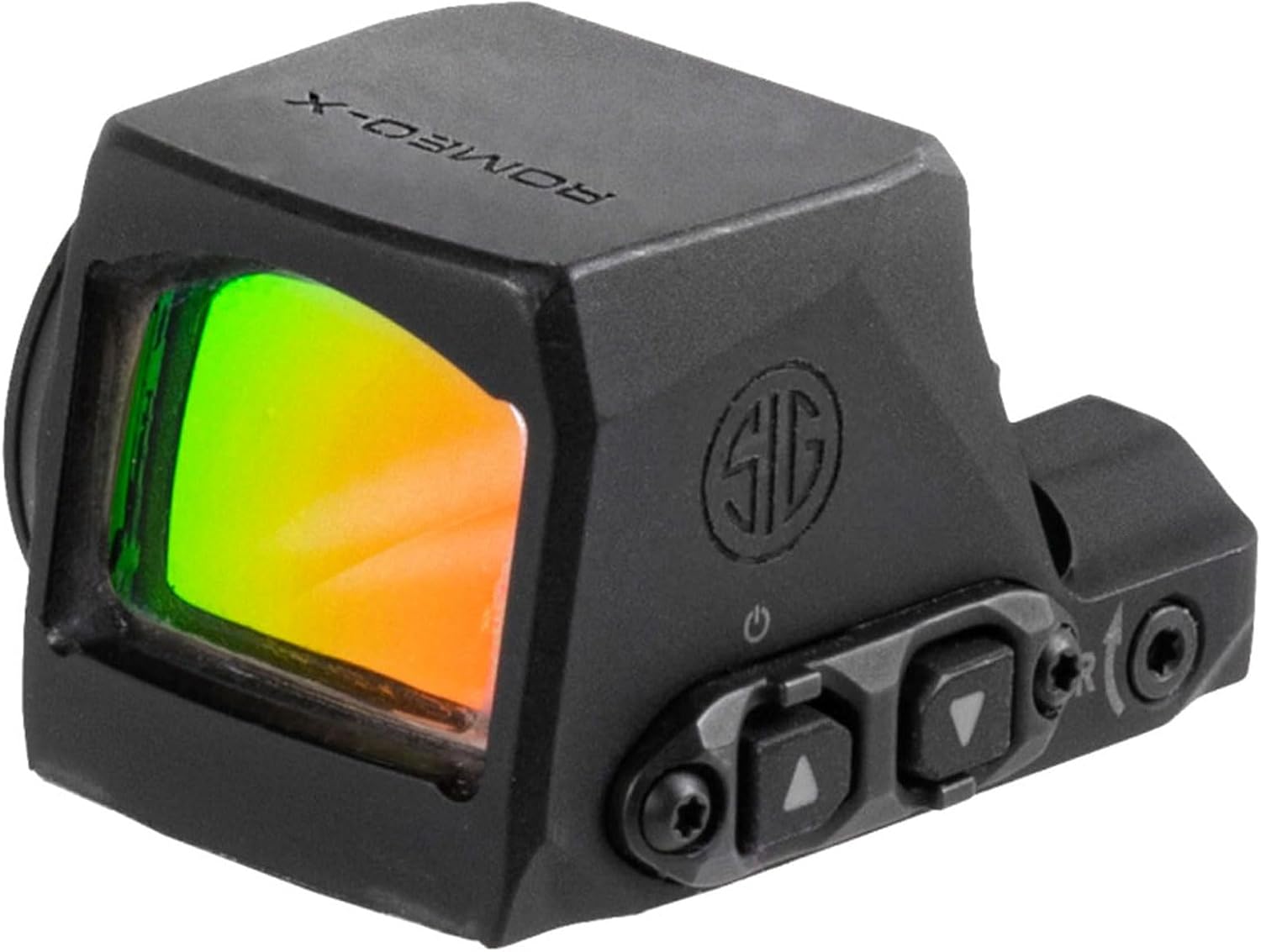
The ROMEO-X Compact is one of the cleanest factory-ready optics for modern carry pistols, especially within the SIG ecosystem.
- Footprint: RMSc modified
- Battery: Side-load CR1632
- Dot size: 2 MOA
- Housing: CNC aluminum
- Integrated rear notch sight
- MOTAC activation
Pros
- Very low deck height
- Excellent SIG compatibility
- Crisp glass quality
- Easy battery access
Cons
- Smaller adjustment controls
- Limited aftermarket plate support
- Slight emitter reflection indoors
This optic excels in mounting efficiency. On P365 variants, it installs directly without awkward adapter plates, preserving factory sight height and improving overall concealment. That lower mounting position noticeably improves natural presentation speed.
The deck height also enables excellent co-witness alignment. Unlike taller optics that require oversized irons, the ROMEO-X Compact integrates cleanly with standard-height sights on several factory SIG slides.
During range testing, the optic maintained zero consistently through repeated recoil cycles. The controls are smaller than I prefer while wearing gloves, but they remain tactile enough for defensive use. The side battery compartment works well and avoids unnecessary rezero procedures.
Glass quality is impressive for such a compact optic. Tint remains minimal, and edge distortion is well controlled. The emitter can produce slight reflection under artificial indoor lighting, though I never found it distracting during live fire.
Most online discussions praise the optic’s seamless integration with SIG pistols. Users also appreciate the low-profile carry feel compared to bulkier enclosed designs. The primary criticism centers on ecosystem limitations outside SIG-compatible platforms.
➡️➡️➡️ Explore User Feedback and Current Pricing on Amazon
Holosun 507K

The 507K remains one of the most versatile micro carry optics because it balances size, reliability, battery access, and reticle flexibility extremely well.
- Footprint: RMSc modified
- Battery: Side CR1632
- Reticle: Circle-dot MRS
- Housing: 7075 aluminum
- Brightness settings: 10 daylight, 2 NV
- Shake Awake technology
Pros
- Excellent value
- Multiple reticle options
- Strong battery life
- Durable housing
Cons
- Open emitter design
- Slight lens tint
- Smaller buttons
The 507K works exceptionally well on slimline pistols like the P365XL, Hellcat Pro, and Glock 43X MOS. The compact body minimizes printing during concealed carry while still offering a usable window.
I found the circle-dot reticle especially fast during draw-to-first-shot drills. The larger ring helps the eye acquire the dot quickly even under imperfect presentations. Parallax shift remains minimal at defensive distances, though edge deviation becomes slightly more noticeable compared to premium enclosed optics.
The side battery tray is a major advantage because it simplifies maintenance without disturbing zero. Recoil resistance also impressed me. After several hundred rounds of defensive ammunition, the optic maintained brightness consistency and retained zero.
Lens tint is visible but manageable outdoors. The buttons are somewhat small with gloves, although accidental presses are unlikely. The emitter remains exposed, so lint accumulation is something users must occasionally monitor on daily carry guns.
Mounting compatibility is broad, but some RMSc-pattern slides still require minor recoil lug modifications depending on the manufacturer. Community feedback consistently rates the 507K as one of the strongest value optics available for concealed carry.
➡️➡️➡️ Explore User Feedback and Current Pricing on Amazon
Vortex Defender CCW

The Defender CCW delivers a surprisingly refined feature set at a more affordable price point than many premium carry optics.
- Footprint: Shield RMSc
- Battery: Top-load CR1632
- Dot size: 3 MOA
- Housing: Aluminum
- Fast-Rack texture
- Motion activation
Pros
- Affordable price
- Top-loading battery
- Good window clarity
- Strong warranty support
Cons
- Slightly thicker housing
- Shorter battery life
- Brightness buttons protrude more
The Defender CCW impressed me more than expected during testing. It tracks recoil consistently and maintains zero well on compact carry pistols. I particularly liked the top-loading battery compartment because it simplifies maintenance without removing the optic.
Window clarity is better than many optics in this price range. Distortion remains controlled near the edges, and the dot stays reasonably crisp during rapid transitions. The lens tint is mild enough that target colors remain natural outdoors.
The housing is slightly bulkier than ultra-compact optics, though concealment remained manageable during appendix carry. I also noticed the brightness controls protrude more than some competitors, increasing the chance of accidental activation during hard use.
Parallax performance is respectable for an optic in this category. The lower deck height supports decent co-witness setups on many RMSc-compatible pistols, though some factory slides still benefit from slightly taller irons.
Online discussions generally praise the Defender CCW for value and warranty support. While it lacks the proven track record of premium duty optics, it delivers dependable performance for budget-conscious EDC setups.
➡️➡️➡️ Explore User Feedback and Current Pricing on Amazon
How I Tested / Evaluation Criteria
Parallax
I evaluated optics at varying distances from 5 to 25 yards while intentionally shifting head position inside the viewing window. The best optics minimized visible dot drift near window edges and maintained consistent point-of-impact behavior during rapid target transitions.
Co-Witness / Deck Height
Deck height directly affects concealment, sight picture, and backup iron usability. I prioritized optics that mounted low enough to preserve natural presentation and avoid requiring excessively tall suppressor-height irons.
Durability
Each optic underwent repeated recoil testing with defensive ammunition, slide manipulations against barriers, and environmental exposure. I paid close attention to emitter stability, screw retention, and housing integrity after extended firing sessions.
Battery
Battery systems matter more than many buyers realize. Side-loading and top-loading compartments reduce maintenance headaches because they eliminate unnecessary rezero procedures. I also evaluated battery tray sealing and cap durability.
Brightness Range
An EDC optic must perform under direct sunlight while remaining usable in low-light environments. I tested outdoor visibility, brightness bloom, and night-adjustment usability across multiple lighting conditions.
Glass Quality
Glass clarity affects speed and eye fatigue. I compared lens tint, edge distortion, glare handling, and emitter crispness while transitioning between indoor and outdoor environments.
Controls Ergonomics
Button size and tactility become important under stress or while wearing gloves. I evaluated ease of adjustment, accidental activation risk, and control accessibility during live-fire drills.
Mounting Ecosystem
Footprint compatibility remains one of the most overlooked factors in EDC optics. I examined direct-mount options, plate quality, screw engagement depth, and compatibility across popular carry pistols including Glock MOS, SIG P365, and slimline platforms.
How to Choose the Right Red Dot for This Gun
Choosing the correct carry optic starts with understanding your pistol’s mounting system. Many shooters focus entirely on window size or reticle style while ignoring footprint compatibility, which often creates reliability problems later. Direct mounting is almost always preferable because it lowers deck height, improves screw engagement, and reduces tolerance stacking.
For slimline pistols like the Glock 43X MOS or SIG P365 series, RMSc-pattern optics dominate because they maintain concealability while allowing low-profile mounting. Optics such as the Holosun EPS Carry and 507K perform especially well here because they preserve a natural draw angle and maintain practical co-witness capability.
Larger compact pistols can handle enclosed optics more comfortably. The Aimpoint ACRO P-2 offers exceptional environmental protection but adds noticeable bulk. For users prioritizing durability over concealment minimalism, that tradeoff is worthwhile. Open emitters remain lighter and often provide larger windows, but enclosed designs are becoming increasingly popular for daily carry because emitter occlusion from lint or moisture is a real issue.
Battery access should also influence buying decisions. Bottom-loading batteries force optic removal and introduce rezero concerns. Side or top-loading systems are far more practical for carry guns that must remain consistently zeroed.
Window size matters, but presentation consistency matters more. A massive competition-style optic may look attractive initially, yet become uncomfortable during concealment. Smaller windows require training but often conceal far better.
Finally, consider aftermarket support. Some proprietary footprints limit future mounting flexibility and increase adapter dependence. Widely supported ecosystems generally make long-term maintenance easier and improve compatibility with future slide upgrades.
FAQs
What is the best footprint for EDC pistol optics?
RMSc-pattern footprints are currently the most versatile for slimline carry pistols. They allow lower mounting heights and broad compatibility across modern concealed carry handguns.
Are enclosed emitter optics worth it for concealed carry?
Yes. Enclosed emitters prevent lint, sweat, and debris from blocking the emitter during daily carry. They generally provide greater reliability in adverse environments.
Do I need suppressor-height sights with a red dot?
Not always. Lower deck optics like the ROMEO-X Compact often work with standard-height sights, while taller optics usually require suppressor-height irons for co-witness capability.
Is the ACRO P-2 too large for concealed carry?
For some users, yes. It conceals best on compact or larger carry pistols. However, many shooters accept the added bulk because of its exceptional durability and enclosed design.
How often should I replace red dot batteries?
For EDC optics, I recommend annual battery replacement regardless of advertised runtime. Preventive maintenance is far more reliable than waiting for battery failure.
Conclusion
The Best Red Dot for EDC in 2026 ultimately depends on your balance between concealment, durability, and mounting simplicity. For most concealed carriers, the Holosun EPS Carry currently offers the strongest combination of enclosed reliability, compact dimensions, and broad compatibility. Shooters prioritizing maximum ruggedness should still consider the Aimpoint ACRO P-2 or Trijicon RMRcc, while value-focused users will find excellent performance in the Holosun 507K and Vortex Defender CCW.
Proper mounting, reliable screw engagement, and realistic training matter just as much as optic selection. The best carry optic is the one that survives hard use, maintains zero, and integrates naturally into your everyday draw stroke.
Sources referenced include manufacturer specifications, mounting footprint references, long-term user discussions on Reddit and pistol forums, and professional evaluations from optics review outlets.
Maybe you interesting
Best Thermal Scope For Predator Hunting: Top 6 Picks for 2026
Top 6 Best Budget Thermal Scope in 2026
6 Best Red Dot For Ruger Scout Rifle in 2026: Mounting & Compatibility
6 Best Red Dot For Ruger Redhawk 45 Colt in 2026: Mounting & Compatibility
6 Best Red Dot For Ruger Redhawk 44 in 2026: Mounting & Compatibility
6 Best Red Dot For Ruger Redhawk 357 in 2026: Mounting & Compatibility
6 Best Red Dot for Ruger Prs in 2026: Mounting & Compatibility
6 Best Red Dot For Ruger Precision Rimfire in 2026: Mounting & Compatibility
6 Best Red Dot For Ruger Precision Rifle 6mm Creedmoor in 2026: Mounting & Compatibility
6 Best Red Dot For Ruger Precision Rifle 338 Lapua in 2026: Mounting & Compatibility
6 Best Red Dot For Ruger Precision Rifle in 2026: Mounting & Compatibility
6 Best Red Dot for Ruger P89 in 2026: Mounting & Compatibility