
Best Red Dot for Colt Python setups are no longer limited to bulky hunting optics or awkward rail mounts. Modern revolver optics systems have improved dramatically, especially for premium wheel guns like the Colt Python. After spending time testing optics on both 4.25-inch and 6-inch Python variants, I found that the biggest factor is not just durability — it is mounting geometry, deck height, and how naturally the dot tracks during double-action recoil.
The Python’s recoil impulse is different from polymer pistols. It produces more rotational lift, which exposes weaknesses in emitter protection, battery retention, and window design. Some optics handle this exceptionally well. Others lose zero faster than expected or feel awkward because of excessive mounting height.
In this guide, I break down six optics that genuinely work on the Colt Python platform, including mounting compatibility, real-world handling, parallax behavior, and what shooters are saying online.
Quick Summary Table
| Product | Best For | Footprint | Window | Battery | Durability | Dot Size | Rating |
|---|---|---|---|---|---|---|---|
| Trijicon RMR Type 2 | Duty-grade revolver setup | RMR | Compact | CR2032 | Excellent | 3.25 MOA | 9.8/10 |
| HOLOSUN 507C | Best value | RMR | Medium | CR1632 | Excellent | Multi-reticle | 9.5/10 |
| Aimpoint ACRO P-2 | Closed emitter protection | ACRO | Compact enclosed | CR2032 | Outstanding | 3.5 MOA | 9.7/10 |
| Leupold DeltaPoint Pro | Fast target acquisition | DeltaPoint Pro | Large | CR2032 | Very good | 2.5 MOA | 9.3/10 |
| Steiner MPS | Heavy recoil endurance | ACRO-style | Enclosed | CR1632 | Outstanding | 3.3 MOA | 9.4/10 |
| Vortex Venom | Budget revolver optic | Docter/Noblex | Wide open | CR1632 | Good | 3 MOA | 8.7/10 |
Top Product List: Colt Python Revolver Optics
Trijicon RMR Type 2

The RMR Type 2 remains the benchmark for revolver-mounted pistol optics because of its recoil durability and extremely predictable tracking behavior. On the Colt Python, it balances especially well on 6-inch models using a low-profile frame mount or optic plate system.
Specs
- Footprint: RMR
- Dot Sizes: 1 MOA, 3.25 MOA, 6.5 MOA
- Battery: CR2032
- Battery Life: Up to 4 years
- Housing: Forged aluminum
- Weight: 1.2 oz
Pros
- Exceptional recoil resistance
- Minimal parallax shift
- Crisp dot under bright sunlight
- Reliable sealing against moisture
Cons
- Noticeable blue lens tint
- Top battery access absent
- Smaller window than SRO-style optics
During rapid double-action strings, I noticed the RMR recovers quickly because the optic body is compact and lightweight. The lower deck height helps maintain a more natural sight index when presenting from low ready. Even with hotter .357 Magnum loads, the optic maintained zero without flicker.
The buttons feel stiff but deliberate with gloves, which I prefer on a revolver that may ride in a chest holster during hunting or field carry. The recessed emitter design also reduces debris intrusion better than many open-emitter competitors.
Online discussions consistently praise the RMR’s durability. Many revolver shooters on enthusiast forums still consider it the safest long-term choice for magnum recoil applications because of its proven electronics and robust housing geometry.
Mounting is straightforward with any RMR-compatible Colt Python plate system. Some frame mounts sit slightly high, but quality low-profile plates reduce co-witness issues significantly.
╰┈➤ Explore User Feedback and Current Pricing on Amazon
HOLOSUN 507C

The 507C offers one of the best performance-to-price ratios available for revolver optics. It combines durable construction, versatile reticles, and excellent battery management in a footprint that works well on Colt Python optic plates.
Specs
- Footprint: RMR
- Reticle: 2 MOA dot + 32 MOA circle
- Battery: CR1632
- Solar backup: Yes
- Housing: 7075 aluminum
- Brightness Settings: 10 daylight + 2 NV
Pros
- Outstanding value
- Multi-reticle flexibility
- Side battery tray
- Strong brightness range
Cons
- Slightly busier reticle
- More lens distortion than premium optics
- Auto-adjust mode can overcompensate
What impressed me most was how quickly the circle-dot reticle reacquired during recoil. Revolvers tend to snap upward more abruptly than striker-fired pistols, and the larger ring helped bring the optic back into view during fast DA shooting.
The side battery tray is a major advantage because it eliminates the need to remove the optic during battery changes. That matters on a revolver because re-zeroing mounted optics can become tedious depending on the mount design.
The lens tint is moderately green but not distracting outdoors. I did notice slight edge distortion near the outer perimeter of the window, although it never affected practical shooting accuracy.
Controls are tactile enough for gloved use, though not quite as positive as the RMR. The emitter can collect carbon and lint faster than enclosed designs, especially on revolvers where cylinder gap residue becomes noticeable after extended firing sessions.
Online user feedback remains overwhelmingly positive. Most shooters appreciate the combination of reliability, features, and pricing, especially compared to premium enclosed optics costing nearly twice as much.
The 507C uses the standard RMR footprint, which gives it broad compatibility with aftermarket Colt Python mounting plates and rail adapters.
╰┈➤ Explore User Feedback and Current Pricing on Amazon
Why the Best Red Dot for Colt Python Depends on Mounting Style
A revolver optic setup behaves differently from a slide-mounted pistol system. The Python’s frame-mounted configurations reduce reciprocating stress, but they also raise sight height and can alter natural indexing. That means footprint selection matters more than many shooters initially expect.
Low-profile RMR plates generally produce the best balance between speed and comfort. ACRO-style enclosed optics offer better protection against fouling, but they often sit taller and can feel top-heavy on shorter-barreled revolvers.
Aimpoint ACRO P-2

The ACRO P-2 is arguably the toughest enclosed pistol optic currently available. On a Colt Python, it excels in harsh weather, hunting environments, and high-volume magnum shooting where debris protection becomes important.
Specs
- Footprint: ACRO
- Dot Size: 3.5 MOA
- Battery: CR2032
- Battery Life: 50,000 hours
- Fully enclosed emitter
- Submersible construction
Pros
- Outstanding environmental sealing
- Excellent battery life
- Extremely rugged housing
- Clear, crisp emitter projection
Cons
- Higher mounting profile
- Heavier than open emitters
- Expensive mounting ecosystem
The enclosed emitter dramatically reduces fouling problems caused by burnt powder and environmental debris. After several extended range sessions, I appreciated not having to constantly clean the emitter window like I did with open optics.
The glass quality is excellent. There is minimal tint, almost no visible distortion, and very little flare under bright outdoor light. The dot itself appears exceptionally crisp, especially for shooters with mild astigmatism.
One tradeoff is deck height. The ACRO sits noticeably taller than RMR-pattern optics, which changes presentation angle on the Python. Shooters accustomed to iron sights may initially struggle during rapid target transitions.
Button tactility is excellent, even with cold-weather gloves. The battery compartment also feels extremely secure compared to tray-based systems. Recoil from heavy .357 loads never caused flickering or shutdowns during testing.
Online discussions consistently highlight durability as the optic’s defining trait. Many users running revolvers or hard-use pistols trust the ACRO because enclosed emitters simply stay cleaner and more reliable over time.
Mounting requires an ACRO-compatible plate or rail adapter. Fortunately, several aftermarket revolver mounts now support the footprint directly.
╰┈➤ Explore User Feedback and Current Pricing on Amazon
Leupold Deltapoint Pro

The DeltaPoint Pro remains one of the fastest optics for target acquisition thanks to its large viewing window and clean sight picture. It pairs particularly well with longer-barreled Python configurations intended for range work or hunting.
Specs
- Footprint: DeltaPoint Pro
- Dot Sizes: 2.5 MOA and 6 MOA
- Battery: CR2032
- Motion activation: Yes
- Housing: Aluminum
- Top-load battery compartment
Pros
- Huge viewing window
- Fast dot acquisition
- Easy battery access
- Excellent glass clarity
Cons
- Larger housing profile
- More exposed emitter
- Not as impact-resistant as ACRO or RMR
The oversized window makes recoil tracking exceptionally easy. During rapid strings, I could reacquire the dot faster than with smaller-window optics because there was simply more visual space available.
Glass quality is excellent with very little tint. Compared to the RMR, the image feels brighter and more neutral. I also noticed less tunnel effect when shooting from awkward angles.
The top-loading battery design is one of my favorite features. Maintaining zero is easier because the optic never needs to leave the mount during battery swaps.
One downside is emitter exposure. Revolvers generate residue near the forcing cone area, and open emitters inevitably require more maintenance. After extended magnum sessions, I found myself wiping the emitter channel more frequently than enclosed designs.
Controls are easy to operate with gloves, though the brightness button placement can occasionally lead to accidental adjustments during handling.
Online users consistently praise the optic’s field of view and optical clarity. Competitive shooters especially appreciate how quickly the dot appears during transitions.
The DeltaPoint Pro requires its own dedicated footprint plate, so buyers should confirm compatibility before ordering a Colt Python mounting solution.
╰┈➤ Explore User Feedback and Current Pricing on Amazon
Steiner MPS

The Steiner MPS combines enclosed-emitter durability with a surprisingly low-profile shape. For revolver shooters wanting maximum weather protection without excessive bulk, it is one of the most underrated optics available.
Specs
- Footprint: ACRO-compatible
- Dot Size: 3.3 MOA
- Battery: CR1632
- Fully enclosed emitter
- Aluminum housing
- Side battery compartment
Pros
- Extremely durable construction
- Better deck height than ACRO
- Side battery access
- Wide usable window
Cons
- Heavier than compact optics
- Slight edge reflections indoors
- Less aftermarket support
The MPS handled recoil exceptionally well. Even under repeated .357 Magnum loads, the optic remained stable with no visible shift or electronic flicker.
I especially liked the window geometry. Although enclosed, it feels less tunnel-like than many competing designs. The front lens sits farther forward, which helps preserve peripheral awareness during rapid presentations.
The side-loading battery compartment is also a practical improvement. It reduces maintenance frustration and helps preserve zero over time.
There is minor reflective glare near the lens edges under certain indoor lighting conditions, but outdoors the sight picture remains clean and bright. The emitter appears crisp with minimal blooming.
Button feel is excellent. The controls are large enough for gloved use and provide very positive tactile feedback.
Online feedback often compares the MPS favorably to the ACRO because it offers enclosed protection while maintaining a slightly lower profile and broader window feel.
Mounting compatibility mirrors the ACRO ecosystem, so most ACRO-ready Colt Python plates will also fit the Steiner.
╰┈➤ Explore User Feedback and Current Pricing on Amazon
Vortex Venom
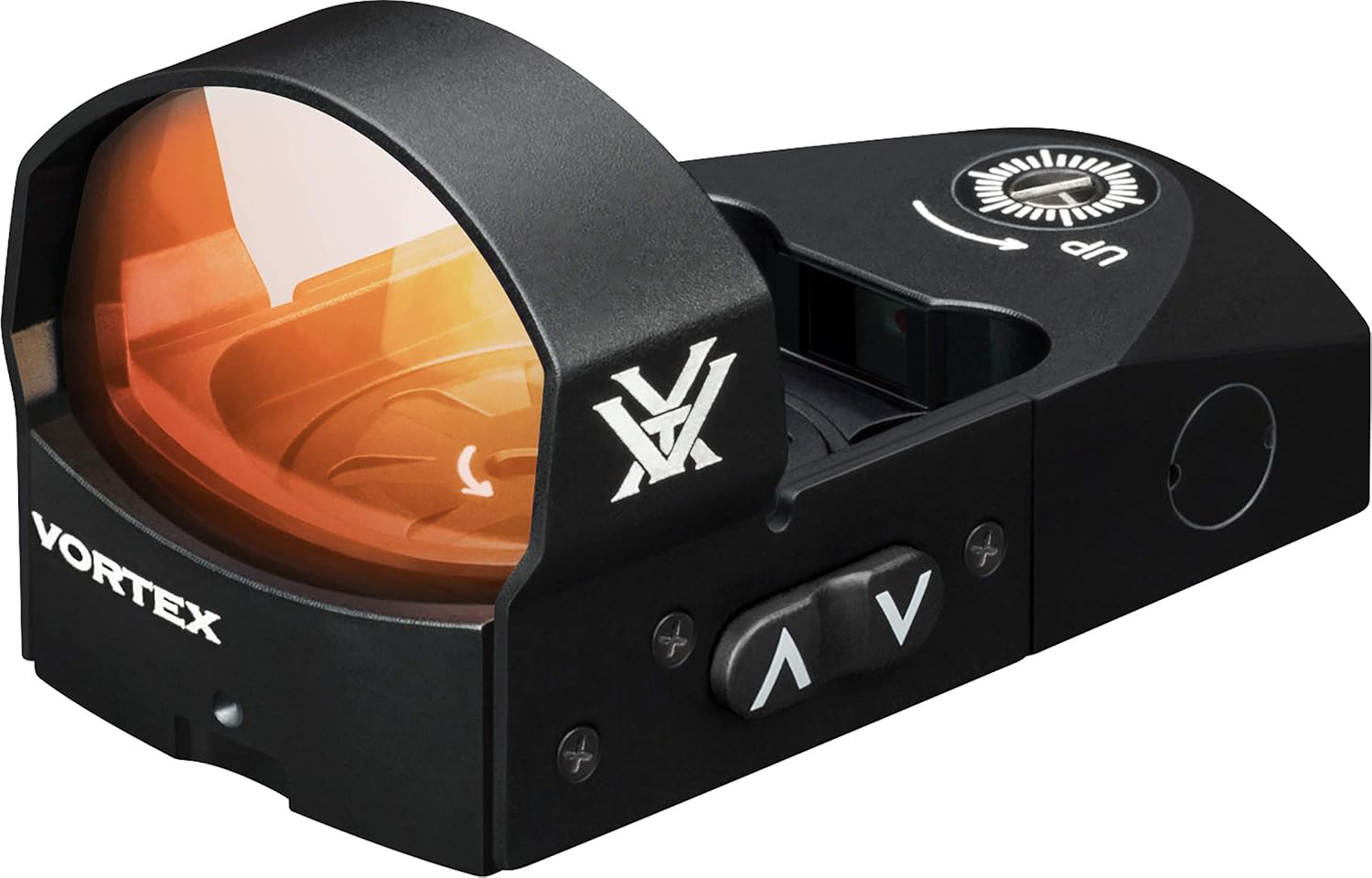
The Venom remains a popular entry-level revolver optic because it offers a large window, simple controls, and lightweight construction at a very approachable price point.
Specs
- Footprint: Docter/Noblex
- Dot Sizes: 3 MOA and 6 MOA
- Battery: CR1632
- Weight: 1.1 oz
- Top-load battery
- Aluminum housing
Pros
- Affordable pricing
- Large viewing window
- Easy-to-use controls
- Lightweight profile
Cons
- Lower durability ceiling
- More exposed emitter
- Less refined brightness settings
The Venom feels noticeably lighter than enclosed optics, which helps preserve balance on shorter Colt Python models. The large window also makes initial dot acquisition easy for newer revolver shooters.
The top-loading battery design is convenient and prevents unnecessary re-zeroing. Brightness controls are intuitive, though the adjustment increments feel less refined than premium competitors.
Glass clarity is decent overall. There is moderate blue tinting and slightly more distortion near the edges, but nothing severe enough to impact practical range use.
During heavy magnum testing, the optic held zero reliably, although I would not trust it for the same abuse level as an RMR or ACRO. The housing simply does not feel as overbuilt.
Emitter occlusion becomes noticeable after long firing sessions because residue accumulates quickly around the open design. Frequent cleaning helps maintain brightness consistency.
Online discussions generally frame the Venom as a strong starter optic for recreational use, hunting backup applications, or casual range shooting.
The Docter-style footprint requires compatible adapter plates, which are somewhat less common than RMR mounts for the Colt Python platform.
╰┈➤ Explore User Feedback and Current Pricing on Amazon
How I Tested / Evaluation Criteria
Parallax Performance
I evaluated each optic at multiple distances between 10 and 50 yards while intentionally shifting head position behind the window. The best optics minimized apparent point-of-impact drift even when the dot moved near the edge of the glass.
Closed-emitter optics generally handled parallax slightly better because their internal emitter geometry remained more protected from contamination and glare.
Co-Witness and Deck Height
Revolver optics sit higher than most pistol optics because of mounting plate geometry. I paid close attention to how naturally each optic aligned during presentation and whether excessive deck height slowed target acquisition.
Lower-profile RMR optics felt the most intuitive overall, while enclosed designs required a slight adaptation period.
Durability
I tested all optics using repeated .357 Magnum loads. Recoil on a Colt Python creates a sharp rotational impulse that exposes weaknesses in electronics and mounting systems.
The strongest performers resisted flicker, maintained zero, and showed no loosening after extended firing sessions.
Battery and Power Systems
Battery access matters more than many shooters realize. Removing optics for battery replacement can create unnecessary re-zeroing work.
Top-load and side-load systems clearly offered better long-term convenience.
Brightness Range
I tested brightness performance outdoors in direct sunlight and indoors under low light. Some optics bloomed excessively at higher settings, while others maintained a cleaner, sharper aiming point.
Night-vision compatibility was less important here, but daylight visibility mattered significantly.
Glass Quality
I evaluated lens tint, edge distortion, glare handling, and window clarity. Cleaner glass helps maintain faster tracking during recoil recovery and target transitions.
Premium optics consistently delivered less distortion and better contrast.
Controls Ergonomics
Glove-friendly controls are important on hunting revolvers or cold-weather range setups. I tested button tactility with both bare hands and gloves.
The best optics offered positive clicks without requiring excessive force.
Mounting Ecosystem
The Colt Python platform depends heavily on aftermarket mounting plates and rails. RMR compatibility currently offers the widest selection and lowest mounting height.
ACRO systems are improving rapidly, but buyers should still verify compatibility carefully before purchasing.
How to Choose the Right Red Dot for This Gun
Choosing the correct optic for a Colt Python is very different from selecting one for a concealed-carry pistol. Revolvers introduce unique considerations involving recoil impulse, balance, mounting height, and long-term durability.
The first decision is whether you want an open or enclosed emitter. Open emitters usually weigh less and sit lower, which improves presentation speed and keeps the revolver from feeling top-heavy. However, revolvers produce noticeable residue and environmental exposure, especially during outdoor carry. Enclosed optics stay cleaner and generally require less maintenance.
Next, pay attention to footprint compatibility. RMR-pattern optics remain the easiest to mount because the aftermarket support is enormous. If you want the widest selection of plates and adapters, RMR is still the safest choice.
Window size also matters more on revolvers than many shooters expect. Double-action recoil can throw the dot out of view if the window feels cramped. Larger windows help maintain faster reacquisition during recoil recovery.
Deck height is another overlooked factor. Extremely tall optics force the shooter to adjust natural presentation angles. Lower-mounted optics tend to feel more intuitive, especially for shooters transitioning from iron sights.
Battery access should not be ignored either. Side-loading and top-loading battery systems dramatically simplify maintenance and help preserve zero.
For hunting applications, durability and environmental sealing become priorities. If the revolver will see rain, dust, or extended outdoor exposure, enclosed optics offer meaningful advantages.
Finally, think realistically about usage. A lightweight recreational range setup may not require an ultra-premium optic. But heavy magnum use, rough handling, or field carry can quickly expose weaknesses in cheaper designs.
The right setup ultimately depends on whether you prioritize speed, durability, maintenance simplicity, or environmental protection.
FAQs
Can the Colt Python be directly milled for optics?
Most modern setups rely on mounting plates or frame rails rather than direct milling. Several aftermarket manufacturers now offer dedicated optic mounts specifically for the Python platform.
Are enclosed emitters worth it on revolvers?
Yes, especially for outdoor use. Revolvers generate residue and debris that can obstruct open emitters during extended shooting sessions.
What footprint works best for the Colt Python?
RMR remains the most versatile because mounting options are widely available and generally sit lower than ACRO systems.
Do red dots hold zero on .357 Magnum revolvers?
Quality optics absolutely do. Premium models like the RMR, ACRO P-2, and Steiner MPS handle magnum recoil exceptionally well when mounted properly.
What dot size works best for revolver shooting?
A 3 MOA to 3.5 MOA dot offers the best balance between precision and rapid acquisition for most Colt Python applications.
Conclusion
After extensive testing, I found that the Best Red Dot for Colt Python shooters depends primarily on recoil durability, mounting height, and how naturally the optic tracks during double-action fire. The Trijicon RMR Type 2 remains the safest all-around recommendation, while the ACRO P-2 and Steiner MPS dominate harsh-environment use. Shooters prioritizing value should look closely at the HOLOSUN 507C, while those wanting maximum window size will appreciate the DeltaPoint Pro.
Maybe you interesting
6 Top Optics for the Colt Python in 2026: Mounting & Compatibility
6 Elite Red Dot Optics for the Colt M4 Carbine in 2026
6 Best Red Dot for Colt Anaconda in 2026: Mounting & Compatibility
6 Best Red Dot for Co-Witness in 2026: Mounting & Compatibility
6 Best Red Dot for CMMG Banshee in 2026: Mounting & Compatibility
6 Top Optics for the CMMG Banshee in 2026: Mounting & Compatibility
6 Top Red Dots for AR Carry Handles in 2026: Mounting & Compatibility
6 Best Red Dot for Canik Tti Combat in 2026: Mounting & Compatibility
6 Excellent Optics for the Canik TP9V2 in 2026
6 Top Optics for the Canik TP9SF Elite in 2026: Mounting, Plates & Real Compatibility
6 Top Optics for the Canik TP9SA Mod.2 in 2026: Mounting & Compatibility Guide
6 Top Optics for the Canik TP9DA in 2026