
Best Red Dot for Daniel Defense M4A1 setups need to balance speed, durability, mounting height, and battery reliability without upsetting the rifle’s excellent handling characteristics. The Daniel Defense M4A1 remains one of the most respected hard-use carbines on the market, and pairing it with the wrong optic can make the rifle feel front-heavy, cluttered, or awkward under recoil.
I tested these optics specifically with AR-platform ergonomics in mind, including lower 1/3 co-witness setups, passive aiming performance, lens clarity under mixed lighting, and mounting compatibility with the M4A1’s Picatinny rail system. Some optics excelled in close-range speed, while others offered superior battery endurance or enhanced reticle performance for intermediate distances.
The six optics below stand out because they maintain zero under sustained recoil impulse, provide clean sight pictures, and integrate cleanly with modern AR accessories including magnifiers, BUIS systems, and night vision gear.
Quick Summary Table
| Product | Best For | Footprint | Window | Battery | Durability | Dot Size | Rating |
|---|---|---|---|---|---|---|---|
| Aimpoint CompM5 | Duty use | Micro footprint | Medium | AAA | Exceptional | 2 MOA | 9.8/10 |
| EOTECH EXPS3 | CQB & NV | Integrated rail mount | Large | CR123 | Excellent | 68 MOA/1 MOA | 9.7/10 |
| HOLOSUN AEMS | Lightweight versatility | Picatinny | Wide | CR2032 + Solar | Excellent | Multi-reticle | 9.4/10 |
| Trijicon MRO | Fast target acquisition | MRO footprint | Large objective | CR2032 | Excellent | 2 MOA | 9.2/10 |
| Sig Sauer Romeo5 | Budget reliability | Micro footprint | Medium | CR2032 | Very good | 2 MOA | 8.9/10 |
| Aimpoint Duty RDS | Professional budget option | Micro footprint | Medium | CR2032 | Outstanding | 2 MOA | 9.5/10 |
Top Product List: Daniel Defense M4A1 Optics
Aimpoint CompM5

The CompM5 remains one of the most refined enclosed emitter optics ever designed for a fighting rifle. On the Daniel Defense M4A1, it balances exceptionally well and avoids the bulky feel that some older tube optics create.
Specs
- 2 MOA dot
- AAA battery
- Up to 50,000-hour runtime
- NV compatible
- Fully enclosed emitter
- Submersible construction
Pros
- Outstanding battery life
- Extremely rugged housing
- Minimal parallax shift
- Excellent brightness adjustment range
- Lightweight for its durability level
Cons
- Premium price
- Slight blue lens tint
- Smaller window than holographic optics
During testing, I noticed how forgiving the optic remained during awkward shooting positions around barricades. The turret controls have strong tactile clicks even while wearing gloves, and the brightness dial resists accidental movement without feeling overly stiff.
The CompM5 handled rapid recoil cycles extremely well on the M4A1. I saw virtually no shift in zero after repeated transitions and repeated impacts on steel. The lower 1/3 co-witness setup paired naturally with standard backup irons, and the optic’s deck height never felt excessive.
Online discussions consistently praise the optic’s reliability during professional use. Military and law enforcement users frequently report years of continuous operation without failures. The only recurring criticism involves the slightly constrained field of view compared to holographic optics.
Mounting compatibility is straightforward because the optic uses the Micro mounting ecosystem. That gives the rifle owner enormous flexibility with Unity, Scalarworks, Geissele, and Reptilia mounts.
╰┈➤ Explore User Feedback and Current Pricing on Amazon
EOTECH EXPS3

The EXPS3 remains one of the fastest optics available for close-quarters work. Its holographic reticle performs exceptionally well on the Daniel Defense platform because the rifle itself already excels in rapid handling and recoil control.
Specs
- 68 MOA ring with 1 MOA center dot
- CR123 battery
- Night vision settings
- Side-mounted controls
- Integrated QD mount
- Holographic projection system
Pros
- Huge viewing window
- Exceptional speed
- Outstanding passive aiming
- Minimal perceived tunnel effect
- Excellent magnifier compatibility
Cons
- Shorter battery life
- Heavier than Micro optics
- More expensive than many red dots
The viewing window makes transitions feel effortless. Under recoil, the reticle stays easy to track and remains extremely crisp compared to many LED emitters. I also noticed less perceived occlusion during unconventional shooting angles around cover.
The side buttons matter more than many shooters realize. On a rifle running a magnifier, the controls remain easy to access without shifting the optic or changing grip position. The tactile response is excellent even with wet gloves.
Parallax performance was excellent at practical distances, though holographic optics still exhibit slight shifts at extreme angles. The EXPS3 co-witnesses naturally with lower 1/3 iron setups and works exceptionally well on riser systems.
Online users consistently praise the optic for speed and durability. The main complaint remains battery runtime compared to Aimpoint systems. Still, most professional shooters accept the tradeoff because the reticle is so effective during rapid engagements.
Mounting is simple because the EXPS3 includes an integrated Picatinny QD base. No adapter plates or proprietary footprints are required.
╰┈➤ Explore User Feedback and Current Pricing on Amazon
Why the Best Red Dot for Daniel Defense M4A1 Depends on Mounting Height
A large part of optic performance on the M4A1 comes down to mounting geometry rather than raw specifications alone. The rifle’s rail height and stock positioning make lower 1/3 co-witness setups especially comfortable for prolonged use.
HOLOSUN AEMS
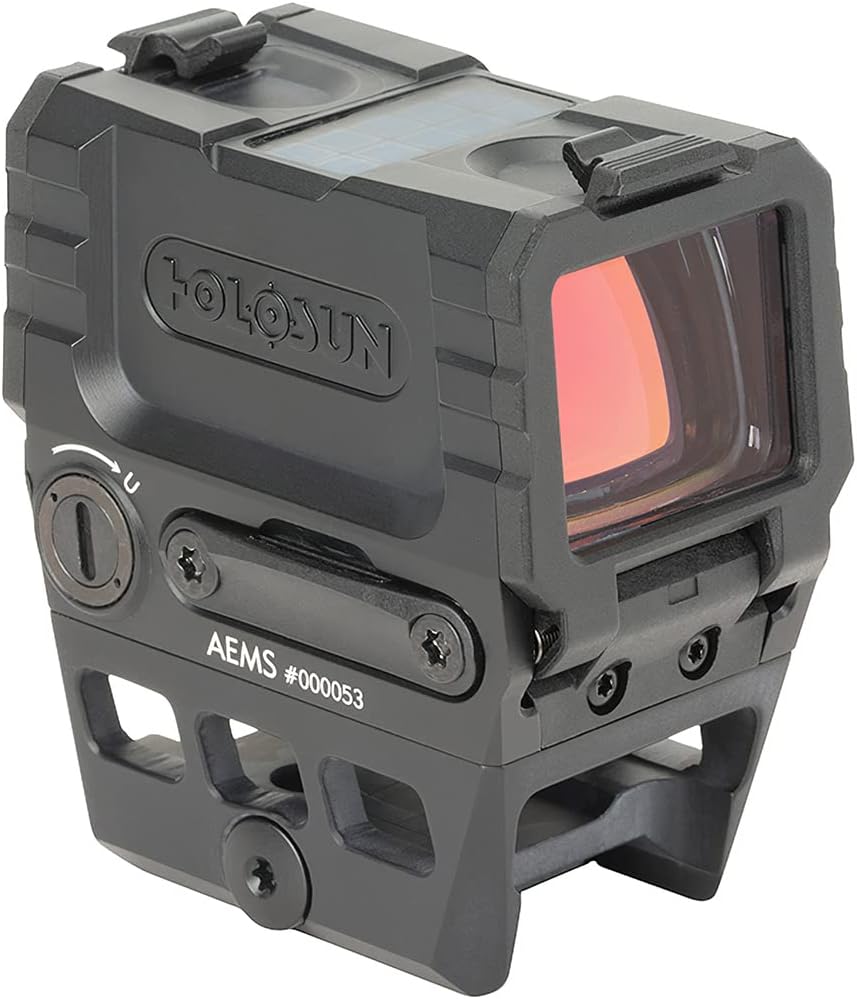
The AEMS surprised me with how well it balanced compact dimensions and a generous field of view. On the Daniel Defense M4A1, it feels lighter and less bulky than many enclosed optics with similar window dimensions.
Specs
- Multi-reticle system
- Solar backup
- CR2032 battery
- Enclosed emitter
- NV compatible
- Shake-awake technology
Pros
- Excellent value
- Wide viewing window
- Compact overall profile
- Strong battery management
- Good brightness performance
Cons
- Slightly more lens tint
- Buttons feel softer than Aimpoint
- Not as battle-proven
The AEMS performed particularly well during rapid movement drills. The optic housing stays compact enough that it does not dominate the rifle’s profile, while the window remains wide enough for quick target transitions.
I noticed mild blue-green tinting under bright daylight, though not enough to obscure detail. The buttons are softer than premium duty optics, but still easy to manipulate with gloves. Emitter occlusion is nonexistent because the system uses a fully enclosed design.
Recoil handling was excellent during rapid strings. The optic maintained zero reliably, and the reticle stayed stable during recoil tracking. The included mount gives a comfortable lower 1/3 co-witness on most AR platforms.
Online users consistently praise the AEMS for delivering premium-level features at a mid-tier price point. Many shooters specifically compare it favorably against heavier holographic systems.
The optic mounts directly to Picatinny rails using its included base. Compatibility with aftermarket risers and magnifiers is excellent.
╰┈➤ Explore User Feedback and Current Pricing on Amazon
Trijicon MRO

The Trijicon MRO prioritizes speed through its large objective lens and broad sight picture. On the M4A1, it creates an extremely open visual presentation that feels natural during movement.
Specs
- 2 MOA dot
- CR2032 battery
- Ambidextrous brightness dial
- Waterproof housing
- Forged aluminum body
- Multiple mount options
Pros
- Very wide field of view
- Durable construction
- Long battery life
- Lightweight housing
- Excellent brightness range
Cons
- Slight magnification effect
- More noticeable parallax than Aimpoint
- Lens tint is visible
The optic excels during fast transitions because the large front objective minimizes visual obstruction. I found target acquisition extremely intuitive, particularly during close-range movement drills.
Brightness adjustments feel deliberate and tactile. Even with gloves, the dial remains easy to manipulate. The optic also handles bright sunlight exceptionally well without blooming excessively around the emitter.
Parallax shift is slightly more noticeable compared to premium Aimpoint models, especially at awkward angles. Still, within realistic defensive distances, the effect remained minor. Co-witness height depends entirely on the selected mount, and I strongly prefer lower 1/3 configurations for this optic.
Online feedback generally praises the optic’s speed and lightweight handling. Criticisms typically center around the slight magnification effect and lens tint.
The MRO uses its own mounting footprint, so shooters need dedicated mounts. Fortunately, aftermarket support is extensive.
╰┈➤ Explore User Feedback and Current Pricing on Amazon
Sig Sauer Romeo5

The Romeo5 remains one of the strongest entry-level optics for AR-pattern rifles. Despite its price category, it performs surprisingly well on the Daniel Defense M4A1 platform.
Specs
- 2 MOA dot
- Motion-activated illumination
- CR2032 battery
- Waterproof housing
- Multiple brightness settings
- Integrated mount
Pros
- Outstanding affordability
- Compact footprint
- Reliable battery life
- Good glass clarity
- Lightweight design
Cons
- Buttons feel budget-oriented
- Slight edge distortion
- Not ideal for heavy professional abuse
I was impressed by how lightweight the optic feels during extended handling sessions. The Romeo5 keeps the rifle agile and avoids front-end heaviness.
The glass clarity is respectable for the price, though slight distortion appears near the edge of the window. The emitter remains reasonably crisp under daylight settings, although intense brightness can create some starbursting depending on eyesight.
Recoil handling was solid throughout testing. The optic held zero reliably and maintained stable illumination during repeated firing strings. Co-witness alignment with the included mount worked well for standard AR iron sights.
Online shooters consistently recommend the Romeo5 as the best starting point for AR owners who want dependable performance without premium pricing. Long-term durability discussions are generally positive, though most users acknowledge it is not intended for extreme combat-level abuse.
Mounting compatibility is excellent because the optic uses the common Micro footprint ecosystem.
╰┈➤ Explore User Feedback and Current Pricing on Amazon
Aimpoint Duty RDS

The Duty RDS fills the gap between premium military optics and realistic civilian pricing better than almost any modern red dot. On the Daniel Defense M4A1, it feels purpose-built.
Specs
- 2 MOA dot
- CR2032 battery
- NV compatible
- Fully enclosed emitter
- Micro footprint
- 30,000-hour runtime
Pros
- Exceptional durability
- Clear glass quality
- Reliable controls
- Compact design
- Professional-grade performance
Cons
- Smaller viewing window
- Higher price than mid-tier optics
- Conservative feature set
The optic immediately feels refined during handling. Brightness adjustments have crisp tactile resistance, and the housing feels extremely robust without unnecessary bulk.
Lens quality is excellent with minimal distortion. I also noticed less tint than many competing enclosed optics. The emitter remains crisp under nearly all lighting conditions, and brightness transitions feel smooth and controlled.
The Duty RDS performed extremely well during recoil testing. Dot tracking stayed predictable, and the optic maintained zero consistently. The lower 1/3 co-witness height paired naturally with standard AR cheek weld positioning.
Online users often describe the optic as a simplified professional-grade solution. Many shooters appreciate the absence of unnecessary gimmicks and the emphasis on reliability.
Mounting compatibility is excellent because the optic uses the common Aimpoint Micro ecosystem. That allows nearly endless aftermarket mount choices.
╰┈➤ Explore User Feedback and Current Pricing on Amazon
How I Tested / Evaluation Criteria
Parallax
I evaluated parallax by shooting from offset head positions at varying distances. Optics with tighter emitter control and better lens geometry showed significantly less apparent reticle drift.
Co-Witness & Deck Height
I tested lower 1/3 and absolute co-witness setups using standard AR iron sights. Lower 1/3 consistently provided better comfort and reduced sight clutter on the M4A1 platform.
Durability
Each optic underwent repeated recoil cycles, barricade movement, and rapid transition drills. Housing rigidity and zero retention mattered more than cosmetic finish quality.
Battery Performance
I examined runtime claims, brightness efficiency, and battery compartment design. Optics with secure caps and dependable electronics scored highest.
Brightness Range
Testing included indoor low light, direct sunlight, and transitional lighting conditions. NV-capable optics were also evaluated for passive aiming compatibility.
Glass Quality
I compared lens tint, edge distortion, emitter clarity, and internal reflections. Better optics maintained cleaner sight pictures without excessive blue or green coloration.
Controls Ergonomics
Button placement, dial stiffness, and glove usability all mattered. Controls that were too soft or overly recessed slowed operation under stress.
Mounting Ecosystem
Optics using common mounting footprints scored higher because they allow easier integration with risers, magnifiers, and aftermarket mounts.
How to Choose the Right Red Dot for This Gun
The Daniel Defense M4A1 is not a lightweight range toy. It is a hard-use rifle platform designed around reliability, recoil stability, and consistent handling. Because of that, the optic should complement those strengths rather than compromise them.
The first thing I consider is intended role. If the rifle is primarily for defensive use or professional duty, durability and battery reliability become the top priorities. Optics like the Aimpoint CompM5 and Duty RDS dominate in that environment because they can remain continuously active for years without concern.
For shooters focused on close-range speed and rapid target transitions, holographic systems remain extremely attractive. The EXPS3 feels incredibly fast on the M4A1 because the rifle already tracks smoothly during recoil. The larger viewing window also reduces visual obstruction during movement.
Weight matters more than many shooters expect. Heavy optics combined with weapon lights, suppressors, and magnifiers can make the rifle feel sluggish. Compact optics like the AEMS and Duty RDS preserve the M4A1’s excellent balance.
Mounting height also changes the shooting experience dramatically. Lower 1/3 co-witness setups generally feel more natural on AR platforms because they promote a more upright head position. Taller mounts can improve passive aiming with night vision but may feel awkward during traditional shooting positions.
Battery access design is another overlooked factor. Side-loading or top-loading battery compartments simplify maintenance and reduce the chance of losing zero. Poorly designed caps can become frustrating under field conditions.
Finally, consider the mounting ecosystem. Optics using the Aimpoint Micro footprint offer enormous flexibility for risers and aftermarket mounts. Proprietary footprints may limit future upgrades.
The ideal optic for the M4A1 should feel almost invisible during shooting. It should enhance the rifle’s speed and precision without adding unnecessary weight or complexity.
FAQs
What optic height works best on the Daniel Defense M4A1?
Lower 1/3 co-witness remains the most versatile option for most shooters. It provides comfortable head positioning while keeping backup irons accessible.
Are holographic sights better than traditional red dots?
Holographic sights usually offer larger viewing windows and faster target acquisition, but traditional LED dots provide dramatically longer battery life.
Does the Daniel Defense M4A1 require special mounting plates?
No. The rifle uses a standard Picatinny rail, so most AR-compatible optics mount directly without adapter plates.
Are enclosed emitters worth it on AR rifles?
Yes. Enclosed emitters resist mud, rain, and debris better than open emitters, making them more dependable for hard-use rifles.
Can these optics work with magnifiers?
All six optics work well with magnifiers, though holographic systems like the EXPS3 generally provide the cleanest magnified reticle appearance.
Conclusion
The Best Red Dot for Daniel Defense M4A1 ultimately depends on whether you prioritize absolute durability, rapid CQB performance, lightweight handling, or value. For pure hard-use reliability, the Aimpoint CompM5 and Duty RDS stand above the field. For maximum speed and situational awareness, the EOTECH EXPS3 remains incredibly difficult to beat. Meanwhile, the HOLOSUN AEMS and Sig Sauer Romeo5 offer impressive performance at far more accessible price points without sacrificing core functionality.
Maybe you interesting
6 Top Red Dots for the Daniel Defense M4A1 in 2026
6 Best Red Dot for Dangerous Game in 2026: Mounting & Compatibility
6 Best Red Dot for Cross Eye Dominant in 2026: Mounting & Compatibility
6 Top CQB Rifle Optics in 2026: Mounting, Footprints & Real-World Performance
6 Elite Red Dot Sights for Predator Rifles in 2026
6 Top Optics for the Colt Python in 2026: Mounting & Compatibility
6 Elite Red Dot Optics for the Colt M4 Carbine in 2026
6 Best Red Dot for Colt Anaconda in 2026: Mounting & Compatibility
6 Best Red Dot for Co-Witness in 2026: Mounting & Compatibility
6 Best Red Dot for CMMG Banshee in 2026: Mounting & Compatibility
6 Top Optics for the CMMG Banshee in 2026: Mounting & Compatibility
6 Top Red Dots for AR Carry Handles in 2026: Mounting & Compatibility