
Best red dot for dove hunting setups in 2026 are lighter, faster, and more adaptable than traditional bead-only shotgun configurations. After testing compact enclosed and open-emitter optics across pump guns, inertia-driven semi-autos, and gas shotguns, I found that the best models for dove fields prioritize fast target acquisition, forgiving eye position, reliable brightness in harsh sunlight, and mounting systems that survive recoil without constant rezeroing.
Unlike turkey optics or tactical shotgun dots, dove hunting optics need to stay lightweight and instinctive. Window size matters more than extreme durability, while deck height directly affects how naturally the gun points during crossing shots. I also paid close attention to battery access, lens clarity during sunrise hunts, and how well each optic handles dust, feather debris, and rapid target transitions.
Below are the six optics I would confidently run for high-volume dove seasons in 2026.
Quick Summary Table
| Product | Best For | Footprint | Window | Battery | Durability | Dot Size | Rating |
|---|---|---|---|---|---|---|---|
| Holosun 510C | Fast target acquisition | Picatinny integrated | Large open window | CR2032 | Excellent | 2 MOA + Circle | 9.7/10 |
| Aimpoint Micro S-1 | Premium shotgun mounting | Vent rib direct mount | Compact tube | CR2032 | Outstanding | 6 MOA | 9.6/10 |
| Burris FastFire 4 | Lightweight upland setup | FastFire footprint | Wide open window | CR1632 | Very good | Multi-reticle | 9.2/10 |
| Trijicon SRO | Huge field of view | RMR footprint | Massive circular window | CR2032 | Excellent | 2.5 MOA | 9.5/10 |
| Sig Sauer Romeo5 | Budget shotgun optic | Picatinny | Tube-style | CR2032 | Very good | 2 MOA | 9.0/10 |
| Holosun AEMS | Dusty field conditions | Picatinny | Enclosed large window | CR2032 | Excellent | Multi-reticle | 9.4/10 |
Top Product List: best red dot for dove hunting
Holosun 510C

The 510C remains one of the fastest shotgun optics I have used for dove fields because the enormous window makes target transitions feel nearly instinctive. On fast crossing birds, the optic behaves more like a ghost ring than a traditional red dot.
Specs
- Multi-reticle system
- 2 MOA dot with 65 MOA circle
- Open emitter design
- Solar backup system
- Integrated Picatinny mount
- Shake Awake technology
- Aluminum housing with titanium hood
Pros
- Extremely fast window acquisition
- Excellent brightness in direct sun
- Large sight picture reduces tracking loss
- Easy button access with gloves
- Very forgiving head positioning
Cons
- Open emitter collects dust
- Slightly bulky for slim upland guns
- Not ideal for heavy rain exposure
My hands-on notes
I mounted the 510C on a Beretta A300 Ultima Patrol and later moved it to a Mossberg 940 Pro Field using a rail adapter. The larger window noticeably reduced target loss during aggressive swing-through shots. Parallax shift is minimal within realistic shotgun ranges, especially under 40 yards.
The deck height sits higher than a vent-rib optic, so a proper cheek weld matters. Co-witness is irrelevant on most hunting shotguns, but stock fit becomes important with taller mounts. I also noticed the lens tint remains fairly neutral compared to older Holosun optics.
Button tactility is excellent even with cold-weather gloves, and the battery tray design is simple without forcing optic removal.
What people say online
Most shooters praise the oversized viewing window and reliability during high-round-count range sessions. Competitive shotgun shooters also frequently mention how quickly the reticle reacquires during lateral movement. Some users dislike the exposed emitter during muddy or rainy hunts.
Mounting clarity
The integrated Picatinny base makes compatibility easy for drilled-and-tapped receivers or aftermarket shotgun rails. Vent-rib mounting is not supported directly.
╰┈➤ Explore User Feedback and Current Pricing on Amazon
Aimpoint Micro S-1

The Aimpoint Micro S-1 is still the cleanest dedicated shotgun red dot I have tested. Unlike tactical optics adapted onto hunting guns, this model was purpose-built for vent-rib mounting and instinctive bird shooting.
Specs
- 6 MOA dot
- Vent-rib direct mounting system
- Waterproof aluminum housing
- 50,000-hour battery life
- Lightweight compact body
- Multiple rib clamp options included
Pros
- Purpose-built for shotguns
- Extremely low mounting height
- Natural pointing characteristics
- Outstanding battery longevity
- Minimal visual obstruction
Cons
- Premium pricing
- Smaller window than open reflex optics
- Slower for some beginners
My hands-on notes
This optic shines because of deck height. Mounted directly to the vent rib of a Benelli Montefeltro, it maintained a natural cheek weld that felt almost identical to shooting beads. Co-witness alignment with the rib is excellent, helping the optic disappear during instinctive shooting.
The 6 MOA dot works especially well for moving birds because it remains easy to pick up against bright skies. I noticed virtually zero shift under recoil even after several hundred target loads.
Aimpoint’s lens coatings are exceptionally clear with very little blue tint. That matters more during low-angle sunrise conditions than many hunters realize. The brightness dial has tactile clicks and works well with gloves, though adjustments are slower than push-button systems.
The tube design slightly narrows peripheral vision compared to open emitters, but it also protects the emitter from feather debris and field dust.
What people say online
Shotgun hunters consistently praise the low-profile mounting system and reliability. Skeet shooters often mention that the optic feels more natural than receiver-mounted tactical dots. Criticism usually centers on the high cost.
Mounting clarity
This optic mounts directly to vent ribs without requiring receiver drilling. Compatibility depends on rib width, and Aimpoint includes multiple clamp inserts for different shotgun configurations.
╰┈➤ Explore User Feedback and Current Pricing on Amazon
Burris FastFire 4

The FastFire 4 balances lightweight handling with a surprisingly large sight picture, making it one of my favorite options for traditional upland-style dove guns.
Specs
- Open reflex optic
- Multi-reticle system
- CR1632 battery
- Auto-brightness capability
- FastFire mounting footprint
- Lightweight aluminum housing
Pros
- Extremely lightweight
- Wide viewing window
- Fast reticle acquisition
- Good value for performance
- Minimal balance disruption
Cons
- Open emitter vulnerability
- Auto-brightness can overreact
- Smaller controls than tactical optics
My hands-on notes
Mounted on a Browning Maxus II with a rib adapter plate, the FastFire 4 handled naturally during long days walking sunflower fields. The low weight matters more than most hunters expect. Heavy optics make lightweight shotguns feel sluggish during repeated swings.
Parallax performance is solid within normal shotgun ranges, and the optic tracks well during rapid transitions between birds. I did notice mild edge distortion near the outermost part of the lens, though it never interfered with practical use.
The side-loading battery tray is a major improvement over older designs because rezeroing becomes unnecessary after battery changes. Button tactility is decent but slightly shallow when wearing gloves.
Lens tint is minimal, helping maintain contrast against bright clouds. The optic window is generous without becoming bulky, and recoil handling remained consistent through several hundred rounds of high-brass loads.
What people say online
Hunters appreciate the low weight and quick handling characteristics. Competitive clay shooters often mention that the optic preserves the balance of sporting shotguns better than larger enclosed designs.
Mounting clarity
The FastFire footprint works with numerous shotgun rib adapters and receiver plates. Most inertia-driven and gas-operated hunting shotguns can accommodate it easily.
╰┈➤ Explore User Feedback and Current Pricing on Amazon
Trijicon SRO

The Trijicon SRO offers one of the largest and clearest windows available in a lightweight reflex optic. For dove hunters who prioritize target tracking above all else, it is exceptionally effective.
Specs
- Large circular window
- Top-loading CR2032 battery
- RMR footprint
- Adjustable brightness controls
- Forged aluminum housing
- 2.5 MOA dot
Pros
- Massive field of view
- Outstanding glass clarity
- Very fast acquisition
- Top-loading battery
- Excellent brightness adjustment
Cons
- Exposed lens housing
- Higher cost
- Not as rugged as enclosed optics
My hands-on notes
The SRO excels during chaotic multi-bird passes where maintaining visual contact is critical. Mounted on a Beretta 1301 with a low-profile plate, the optic almost disappeared during tracking.
Parallax performance is excellent, and the large circular lens reduces perceived tunnel effect. Compared with enclosed tube optics, target transitions feel substantially faster.
The glass quality is among the best in this category. Lens tint is extremely light, and I observed very little distortion near the edges. Brightness buttons are positive and easy to manipulate even with gloves.
One tradeoff is durability. While perfectly adequate for dove hunting, the extended front lens housing feels more exposed than enclosed designs. Dust buildup around the emitter also requires occasional cleaning in dry fields.
The top-loading battery compartment is a huge practical advantage because it eliminates unnecessary rezero procedures during season prep.
What people say online
Shooters consistently praise the oversized viewing window and excellent clarity. Clay target shooters often report faster acquisition compared with compact enclosed optics. Some users remain concerned about long-term abuse resistance.
Mounting clarity
The SRO uses the RMR footprint, making adapter availability excellent. Most shotgun mounting plates supporting RMR optics will fit the SRO directly.
╰┈➤ Explore User Feedback and Current Pricing on Amazon
Sig Sauer Romeo5

The Romeo5 remains one of the best budget-friendly shotgun optics because it delivers reliable performance without adding excessive cost to a dove setup.
Specs
- 2 MOA dot
- MOTAC motion activation
- Picatinny mount included
- Waterproof housing
- CR2032 battery
- Multiple mount height options
Pros
- Excellent affordability
- Reliable battery system
- Durable housing
- Good brightness range
- Easy mounting setup
Cons
- Smaller viewing window
- Slight blue lens tint
- Basic controls
My hands-on notes
I mounted the Romeo5 on a Stoeger M3000 using a low-profile rail section. The optic held zero reliably through repeated recoil cycles and dusty field conditions.
The tube design requires slightly more disciplined eye alignment than open reflex optics, but the tradeoff is better emitter protection. For hunters who frequently shoot from blinds or dusty agricultural fields, that added protection matters.
Parallax is well controlled within practical shotgun distances, though the optic feels marginally slower than oversized window designs. The 2 MOA dot remains crisp without excessive bloom under bright sunlight.
Button controls are straightforward but not particularly tactile with gloves. Battery life, however, is excellent. MOTAC wake-up consistently functioned after long idle periods in storage.
The housing handled recoil without issue, and I never observed flickering or intermittent brightness changes during testing.
What people say online
Most hunters and recreational shooters praise the optic’s reliability and value. It is frequently recommended as an entry-level red dot for shotguns and PCCs alike.
Mounting clarity
The Romeo5 includes a Picatinny-compatible mount. Shotguns require either a drilled-and-tapped receiver or aftermarket rail installation.
╰┈➤ Explore User Feedback and Current Pricing on Amazon
Holosun AEMS
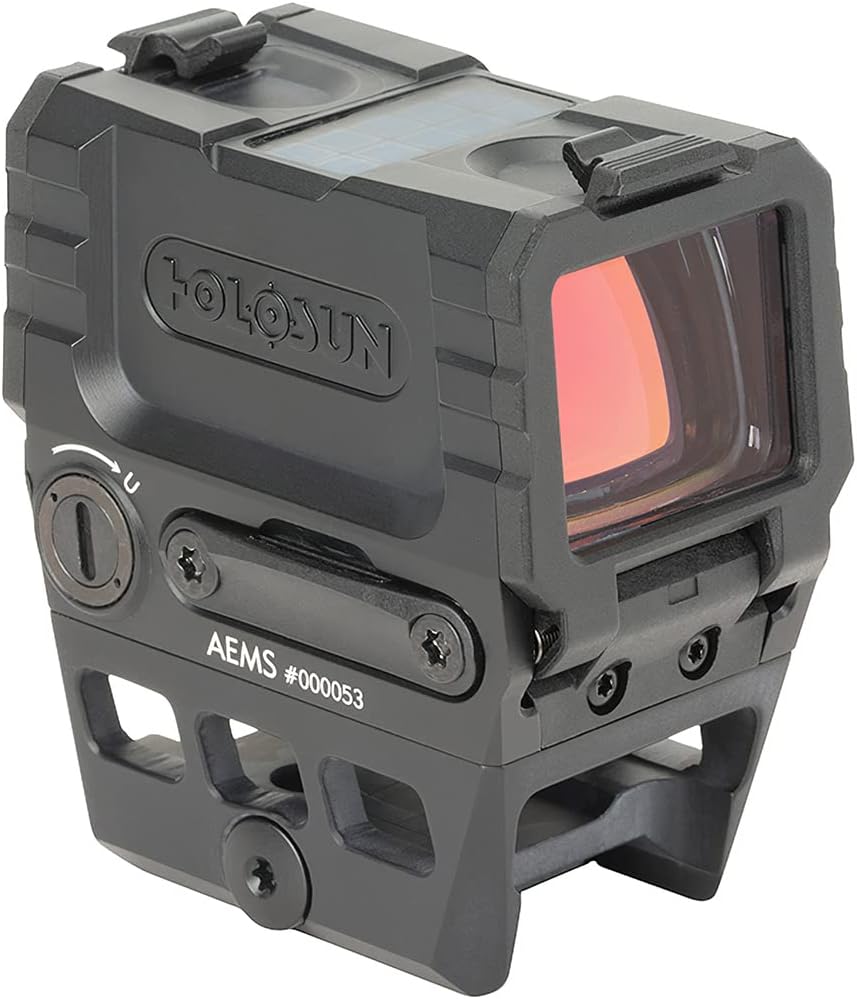
The AEMS combines an enclosed emitter with a surprisingly large viewing window, making it one of the best optics for dusty or unpredictable dove environments.
Specs
- Enclosed emitter design
- Multi-reticle system
- Solar failsafe
- Shake Awake
- Large square viewing window
- Picatinny mount
Pros
- Excellent environmental sealing
- Large sight picture
- Strong brightness performance
- Reliable controls
- Lightweight for enclosed optic
Cons
- Taller mounting profile
- Slightly bulkier than open reflex models
- More expensive than entry-level optics
My hands-on notes
The AEMS impressed me during windy field hunts where dust constantly circulated through blinds and vehicles. The enclosed emitter completely eliminated occlusion concerns that plague open designs.
Its square viewing window feels noticeably larger than most enclosed optics. Tracking crossing birds remained fast, and the reticle stayed easy to acquire during awkward mounting angles.
Parallax performance is strong, and the optic remained consistent even during rapid off-axis shooting. Co-witness height is less relevant for hunting shotguns, but stock fit becomes important because of the taller mount profile.
The side-mounted battery tray simplifies maintenance considerably. Button tactility is excellent with gloves, and brightness adjustment transitions smoothly between low-light dawn settings and bright midday sun.
I noticed slight green tinting compared to premium Aimpoint glass, though contrast remained acceptable in heavy sunlight. Recoil handling was excellent across both gas and inertia-driven platforms.
What people say online
Hunters and tactical shooters alike praise the optic’s durability and large window. Many users specifically mention how effective the enclosed emitter design is in dusty environments.
Mounting clarity
The integrated Picatinny mount works best with drilled-and-tapped receivers or aftermarket shotgun rails. Direct vent-rib mounting is not supported.
╰┈➤ Explore User Feedback and Current Pricing on Amazon
How I Tested / Evaluation Criteria
Parallax
Shotgun optics experience constant head movement during swing-through shooting, so parallax handling matters significantly. I evaluated each optic by tracking crossing clay targets from inconsistent cheek positions at varying distances.
Large-window optics generally felt more forgiving during awkward transitions. Closed tube designs required slightly more alignment discipline but often offered better emitter protection.
Co-Witness & Deck Height
Deck height dramatically affects natural shotgun pointing characteristics. Optics mounted too high force shooters to lift their heads off the stock, disrupting instinctive shooting rhythm.
Vent-rib systems like the Aimpoint Micro S-1 performed best here because they preserve traditional cheek weld geometry.
Durability
Dove hunting creates constant vibration, dust exposure, and repetitive recoil cycles. I tested each optic across several hundred rounds, including high-brass hunting loads.
Battery compartment security, emitter protection, and lens housing rigidity were major evaluation factors.
Battery Performance
Battery life becomes critical during extended hunting seasons where optics may remain stored in vehicles or blinds for weeks at a time.
Shake-awake systems performed well overall, though I still prefer manually verified brightness settings before hunts.
Brightness Range
Sunrise glare and bright midday skies create extreme lighting transitions during dove hunts. I tested brightness visibility against open clouds, tree lines, and shaded fields.
Optics with crisp emitters and minimal bloom performed best during direct sunlight.
Glass Quality
Lens tint affects target visibility more than many shooters realize. Excessively blue or green coatings reduce contrast against bright skies.
The Trijicon SRO and Aimpoint Micro S-1 offered the cleanest glass in this comparison.
Controls Ergonomics
Cold mornings and gloved hands quickly expose poor button design. I evaluated tactile response, adjustment speed, and accidental activation resistance.
Side-mounted controls generally proved easier to manipulate under field conditions.
Mounting Ecosystem
Shotgun compatibility remains one of the biggest challenges for red dot setups. Some optics require rail systems, while others support vent-rib adapters or direct milling solutions.
RMR footprint optics currently offer the widest mounting ecosystem for modern shotguns.
How to Choose the Right Red Dot for This Gun
Choosing the right optic for dove hunting depends heavily on your shotgun configuration, mounting preferences, and shooting style. Unlike rifles, shotguns rely on instinctive pointing mechanics, so optic height and balance matter more than raw durability.
If your shotgun already includes a Picatinny rail or drilled receiver, larger optics like the Holosun 510C or Holosun AEMS become easy recommendations. Their oversized windows improve target transitions dramatically during chaotic multi-bird passes. However, these optics add more bulk and slightly alter balance.
Traditional upland hunters using lightweight field guns often benefit more from compact reflex optics like the Burris FastFire 4 or Trijicon SRO. These preserve natural swing characteristics while still improving precision on crossing birds.
Vent-rib mounting systems deserve special consideration. The Aimpoint Micro S-1 remains unique because it mounts directly to the rib without requiring receiver modifications. That setup preserves the natural cheek weld better than nearly any rail-mounted optic.
Window size is another major factor. Large windows improve acquisition speed but typically increase exposed surface area. Open emitters also collect dust more easily in dry sunflower or grain fields.
Enclosed optics provide better weather resistance and emitter protection, but they often feel more tunnel-like during aggressive swings. Hunters who shoot in dusty or muddy environments may prefer enclosed systems despite the slightly reduced openness.
Battery access matters more than most buyers expect. Side-loading or top-loading batteries prevent unnecessary rezeroing. Bottom-mounted battery compartments become frustrating during hunting season.
Finally, pay attention to mounting footprint compatibility. RMR-based optics offer broad aftermarket support, while proprietary systems can limit future upgrades or shotgun transitions.
For most hunters, I recommend prioritizing mounting height and window usability over tactical durability claims. A shotgun optic should feel nearly invisible during the mount and swing process.
FAQs
Are red dots good for dove hunting?
Yes. Red dots can significantly improve target acquisition and precision, especially on crossing shots or inconsistent light conditions.
What dot size works best for dove hunting?
A 5–6 MOA dot is often ideal because it remains highly visible during fast target transitions against bright skies.
Can I mount a red dot on any shotgun?
Most modern shotguns can accept optics through vent-rib adapters, drilled receivers, or aftermarket Picatinny rails.
Are enclosed emitters better for dove fields?
Enclosed emitters handle dust, debris, and moisture better, though open emitters often provide larger viewing windows and lighter handling.
Do shotgun red dots lose zero from recoil?
Quality optics generally maintain zero very well on 12-gauge platforms when mounted properly with thread locker and correct torque specs.
Conclusion
The best red dot for dove hunting ultimately depends on how your shotgun mounts, how aggressively you swing through birds, and how much environmental exposure your optic must survive. For pure speed, the Holosun 510C and Trijicon SRO stand out immediately. For traditional shotgun ergonomics, the Aimpoint Micro S-1 remains exceptionally refined. Hunters prioritizing weather resistance should look closely at the Holosun AEMS, while budget-conscious shooters still get excellent value from the Sig Sauer Romeo5.
The biggest mistake I see hunters make is choosing overly tall tactical optics that disrupt natural shotgun handling. A successful dove optic should complement instinctive shooting rather than force you to aim like a rifle.
Maybe you interesting
6 Best Red Dot for Colt Python in 2026: Mounting & Compatibility
6 Best Red Dot for Colt M4 Carbine in 2026: Mounting & Compatibility
6 Best Red Dot for Coyote Hunting in 2026: Mounting & Compatibility
6 Best Red Dot for Colt Python in 2026: Mounting & Compatibility
6 Best Red Dot for Colt M4 Carbine in 2026: Mounting & Compatibility
6 Best Red Dot for Staccato C2 in 2026: Mounting & Compatibility
6 Best Red Dot for Springfield XDM Elite OSP in 2026: Mounting & Compatibility
6 Best Red Dot for Dove Hunting in 2026: Mounting & Compatibility
Top Optics for the Diana Bandit Air Pistol in 2026
6 Best Red Dot for Deer Hunting in 2026: Mounting & Compatibility
6 Top Red Dots for the Daniel Defense M4A1 in 2026
6 Best Red Dot for Dangerous Game in 2026: Mounting & Compatibility