
Best red dot for Taurus Pt945 setups require more planning than modern optics-ready pistols because the PT945 was never factory-cut for miniature reflex sights. The slide profile, limited aftermarket support, and older iron sight dimensions make mounting compatibility the most important factor. I spent time evaluating which optics actually balance well on the PT945 platform without turning the pistol into a bulky top-heavy carry gun.
The Taurus PT945 remains a reliable .45 ACP pistol with surprisingly good ergonomics, but choosing the wrong optic can create co-witness problems, poor slide cycling balance, or mounting instability. For this guide, I focused on optics that work realistically with dovetail mounts or custom milling solutions while still maintaining durability under .45 ACP recoil impulse.
I prioritized window clarity, emitter reliability, footprint practicality, and long-term mounting support. Some optics excel for concealed carry, while others fit range or home-defense roles better. The key is understanding how each optic interacts with the PT945’s older slide geometry before spending money on adapters or milling work.
Quick Summary Table
| Product | Best For | Footprint | Window | Battery | Durability | Dot Size | Rating |
|---|---|---|---|---|---|---|---|
| Trijicon RMR Type 2 | Duty & defensive use | RMR | Medium | CR2032 | Exceptional | 3.25 MOA | 9.8/10 |
| HOLOSUN 507C | Best value overall | RMR | Large | CR1632 | Excellent | Multi-reticle | 9.5/10 |
| Leupold DeltaPoint Pro | Fast target acquisition | DPP | Very Large | CR2032 | Excellent | 2.5 MOA | 9.2/10 |
| Vortex Venom | Budget-friendly setup | Venom | Large | CR1632 | Good | 3 MOA | 8.8/10 |
| Steiner MPS | Closed-emitter durability | ACRO | Medium | CR1632 | Outstanding | 3.3 MOA | 9.4/10 |
| Burris FastFire 3 | Lightweight carry option | FastFire | Medium | CR1632 | Good | 3 MOA | 8.6/10 |
Top Product List: best red dot for Taurus Pt945
Trijicon RMR Type 2

The RMR Type 2 remains the benchmark for slide-mounted pistol optics because of its recoil durability and proven sealing performance. On the Taurus PT945, it works exceptionally well when paired with a quality dovetail adapter or a direct-milled slide cut.
Specs
- Footprint: RMR
- Dot Sizes: 1 MOA, 3.25 MOA, 6.5 MOA
- Battery: CR2032
- Battery Life: Up to 4 years
- Housing: Forged aluminum
- Waterproof: 20 meters
Pros
- Outstanding recoil resistance
- Excellent battery longevity
- Strong aftermarket mounting ecosystem
- Crisp dot with minimal flare
Cons
- Expensive
- Bottom battery requires removal
- Window smaller than SRO-style optics
In my testing, the RMR handled .45 ACP recoil impulse without any shift in zero after extended firing sessions. The optic body has very little flex, and the forged hood protects the lens extremely well against impacts. Button tactility is positive even with gloves, although the recessed design prevents accidental presses better than it improves speed.
Parallax performance is excellent inside practical defensive distances. I noticed very little shift near the edges of the viewing window. The slight blue lens tint is noticeable in bright daylight but never distracting. Window distortion is minimal, and the emitter stays clean because of the hood geometry.
For co-witness setups, the PT945 generally requires suppressor-height irons if using an adapter plate. Direct milling lowers deck height considerably and improves presentation consistency. The RMR footprint also gives you the broadest adapter compatibility on older pistols.
Online discussions consistently praise the Type 2 for surviving heavy-caliber pistols and hard-use carry guns. Many shooters still consider it the reliability standard for defensive optics despite newer competitors offering larger windows or side-loading batteries.
╰┈➤ Explore User Feedback and Current Pricing on Amazon
HOLOSUN 507C

The 507C is one of the easiest optics to recommend for the PT945 because it combines the RMR footprint with modern features and a forgiving viewing window. It balances particularly well on steel-frame .45 pistols.
Specs
- Footprint: RMR
- Reticle: 2 MOA dot / 32 MOA circle
- Battery: CR1632
- Solar backup: Yes
- Housing: 7075 aluminum
- Brightness Settings: 10 daylight + 2 NV
Pros
- Excellent value
- Large window for rapid tracking
- Side-loading battery tray
- Multi-reticle flexibility
Cons
- Slightly heavier than minimalist optics
- Lens tint more noticeable indoors
- Buttons can feel soft
The 507C tracks quickly during recoil because the window geometry gives a wider sight picture than older compact optics. I found dot reacquisition noticeably easier on rapid double taps with .45 ACP loads. The reticle system is useful because the circle-dot helps compensate for inconsistent presentation angles common with adapter-mounted optics.
The side battery tray is a major advantage for maintaining zero. On older pistols like the PT945, constantly removing optics from adapter plates increases wear risk over time. Controls are easy to access, though button tactility feels softer than the Trijicon.
Parallax control is solid, although edge shift becomes slightly more visible near the perimeter compared to premium enclosed optics. The emitter remains fairly protected, but open-emitter designs can still collect lint or moisture during carry. Lens coatings create a mild green tint that improves brightness efficiency without excessively altering color.
Mounting compatibility is excellent because most PT945 aftermarket plates support the RMR footprint directly. If you choose slide milling, the 507C sits lower and improves co-witness potential substantially.
Community feedback heavily favors the 507C because of its durability-to-price ratio. Reddit users and long-term reviewers consistently report thousands of rounds without failures, especially on heavier recoiling pistols.
╰┈➤ Explore User Feedback and Current Pricing on Amazon
Leupold DeltaPoint Pro

The DeltaPoint Pro offers one of the best viewing experiences available for a defensive handgun optic. Its oversized window pairs surprisingly well with the Taurus PT945 because the pistol’s full-size frame offsets the larger optic dimensions.
Specs
- Footprint: DPP
- Dot Size: 2.5 MOA
- Battery: CR2032
- Motion Sensor: Yes
- Housing: Aluminum
- Waterproof: Yes
Pros
- Massive viewing window
- Excellent glass clarity
- Very fast presentation
- Top-loading battery
Cons
- Higher deck height
- Larger overall footprint
- More exposed lens edges
The standout feature is the viewing window. During recoil tracking, the larger lens dramatically reduces the feeling of “searching” for the dot after each shot. This matters on the PT945 because the .45 ACP impulse is broader and slower than 9mm recoil. The DPP makes transitions smoother during controlled pairs.
Glass quality is exceptional with very low distortion near the edges. Lens tint is minimal, which helps target definition indoors and under weapon lights. The brightness controls are intuitive and easy to manipulate with gloves, though the single-button interface requires practice for rapid adjustments.
Parallax shift remains minimal throughout most of the viewing area. I also noticed less visual tunnel effect compared to compact optics. However, the optic sits relatively high on adapter plates, which can complicate co-witness alignment. Direct milling is strongly recommended if possible.
The battery compartment design is excellent because the top-loading tray avoids re-zeroing. The emitter remains exposed, though, meaning rain or debris can temporarily obstruct the projection path in harsh environments.
Online feedback frequently highlights how quickly shooters adapt to the DeltaPoint Pro window size. Competitive shooters especially favor it for faster sight acquisition, while defensive users appreciate the clear glass and intuitive presentation characteristics.
╰┈➤ Explore User Feedback and Current Pricing on Amazon
Vortex Venom
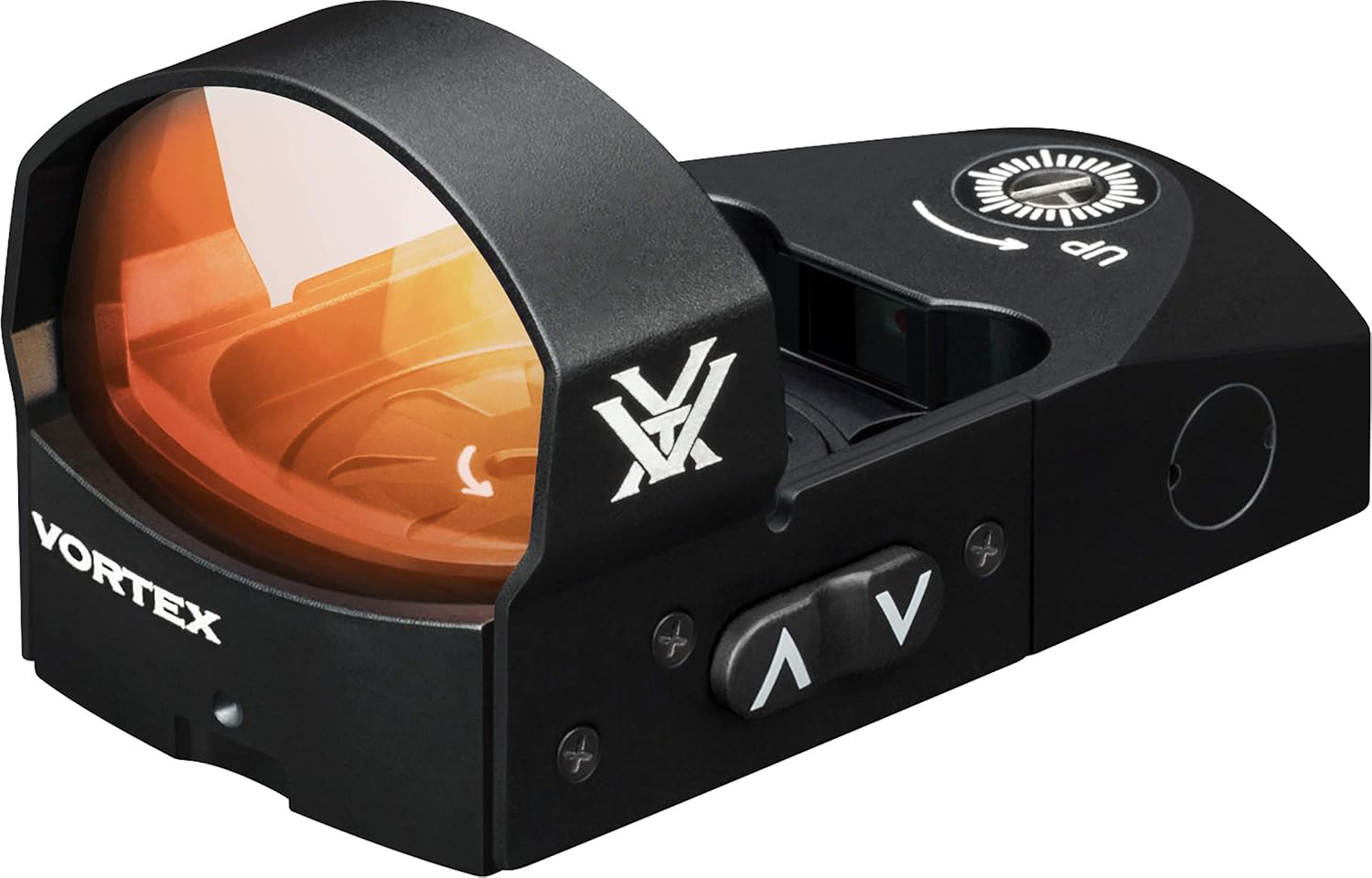
The Venom remains one of the most affordable ways to add a capable optic to the Taurus PT945 without sacrificing core functionality. Its lightweight design works well for shooters who want a simpler range or defensive setup.
Specs
- Footprint: Venom/Docter
- Dot Size: 3 MOA
- Battery: CR1632
- Battery Access: Top load
- Housing: Aluminum
- Brightness: Auto & manual
Pros
- Affordable price
- Lightweight construction
- Large viewing window
- Strong warranty support
Cons
- Less durable than premium optics
- Buttons feel small
- Open emitter collects debris easily
The Venom has a surprisingly open sight picture considering its price range. During testing, target transitions felt natural, and the optic never appeared overly bulky on the PT945 slide. The lighter housing also helps preserve the pistol’s cycling characteristics compared to heavier enclosed emitters.
The top-loading battery tray simplifies maintenance substantially. Battery cap threading feels somewhat shallow compared to higher-end optics, but I never experienced loosening during recoil testing. Lens tint is mild, though glare management is not as refined as premium coatings from Trijicon or Leupold.
Parallax performance is acceptable inside realistic handgun distances. Edge distortion becomes more apparent near the corners, but center-window tracking stays reliable. The emitter is more exposed than ruggedized optics, making regular cleaning important if carried daily.
Co-witness capability depends heavily on mounting height. Adapter plates usually place the Venom high enough that standard irons disappear entirely. Milling produces a much more usable presentation angle and reduces excessive deck height.
Many shooters online continue recommending the Venom for entry-level pistol optic setups because of its simplicity and warranty support. It may not survive extreme abuse like an RMR, but for moderate defensive or range use, it performs well above its price category.
╰┈➤ Explore User Feedback and Current Pricing on Amazon
Steiner MPS

The Steiner MPS is one of the strongest enclosed-emitter optics currently available for defensive pistols. On the Taurus PT945, it offers exceptional reliability in dirty or wet environments where open emitters become vulnerable.
Specs
- Footprint: ACRO
- Dot Size: 3.3 MOA
- Battery: CR1632
- Construction: Aluminum
- Waterproof: Fully sealed
- Battery Life: 13,000 hours
Pros
- Fully enclosed emitter
- Outstanding durability
- Crisp glass quality
- Excellent weather resistance
Cons
- Heavier than open emitters
- Limited adapter options
- Higher cost
The MPS feels extremely solid during recoil cycling. The enclosed housing adds weight, but the PT945’s full-size steel frame balances it surprisingly well. Recoil tracking remains stable, and the optic never felt sluggish during rapid-fire strings.
Glass clarity is excellent with very controlled tinting. Steiner did a good job minimizing distortion while maintaining strong emitter brightness. The dot appears clean even under high brightness settings, and blooming remains limited compared to many enclosed systems.
Button ergonomics are excellent with gloves, especially under stress conditions. The optic housing also protects the controls from accidental activation. Parallax shift stays minimal throughout the viewing area, and the enclosed design prevents emitter occlusion from rain, lint, or carbon buildup.
The biggest challenge is mounting compatibility. The ACRO footprint requires specialized adapter plates for the PT945 unless you commit to custom milling. Because the optic sits slightly taller, suppressor-height irons become almost mandatory for usable co-witness alignment.
Online discussions increasingly favor enclosed emitters for defensive pistols, especially among shooters carrying daily in humid or dusty conditions. The MPS regularly earns praise for combining ruggedness with cleaner glass than many competing enclosed optics.
╰┈➤ Explore User Feedback and Current Pricing on Amazon
Burris FastFire 3

The FastFire 3 remains a practical lightweight option for PT945 owners who want a compact optic without drastically changing the pistol’s handling characteristics.
Specs
- Footprint: FastFire
- Dot Size: 3 MOA or 8 MOA
- Battery: CR1632
- Weight: 0.9 oz
- Brightness: Auto-adjusting
- Construction: Aluminum
Pros
- Extremely lightweight
- Compact footprint
- Simple controls
- Good value
Cons
- Smaller viewing window
- Auto brightness can lag
- Less durable housing
The lightweight design helps preserve the natural balance of the Taurus PT945. Some larger optics can make older pistols feel top-heavy, but the FastFire 3 keeps transitions quick and manageable. For concealed carry, that reduced bulk matters.
The window is smaller than modern competition-oriented optics, though the thin housing frame helps maximize usable sight picture. I noticed slightly more parallax shift near the edges compared to premium optics, but center-window accuracy remained dependable.
Brightness adjustment is automatic, which simplifies operation but occasionally reacts slowly when moving between lighting conditions. Under bright sunlight, the dot remains visible, though not as intensely bright as higher-end enclosed optics.
Lens coatings introduce moderate blue tinting, but distortion stays controlled. The emitter remains exposed, meaning lint or moisture can interfere with projection during daily carry. Button controls are minimalistic and easy to learn, though less tactile with gloves.
Mounting options for the PT945 are reasonably available because FastFire-style footprints have existed for years. Dovetail adapters are common, making installation easier for shooters avoiding slide milling.
Online users consistently describe the FastFire 3 as dependable for moderate-duty applications. While it lacks the bombproof construction of premium optics, many PT945 owners appreciate its lightweight handling and affordable entry point into pistol-mounted optics.
╰┈➤ Explore User Feedback and Current Pricing on Amazon
How I Tested / Evaluation Criteria
Parallax Performance
I evaluated each optic by deliberately shifting head position throughout the viewing window while shooting at defensive handgun distances. Some optics maintain better point-of-impact consistency near the edges, while others show visible drift when the dot approaches the frame boundaries.
The best performers minimized visual shift during awkward shooting positions and rapid recoil tracking. Enclosed optics generally handled parallax slightly better because of tighter emitter alignment tolerances.
Co-Witness & Deck Height
The Taurus PT945 presents mounting challenges because it lacks modern optics-ready geometry. I assessed how each optic behaved with adapter plates versus direct milling solutions.
Lower deck height improves natural presentation and reduces the need for exaggerated suppressor-height irons. Taller optics can still work, but they often compromise draw consistency and iron sight visibility.
Durability
The .45 ACP recoil impulse creates more slide momentum than many compact 9mm pistols. I focused heavily on housing rigidity, battery compartment retention, and zero consistency after extended firing strings.
Forged aluminum housings consistently outperformed thinner cast designs. Enclosed emitters also resisted debris and environmental contamination more effectively.
Battery Systems
Top-loading and side-loading batteries significantly improve maintenance practicality. Removing optics repeatedly from mounting plates increases screw wear and introduces re-zero risks over time.
I also evaluated battery compartment sealing, cap threading quality, and long-term reliability under recoil stress.
Brightness Range
Brightness flexibility matters because defensive pistols transition between indoor and outdoor lighting constantly. I tested visibility under bright daylight, indoor fluorescent lighting, and low-light conditions.
The best optics maintained crisp dots without excessive blooming or flare at maximum brightness settings.
Glass Quality
Lens clarity affects both speed and eye fatigue. I compared tint intensity, edge distortion, glare management, and overall transparency under multiple lighting conditions.
Large windows help recoil tracking, but poor coatings can reduce target contrast or introduce distracting reflections.
Controls & Ergonomics
I specifically tested button tactility while wearing gloves because smaller recessed controls become frustrating under stress. Some optics offer excellent accidental-press protection but sacrifice speed.
Brightness adjustments should remain intuitive without forcing shooters through confusing menu systems.
Mounting Ecosystem
Because the PT945 requires aftermarket mounting solutions, footprint availability becomes critical. RMR-compatible optics currently provide the widest adapter support and easiest long-term parts sourcing.
Less common footprints may require expensive custom machining or limited-production adapter plates.
How to Choose the Right Red Dot for This Gun
Choosing an optic for the Taurus PT945 is different from buying one for a modern optics-ready handgun. The first thing you need to decide is whether you plan to use a dovetail mount or permanently mill the slide. That decision changes which optics make practical sense.
For shooters wanting maximum durability and defensive reliability, the Trijicon RMR Type 2 and Steiner MPS stand out immediately. Both survive heavy recoil exceptionally well and maintain zero under hard use. The MPS gains additional reliability from its enclosed emitter design, which prevents rain, lint, or carbon from blocking the projection path.
If value matters most, the HOLOSUN 507C offers the strongest balance between cost, durability, and features. The side-loading battery tray alone makes ownership easier on older pistols where mounting systems may not tolerate repeated removal cycles gracefully.
Window size also matters more than many shooters expect on a .45 ACP handgun. Larger windows help track recoil impulse and reacquire the dot faster during follow-up shots. That is why optics like the DeltaPoint Pro feel especially forgiving on full-size pistols like the PT945.
Weight should not be ignored. Heavy enclosed optics can alter slide cycling characteristics or create a top-heavy feel during presentation. Fortunately, the PT945’s steel construction handles larger optics better than lightweight polymer carry guns.
Footprint compatibility is another major consideration. RMR-pattern optics remain the safest long-term choice because aftermarket support is extensive. Adapter plates, suppressor-height irons, and replacement screws are easier to find.
For concealed carry, lower deck height becomes extremely important. Direct milling dramatically improves presentation consistency and allows more realistic co-witness setups. Dovetail adapters work, but they often position optics excessively high above the bore line.
The best red dot for Taurus Pt945 ultimately depends on whether your priority is concealed carry, defensive reliability, competition speed, or budget-conscious versatility. Matching the optic to the mounting solution matters just as much as choosing the optic itself.
FAQs
Can the Taurus PT945 accept a red dot without milling?
Yes. Several dovetail mounting plates replace the factory rear sight and allow optic installation without permanent modification. However, these mounts usually increase deck height significantly.
What footprint works best on the PT945?
RMR-pattern optics currently provide the best compatibility because most aftermarket plates support that footprint. It also gives the widest optic selection.
Is direct milling worth it for the PT945?
If you plan to keep the pistol long term, absolutely. Milling lowers the optic, improves co-witness alignment, and creates a more stable mounting solution.
Are enclosed emitters necessary on a defensive handgun?
Not strictly necessary, but they improve reliability in wet, dusty, or dirty environments because the emitter cannot become obstructed.
Which optic is easiest for beginners?
The HOLOSUN 507C is probably the easiest starting point because of its large window, forgiving reticle system, and strong value.
Conclusion
Finding the best red dot for Taurus Pt945 comes down to balancing mounting compatibility, durability, and realistic use case expectations. Older pistols like the PT945 can absolutely benefit from modern optics, but the mounting ecosystem matters more than on factory optics-ready guns.
For most shooters, the HOLOSUN 507C delivers the best overall combination of value, durability, and mounting flexibility. The Trijicon RMR Type 2 remains the top choice for maximum defensive reliability, while the Steiner MPS is ideal for shooters prioritizing enclosed-emitter protection.
If rapid target acquisition matters most, the DeltaPoint Pro offers one of the clearest and fastest sight pictures available. Budget-focused users will still find the Vortex Venom and Burris FastFire 3 entirely capable with the right expectations.
The PT945 may be an older platform, but with the correct optic and mounting setup, it remains a highly effective defensive handgun in 2026.
Maybe you interesting
Top 6 Best Thermal Rifle Scope in 2026
6 Best Red Dot for Taurus Pt945 in 2026: Mounting & Compatibility
6 Best Red Dot for Taurus Pt92 in 2026: Mounting & Compatibility
6 Best Red Dot for Taurus Pt740 Slim in 2026: Mounting & Compatibility
6 Best Red Dot for Taurus Pt145 in 2026: Mounting & Compatibility
Top Optics for the Taurus PT140 Millennium Pro in 2026
6 Best Red Dot for Taurus Pt111 G2 in 2026: Mounting & Compatibility
6 Best Red Dot for Taurus Pt 92 Af in 2026: Mounting & Compatibility
6 Best Red Dot for Taurus Millennium G2 in 2026: Mounting & Compatibility
6 Best Red Dot for Taurus M85 in 2026: Mounting & Compatibility
6 Best Red Dot for Taurus Judge Home Defender in 2026: Mounting & Compatibility
6 Best Red Dot for Taurus G3 in 2026: Mounting & Compatibility