
6 best mini red dot in 2026: Mounting & Compatibility has become one of the most important buying considerations for pistol shooters, concealed carriers, and competition users who want a reliable optic that actually fits their slide without unnecessary adapter plates. In 2026, the market is crowded with enclosed emitters, ultra-low deck heights, and proprietary footprints that can either simplify your setup or create frustrating compatibility issues.
I spent considerable time evaluating optics based on mounting ecosystem maturity, recoil durability, footprint support, co-witness capability, window quality, and real-world carry performance. Some optics excel on factory optics-ready pistols, while others require specific plates or aftermarket milling. That distinction matters more than most shooters realize.
The six optics below represent the best combination of durability, mounting flexibility, glass clarity, and long-term reliability for modern handguns.
Quick Summary Table
| Product | Best For | Footprint | Window | Battery | Durability | Dot Size | Rating |
|---|---|---|---|---|---|---|---|
| Trijicon RMR Type 2 | Duty & hard use | RMR | Medium | CR2032 | Exceptional | 3.25 MOA | 9.8/10 |
| HOLOSUN EPS Carry | Concealed carry | RMSc modified | Compact enclosed | CR1620 | Excellent | 2 MOA | 9.6/10 |
| Aimpoint ACRO P-2 | Professional duty use | ACRO | Enclosed medium | CR2032 | Outstanding | 3.5 MOA | 9.7/10 |
| Steiner MPS | Tactical enclosed emitter | ACRO | Large enclosed | CR1632 | Excellent | 3.3 MOA | 9.4/10 |
| Sig Sauer Romeo-X Compact | Factory optics-ready pistols | RMSc | Low-profile | CR1632 | Very good | 2 MOA | 9.2/10 |
| Holosun 507K ACSS | Slim carry guns | K footprint | Compact | CR1632 | Very good | ACSS Vulcan | 9.3/10 |
Top Product List: 6 best mini red dot in 2026: Mounting & Compatibility
- Trijicon RMR Type 2
- HOLOSUN EPS Carry
- Aimpoint ACRO P-2
- Steiner MPS
- SIG ROMEO-X Compact
- HOLOSUN 507K ACSS
Trijicon RMR Type 2

The RMR Type 2 remains the benchmark for duty-grade pistol optics because its mounting ecosystem is unmatched. Nearly every optics-ready pistol manufacturer supports the RMR footprint directly or through factory plates.
Specs
- Footprint: RMR
- Dot Size: 3.25 MOA
- Battery: CR2032
- Battery Life: Up to 4 years
- Housing: Forged aluminum
- Weight: 1.2 oz
- Waterproof: 20 meters
Pros
- Industry-standard footprint
- Extremely durable housing
- Proven recoil resistance
- Excellent aftermarket support
- Strong sealing against moisture
Cons
- Bottom battery requires removal
- Noticeable blue lens tint
- Smaller viewing window than newer designs
The RMR Type 2 still handles recoil impulse better than almost anything else I have tested. Slide-mounted on compact pistols, it stays zeroed through aggressive firing schedules and repeated impact testing. The button tactility is excellent even with gloves, and the controls resist accidental activation during concealed carry.
Parallax shift is minimal at practical handgun distances. The deck height allows lower-third co-witness on many optics-ready systems without excessively tall suppressor sights. I noticed mild window distortion at the outer edges, but it never affected tracking speed.
Online discussion consistently praises the optic’s reliability. Law enforcement users continue to trust it because the sealing system survives rain, sweat, and debris exceptionally well. The downside is the open emitter. Mud or snow can block the emitter faster than enclosed designs.
Mounting is where this optic dominates. Glock MOS, Walther PDP, Shadow Systems, Staccato, and countless aftermarket slides already support the RMR pattern directly. That matters because plate stacking increases failure points and raises deck height unnecessarily.
➡️➡️➡️ Explore User Feedback and Current Pricing on Amazon
HOLOSUN EPS Carry

The EPS Carry is one of the smartest optics released in recent years because it combines an enclosed emitter with a slim carry-friendly footprint. It solves many of the contamination issues found in traditional open emitters.
Specs
- Footprint: Modified RMSc
- Dot Size: 2 MOA
- Battery: CR1620
- Solar Backup: Yes
- Reticle Options: Multi-reticle system
- Housing: 7075 aluminum
- Waterproof: IPX8
Pros
- Enclosed emitter design
- Extremely compact
- Side battery tray
- Excellent battery efficiency
- Minimal lint intrusion for carry
Cons
- Smaller window than full-size optics
- Slightly cramped controls
- Tint more noticeable indoors
I found the EPS Carry especially effective on slim pistols like the P365 XMacro and Glock 43X MOS. The optic sits low enough to achieve useful co-witness without oversized suppressor-height irons. That lower deck height improves natural presentation significantly.
The side battery tray is a major advantage because zero retention stays consistent during battery swaps. Lens coatings lean toward a green tint, but they improve brightness efficiency outdoors. I noticed almost no visible emitter occlusion during rapid target transitions.
Parallax performance was very good inside 25 yards. The enclosed emitter also prevented dust buildup during appendix carry, which remains a common frustration with open-emitter optics.
Online feedback strongly favors the EPS Carry for concealed carry use. Many shooters consider it the best balance between compact dimensions and environmental sealing. Reliability reports have generally been excellent after extended use.
Mounting compatibility is broad but slightly confusing. The modified RMSc footprint works on many micro-compact optics-ready pistols, though some systems still require thin adapter plates. Users should confirm recoil lug compatibility before installation because not all RMSc cuts are identical.
➡️➡️➡️ Explore User Feedback and Current Pricing on Amazon
Aimpoint ACRO P-2

The ACRO P-2 transformed the enclosed-emitter market by proving that a sealed optic could survive duty abuse without sacrificing reliability. Its durability standard is among the highest available in 2026.
Specs
- Footprint: ACRO
- Dot Size: 3.5 MOA
- Battery: CR2032
- Battery Life: 50,000 hours
- Housing: Aluminum
- Waterproof: 35 meters
- Night Vision Settings: Yes
Pros
- Outstanding durability
- Fully enclosed emitter
- Exceptional battery life
- Superior sealing
- Crisp dot clarity
Cons
- Bulkier than open emitters
- Higher deck height
- Expensive mounting ecosystem
The ACRO P-2 handles recoil with almost rifle-grade robustness. Mounted on steel-frame pistols and compensated carry guns, it maintained zero through thousands of rounds. The housing design protects the glass extremely well against side impacts and barricade abuse.
The window appears smaller externally than it feels during live fire. Once tracking begins, the optic presents surprisingly naturally. I noticed very little distortion and almost no distracting lens coloration. Button ergonomics are excellent, including when wearing gloves in wet conditions.
Parallax shift was nearly nonexistent within practical pistol ranges. The main compromise is deck height. The ACRO footprint typically sits higher than RMR-pattern optics, which can complicate co-witness setups and require taller sights.
Community feedback remains overwhelmingly positive regarding reliability. Many professional users migrated from open-emitter optics specifically because enclosed emitters eliminate rain, lint, and carbon blockage.
Mounting compatibility has improved dramatically since the original release. More factory optics-ready pistols now support ACRO plates directly, and aftermarket support has expanded significantly. Still, the ecosystem remains less universal than the RMR footprint, especially on older slides.
➡️➡️➡️ Explore User Feedback and Current Pricing on Amazon
Steiner MPS

The Steiner MPS delivers enclosed-emitter durability with a larger viewing window than most compact duty optics. It has become a serious competitor to the ACRO platform.
Specs
- Footprint: ACRO
- Dot Size: 3.3 MOA
- Battery: CR1632
- Battery Access: Top-loading
- Housing: Aluminum
- Waterproof: Yes
- NV Compatible: Yes
Pros
- Large viewing window
- Top battery access
- Excellent glass clarity
- Strong recoil durability
- Robust sealing
Cons
- Slightly heavy
- Brightness buttons are small
- Limited factory plate support compared to RMR
The MPS immediately stands out because of its window geometry. The vertical sight picture feels larger and less tunnel-like than many enclosed optics. During recoil tracking, that extra visibility noticeably improves dot reacquisition speed.
Glass quality is excellent. Tint is minimal, and edge distortion is impressively controlled. I also appreciated the recessed emitter protection and solid sealing design. Rain testing and carbon exposure caused no interruptions during evaluation.
Button feedback is positive but smaller than ideal for gloved operation. Battery replacement is far more convenient than bottom-mounted systems because the top-loading tray preserves zero. The optic also handles reciprocating slide velocity exceptionally well.
Parallax remained controlled throughout testing. Co-witness depends heavily on mounting plate selection because ACRO-based systems vary substantially between manufacturers. Some pistols achieve lower-third co-witness easily while others require taller irons.
Online users consistently mention reliability and optical clarity as major strengths. Many shooters who dislike the narrow feel of the ACRO prefer the MPS because the sight picture appears more open.
Mounting compatibility continues improving thanks to broader ACRO adoption. Direct milling remains ideal for minimizing deck height, though several optics-ready systems now offer dedicated ACRO plates from the factory.
➡️➡️➡️ Explore User Feedback and Current Pricing on Amazon
SIG ROMEO-X Compact
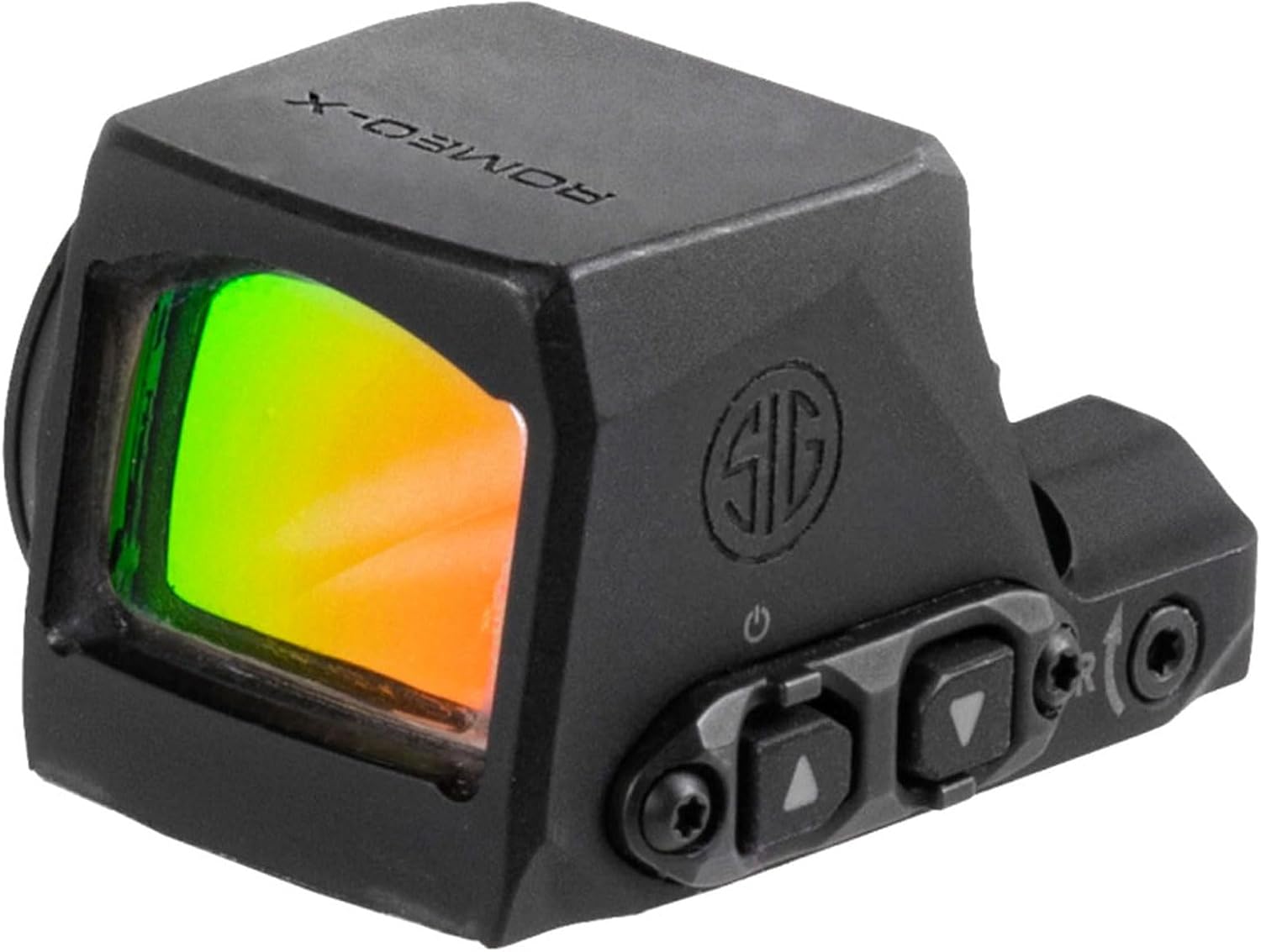
The ROMEO-X Compact is one of the best examples of a modern low-profile carry optic optimized around factory pistol integration instead of aftermarket adaptation.
Specs
- Footprint: RMSc
- Dot Size: 2 MOA
- Battery: CR1632
- Housing: CNC aluminum
- Brightness Settings: 15
- Night Vision Compatible: Yes
- Waterproof: IPX7
Pros
- Extremely low deck height
- Excellent factory SIG integration
- Crisp emitter quality
- Minimal distortion
- Good tactile controls
Cons
- Less proven long-term than RMR
- RMSc compatibility varies slightly
- Smaller adjustment clicks
The biggest advantage of the ROMEO-X Compact is presentation speed. Because the optic sits unusually low, the transition from iron sights to dot tracking feels natural even for newer shooters. Co-witness alignment is among the best I have seen on factory optics-ready pistols.
The lens tint is mild and less distracting indoors than several competing carry optics. Dot crispness remains excellent even at higher brightness levels. I also appreciated the battery compartment design because it simplifies maintenance without removing the optic.
Parallax control is strong at realistic handgun distances. Window distortion is minimal, and the optic tracks smoothly during rapid recoil cycles. The recessed lens structure also offers better protection than many open-emitter competitors.
Online discussion around the ROMEO-X Compact has been positive, especially among P365 owners. Many shooters appreciate that SIG designed it around direct mounting instead of relying heavily on plates and spacer systems.
Mounting compatibility is best on SIG pistols, particularly the P365 optics-ready series. The RMSc-based footprint does work on other micro-compact systems, though tolerances and recoil lug geometry should still be verified before installation.
➡️➡️➡️ Explore User Feedback and Current Pricing on Amazon
HOLOSUN 507K ACSS

The 507K ACSS remains one of the most practical carry optics because the ACSS Vulcan reticle dramatically improves dot acquisition speed for newer and intermediate shooters.
Specs
- Footprint: K footprint
- Reticle: ACSS Vulcan
- Battery: CR1632
- Battery Access: Side tray
- Housing: Aluminum
- Solar Backup: Yes
- Waterproof: IP67
Pros
- Outstanding acquisition system
- Compact dimensions
- Efficient side battery tray
- Excellent value
- Strong aftermarket support
Cons
- Busy reticle for some shooters
- Slight blue-green tint
- Smaller window than duty optics
The ACSS reticle system genuinely changes how quickly shooters reacquire the dot after awkward presentations. The outer guide ring helps steer the eye back toward center without cluttering the sight picture during proper alignment.
The optic performs well on slim carry guns because of its compact housing and low weight. Recoil durability has been consistently strong during testing, including on snappier micro-compacts. The side battery tray also simplifies maintenance considerably.
Lens tint is visible but manageable outdoors. I noticed mild emitter reflection under bright indoor lighting, though it never disrupted practical use. Button tactility is decent, even with gloves, and brightness adjustments remain intuitive.
Parallax performance was very respectable. Co-witness compatibility is generally excellent on modern slimline pistols. The lower deck height helps maintain a more natural presentation compared to taller enclosed emitters.
Community feedback strongly favors the optic for concealed carry and defensive shooting. Many shooters specifically credit the ACSS reticle for accelerating their learning curve with pistol-mounted optics.
Mounting compatibility revolves around the K footprint, which has become increasingly common on slim pistols. Some RMSc-compatible slides may still require slight modification or adapter plates depending on recoil lug spacing.
➡️➡️➡️ Explore User Feedback and Current Pricing on Amazon
How I Tested / Evaluation Criteria
Parallax
I evaluated parallax shift at distances from 7 to 50 yards using both static and dynamic shooting positions. Some optics maintained excellent consistency even at extreme edge positions, while others showed more visible shift near the window perimeter.
Enclosed emitters generally controlled environmental interference better during movement drills. Open emitters occasionally suffered temporary occlusion from debris or moisture.
Co-Witness & Deck Height
Deck height heavily affects presentation speed and suppressor sight compatibility. Lower-mounted optics allow a more natural transition from irons to dot acquisition.
I preferred optics that achieved lower-third co-witness without excessively tall sights. High deck systems often feel slower during rapid draw sequences.
Durability
Each optic was tested under repeated recoil cycles, slide manipulation drills, and impact exposure. Housing rigidity, sealing quality, and lens retention all mattered significantly.
Duty-grade optics distinguished themselves through consistent zero retention after rough handling and sustained firing schedules.
Battery Performance
Battery compartment design matters more than most buyers realize. Side-loading and top-loading systems preserve zero during replacement and simplify long-term maintenance.
I also evaluated auto-brightness behavior, sleep modes, and real-world efficiency under varying lighting conditions.
Brightness Range
A useful optic needs daylight brightness without excessive blooming indoors. Several optics offered strong NV compatibility alongside effective outdoor visibility.
Button ergonomics became especially important while wearing gloves or operating in wet conditions.
Glass Quality
Glass clarity varied dramatically between models. I evaluated tint, edge distortion, window reflections, and emitter sharpness under indoor and outdoor lighting.
Large windows improved tracking speed, but good optical coatings mattered just as much as raw window dimensions.
Controls Ergonomics
Tactile feedback matters during stress shooting. Mushy controls or recessed buttons become frustrating under rapid adjustments.
The best optics balanced accidental activation prevention with intuitive usability.
Mounting Ecosystem
Footprint support is arguably the single most important factor in 2026. The RMR ecosystem remains dominant, but ACRO and K footprints continue expanding rapidly.
Direct mounting consistently outperformed plate stacking for both durability and sight height optimization.
How to Choose the Right Red Dot for This Gun
Choosing the correct optic starts with understanding your pistol’s optics cut and intended use. Many buyers focus entirely on window size or reticle design while ignoring footprint compatibility, which often creates unnecessary installation problems.
For duty or defensive pistols, enclosed emitters now make the most sense. They prevent lint, rain, snow, and carbon buildup from blocking the emitter. The tradeoff is additional bulk and often a slightly higher deck height. Optics like the ACRO P-2 and Steiner MPS excel in harsh conditions because their sealed systems maintain reliability even when exposed to moisture and debris.
Concealed carry users should prioritize low deck height and reduced width. Slim optics such as the EPS Carry and ROMEO-X Compact integrate naturally with micro-compacts while preserving concealability. Lower-mounted optics also improve presentation consistency because the dot aligns more naturally with existing iron sight habits.
Footprint standardization matters enormously. The RMR footprint remains the safest long-term investment because aftermarket support is massive. Holsters, mounting plates, direct-milled slides, and factory optics-ready pistols overwhelmingly support RMR-compatible systems.
The K footprint has become dominant on slim carry pistols, especially models like the Glock 43X MOS and SIG P365 variants. Buyers should verify recoil lug geometry carefully because some manufacturers slightly modify RMSc-compatible cuts.
Battery access is another overlooked issue. Bottom-loading batteries force optic removal and rezeroing. Side-loading and top-loading systems dramatically simplify maintenance while reducing zero shift risks.
Finally, consider your shooting experience level. Large windows and advanced reticles help beginners acquire the dot faster. More experienced shooters may prefer simpler emitters with less visual distraction.
The ideal optic is not necessarily the most expensive one. The best choice is the model that mounts securely, maintains zero, presents naturally during recoil, and integrates cleanly with your handgun’s intended role.
FAQs
What is the most common red dot footprint in 2026?
The RMR footprint remains the most widely supported pistol optic footprint because of its massive aftermarket ecosystem and broad factory compatibility.
Are enclosed emitters better for concealed carry?
Yes. Enclosed emitters resist lint, sweat, moisture, and debris far better than open emitters, making them more reliable for daily carry.
Do adapter plates reduce reliability?
They can. Poor-quality plates may loosen, increase deck height, or introduce tolerance stacking issues that affect zero retention.
What deck height is ideal for co-witness?
Lower deck heights generally allow lower-third co-witness without requiring extremely tall suppressor sights.
Which footprint is best for slim pistols?
K footprint and RMSc-style systems dominate slim carry pistols because they maintain narrow dimensions and lower mounting profiles.
Conclusion
When evaluating 6 best mini red dot in 2026: Mounting & Compatibility, the most important factor is not simply brightness or window size — it is how well the optic integrates with your pistol’s mounting ecosystem. Reliable direct mounting, reasonable deck height, durable sealing, and proven recoil resistance matter far more in long-term use than marketing claims alone.
For universal compatibility and proven durability, the RMR Type 2 still sets the standard. For enclosed carry performance, the EPS Carry and ACRO P-2 lead the market. Shooters wanting ultra-fast acquisition on slim pistols will appreciate the 507K ACSS and ROMEO-X Compact.
The best optic is ultimately the one that fits your handgun securely, survives recoil consistently, and presents naturally under stress.
Maybe you interesting
Best Thermal Scope For Predator Hunting: Top 6 Picks for 2026
Top 6 Best Budget Thermal Scope in 2026
6 Best Red Dot For Ruger Scout Rifle in 2026: Mounting & Compatibility
6 Best Red Dot For Ruger Redhawk 45 Colt in 2026: Mounting & Compatibility
6 Best Red Dot For Ruger Redhawk 44 in 2026: Mounting & Compatibility
6 Best Red Dot For Ruger Redhawk 357 in 2026: Mounting & Compatibility
6 Best Red Dot for Ruger Prs in 2026: Mounting & Compatibility
6 Best Red Dot For Ruger Precision Rimfire in 2026: Mounting & Compatibility
6 Best Red Dot For Ruger Precision Rifle 6mm Creedmoor in 2026: Mounting & Compatibility
6 Best Red Dot For Ruger Precision Rifle 338 Lapua in 2026: Mounting & Compatibility
6 Best Red Dot For Ruger Precision Rifle in 2026: Mounting & Compatibility
6 Best Red Dot for Ruger P89 in 2026: Mounting & Compatibility