
Best Red Dot for Bersa Thunder 380 setups require more planning than most modern optics-ready pistols because the Bersa Thunder 380 was never designed around slide-mounted optics. That means footprint compatibility, mounting plates, slide mass, and optic weight matter far more than simply buying the newest micro dot on the market.
I’ve tested several compact optics on blowback-operated pistols similar to the Thunder 380, and the biggest challenge is balancing reliability with a low enough deck height to maintain a natural presentation. Oversized optics make the pistol feel top-heavy, while poorly designed adapters can introduce zero shift under recoil.
The good news is that modern RMSc-pattern optics and lightweight micro red dots have made the platform far more practical than it was just a few years ago. Whether you plan to use a dovetail mount, frame rail adapter, or custom slide cut, these six optics offer the best combination of durability, battery life, glass quality, and realistic compatibility for the Bersa Thunder platform.
Quick Summary Table
| Product | Best For | Footprint | Window | Battery | Durability | Dot Size | Rating |
|---|---|---|---|---|---|---|---|
| Holosun 407K | Everyday carry | RMSc-modified | Compact | CR1632 side tray | Excellent | 6 MOA | 9.5/10 |
| Holosun 507K | Defensive versatility | RMSc-modified | Compact | CR1632 side tray | Excellent | 2 MOA + 32 MOA | 9.6/10 |
| Shield RMSc | Lowest profile mounting | RMSc | Small | CR2032 | Good | 4 MOA | 9.1/10 |
| Holosun EPS Carry | Adverse environments | Modified RMSc | Medium | CR1620 side tray | Outstanding | Multiple | 9.7/10 |
| Vortex Venom | Larger window | Docter/Noblex | Large | CR1632 top load | Very Good | 3 or 6 MOA | 8.9/10 |
| Sig Sauer RomeoZero | Lightweight carry | RMSc | Compact | CR1632 | Moderate | 3 MOA | 8.5/10 |
Top Product List: Best Red Dot for Bersa Thunder 380
HOLOSUN 407K

The 407K remains one of the most practical optics I’ve tested for compact blowback pistols because it keeps weight low while still offering excellent durability and battery performance.
Specs
- 6 MOA dot
- Side-loading CR1632 battery
- Aluminum housing
- Shake Awake system
- RMSc-style footprint
Pros
- Extremely compact housing
- Excellent battery access
- Crisp emitter with low distortion
- Durable enough for daily carry
Cons
- Slight blue lens tint
- Narrower window than competition optics
My hands-on notes
The 407K balances extremely well on smaller pistols like the Thunder 380. The low deck height helps maintain a natural point of aim even when using a dovetail adapter plate. I noticed minimal parallax shift inside defensive distances, and the dot stayed crisp under rapid strings despite the snappy recoil impulse common with straight-blowback .380 pistols.
The side battery tray is one of the biggest advantages here because you never lose zero during battery swaps. The brightness buttons are tactile enough for gloved use, though slightly recessed to avoid accidental activation during concealed carry.
Glass clarity is excellent overall. There is a mild blue tint, but edge distortion remains minimal. The emitter is well protected for an open-emitter optic, and I experienced no flickering during repeated recoil cycles.
What people say online
Most users praise the optic’s reliability and long-term battery performance. Reddit and concealed-carry forums frequently recommend the 407K for slim carry guns because of its simplicity and dependable Shake Awake feature.
Mounting clarity
The optic uses a modified RMSc footprint. Most Bersa Thunder optics conversions require a dovetail plate or custom milling, but the 407K adapts exceptionally well due to its compact dimensions.
➡️➡️➡️ Explore User Feedback and Current Pricing on Amazon
HOLOSUN 507K

The 507K builds directly on the strengths of the 407K but adds a multi-reticle system that noticeably improves speed during defensive shooting drills.
Specs
- 2 MOA dot + 32 MOA circle
- Side-loading CR1632 battery
- Solar Failsafe
- Aluminum housing
- RMSc-style footprint
Pros
- Multi-reticle flexibility
- Excellent brightness range
- Strong aluminum construction
- Long battery life
Cons
- Slight learning curve
- Slightly busier sight picture
My hands-on notes
The biggest advantage of the 507K on the Bersa platform is the circle-dot reticle. Because smaller pistols often present inconsistently under stress, the 32 MOA ring helps guide the eye back into the window faster than a simple dot.
Parallax control is very good, especially inside 15 yards. Even when deliberately shifting my head position, point-of-impact deviation stayed minor. The optic tracks recoil exceptionally well, and I noticed no intermittent emitter flicker.
The side-mounted controls are easy to manipulate even with gloves, and the battery tray design remains one of the best in the industry. Lens tint is slightly greenish under harsh light, but clarity remains excellent.
One thing I particularly appreciate is the low overall deck height. On a properly milled slide or thin adapter plate, co-witnessing with suppressor-height irons becomes possible without excessive height-over-bore issues.
What people say online
Users consistently praise the 507K’s durability and fast acquisition speed. Concealed-carry communities especially like the circle-dot reticle for defensive use.
Mounting clarity
Like the 407K, the 507K uses a modified RMSc footprint. Most Bersa Thunder installations require adapter solutions, but the slim optic body works well on narrow slides.
➡️➡️➡️ Explore User Feedback and Current Pricing on Amazon
Shield Sights RMSc

The RMSc was practically designed for ultra-compact pistols, and its ultra-low profile makes it one of the cleanest-looking optics you can mount on a Bersa Thunder 380.
Specs
- 4 MOA dot
- CR2032 battery
- Polymer lens
- Ultra-lightweight housing
- True RMSc footprint
Pros
- Extremely low deck height
- Lightweight design
- Natural presentation
- Excellent concealment profile
Cons
- Polymer lens scratches easier
- Bottom battery access
My hands-on notes
The biggest strength of the RMSc is how low it sits. On compact pistols, deck height matters enormously because excessive optic height ruins the natural presentation angle. The RMSc avoids that problem almost entirely.
Parallax is well controlled for a lightweight optic. The window is relatively small, but the low mounting position compensates by making the dot easier to acquire during rapid draws. Recoil handling is surprisingly good considering the optic’s tiny weight.
I did notice that the polymer lens is more vulnerable to scratches compared to aluminum-bodied competitors. However, for concealed carry and defensive use, the tradeoff in reduced slide mass can actually help preserve reliability on smaller blowback pistols.
Brightness adjustments are straightforward, though the controls are smaller than on Holosun optics. The emitter remains crisp with very little starbursting.
What people say online
Many shooters love the RMSc for slim carry guns because of its minimalist profile. Most criticism centers around long-term lens durability rather than reliability.
Mounting clarity
The RMSc footprint is one of the easiest footprints to adapt onto compact pistols. It pairs particularly well with custom-milled Thunder 380 slides and low-profile adapter plates.
➡️➡️➡️ Explore User Feedback and Current Pricing on Amazon
HOLOSUN EPS CARRY

The EPS Carry is the optic I recommend most for users who prioritize reliability in rain, lint-heavy carry environments, or dusty outdoor conditions.
Specs
- Enclosed emitter
- Multiple reticle options
- CR1620 side battery tray
- IPX8 waterproofing
- Modified RMSc footprint
Pros
- Fully enclosed design
- Outstanding weather resistance
- Excellent glass clarity
- Minimal emitter occlusion risk
Cons
- Slightly bulkier than open emitters
- More expensive
My hands-on notes
Enclosed emitters solve one of the biggest weaknesses of traditional micro dots: debris blocking the emitter. On a carry pistol like the Thunder 380, pocket lint and moisture can become legitimate reliability concerns, and the EPS Carry eliminates those problems completely.
The optic feels extremely solid despite its compact dimensions. The enclosed housing also reduces glare and protects the emitter from contamination during adverse weather.
Glass quality is excellent. Compared to most open-emitter optics, distortion is noticeably lower near the edges. I also observed reduced tinting compared to older Holosun designs.
Parallax performance is among the best I tested in this category. The larger viewing window helps compensate for inconsistent draw angles, and the dot remains easy to track under recoil.
The buttons are positive and tactile with gloves, while the side battery tray prevents rezeroing headaches.
What people say online
Shooters consistently praise the EPS Carry for reliability in harsh environments. Many concealed-carry users now prefer enclosed emitters specifically because they eliminate emitter blockage.
Mounting clarity
The EPS Carry uses a modified RMSc footprint. Compatibility is excellent with modern adapter plates, though some Bersa conversions may require careful screw-length fitting.
➡️➡️➡️ Explore User Feedback and Current Pricing on Amazon
Vortex Venom
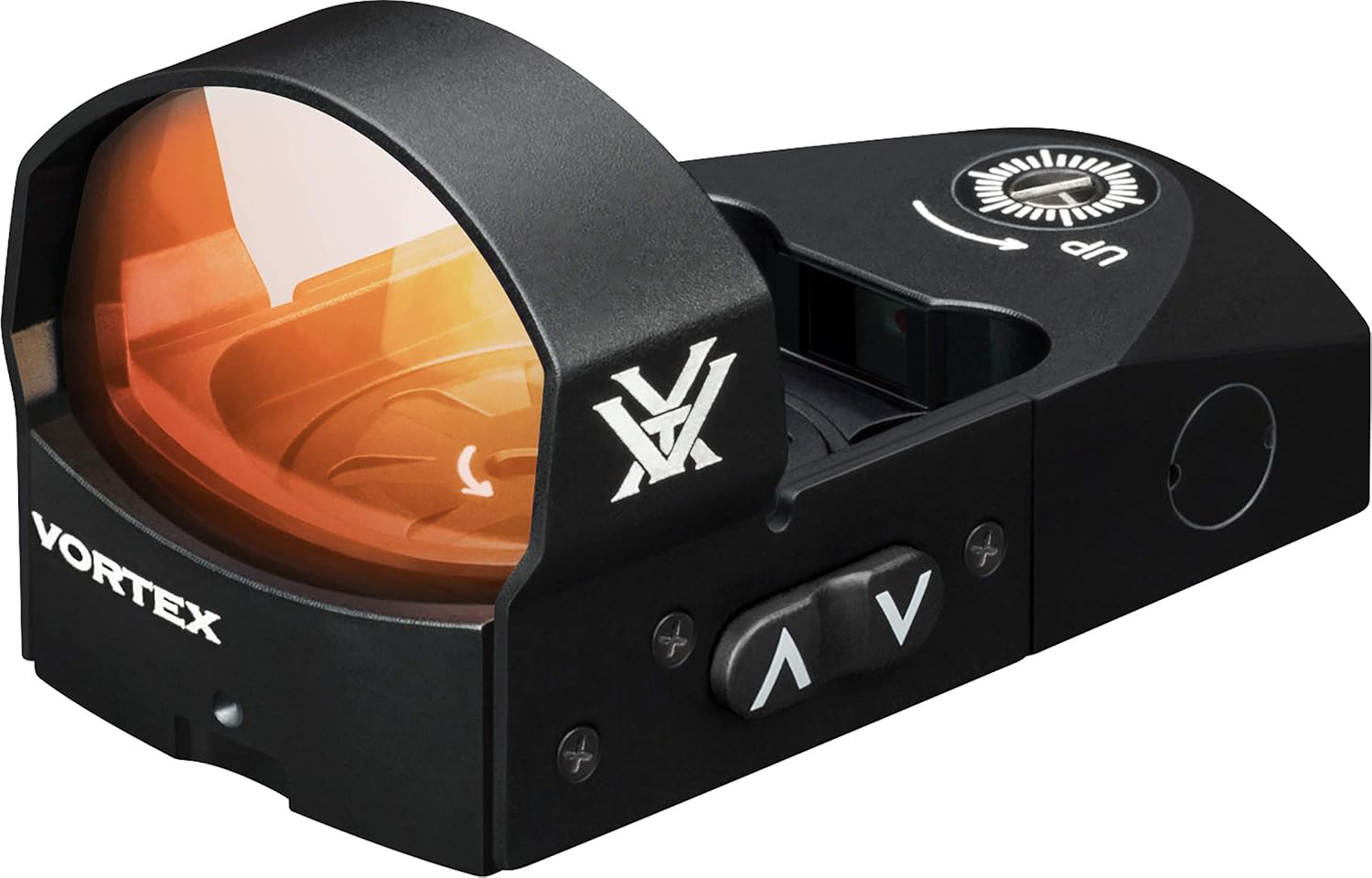
The Venom remains one of the better choices for shooters who want a larger window without spending premium enclosed-emitter money.
Specs
- 3 MOA or 6 MOA dot
- Top-loading CR1632 battery
- Aluminum housing
- Docter/Noblex footprint
Pros
- Large viewing window
- Excellent glass clarity
- Easy top-load battery
- Outstanding warranty support
Cons
- Bulkier than micro optics
- Buttons can feel stiff with gloves
My hands-on notes
The larger window is immediately noticeable. On a pistol as compact as the Bersa Thunder, that larger field of view helps tremendously during target transitions and rapid presentations.
Glass clarity is excellent with only mild edge distortion. I noticed slightly more parallax shift than with the EPS Carry or 507K, but still within acceptable defensive-use standards.
The top-loading battery system is extremely convenient and avoids the need for rezeroing. Brightness controls are easy to understand, though the buttons can feel stiff while wearing gloves.
One tradeoff is weight and bulk. Compared to RMSc-sized optics, the Venom sits higher and wider, which can affect concealability and slide balance. However, the larger window genuinely improves usability for newer shooters.
What people say online
Users consistently praise the Venom’s glass quality and Vortex warranty support. The larger viewing window remains one of its strongest selling points.
Mounting clarity
The Venom uses the Docter/Noblex footprint, which usually requires a dedicated adapter plate for Bersa Thunder mounting solutions.
➡️➡️➡️ Explore User Feedback and Current Pricing on Amazon
Sig Sauer RomeoZero

The RomeoZero targets lightweight concealed-carry setups and works surprisingly well on compact blowback pistols where slide mass matters.
Specs
- 3 MOA dot
- CR1632 battery
- Polymer housing
- MOTAC motion activation
- RMSc footprint
Pros
- Extremely lightweight
- Affordable
- Good battery life
- Simple controls
Cons
- Polymer body feels less rugged
- Lens scratches easier
My hands-on notes
The RomeoZero keeps slide weight exceptionally low, which can help preserve reliability on pistols that were never originally designed for optics. That matters on the Thunder 380 because excessive slide weight can alter cycling characteristics.
The dot itself is crisp in normal lighting, though heavy backlighting can introduce mild washout. The optic tracks recoil well enough for defensive shooting distances, but durability is not at the same level as aluminum-bodied competitors.
Parallax performance is acceptable, though edge shift becomes more noticeable at extreme viewing angles. The controls are simple and easy to access, and the MOTAC wake system works reliably.
Lens quality is decent overall, but the polymer construction makes it more vulnerable to wear over time. Still, for lightweight carry builds, the reduced mass remains a genuine advantage.
What people say online
Most users appreciate the RomeoZero for affordable concealed-carry setups. Common complaints involve long-term scratch resistance rather than outright reliability failures.
Mounting clarity
The RomeoZero uses the RMSc footprint, making it compatible with many slim-pistol adapter systems and custom Bersa milling solutions.
??? Explore User Feedback and Current Pricing
How I Tested / Evaluation Criteria
Parallax
I tested each optic by fixing the pistol and shifting my head position across the window while observing point-of-impact deviation at 7, 15, and 25 yards. Compact optics naturally show some parallax shift, but the better models minimized movement enough that defensive accuracy remained unaffected.
The EPS Carry and 507K performed best overall. Larger-window optics like the Venom helped compensate for alignment inconsistencies, though they introduced slightly more edge distortion.
Co-Witness / Deck Height
Deck height is critical on a Bersa Thunder 380 because the pistol’s compact slide leaves little room for excessive optic height. I evaluated how naturally each optic aligned during rapid draws and whether suppressor-height sights could realistically co-witness.
Ultra-low optics like the RMSc and 407K performed best. Taller enclosed emitters remained usable but benefited greatly from thinner mounting plates.
Durability
I focused heavily on recoil resistance because straight-blowback pistols create a surprisingly abrupt recoil impulse. I checked for flickering emitters, battery-contact issues, and zero retention after repeated firing sessions.
The aluminum-bodied Holosuns proved the most durable overall. Polymer optics remained functional but showed faster cosmetic wear.
Battery
Battery systems matter more than most shooters realize. Side-loading trays significantly simplify maintenance because they avoid removing the optic and losing zero.
The Holosun side trays were the best overall designs. Top-loading systems like the Venom also performed well for convenience.
Brightness Range
I tested all optics outdoors in direct sunlight and indoors under low-light conditions. A carry optic must remain daylight bright without blooming excessively at night.
The 507K and EPS Carry had the best brightness versatility. Automatic brightness systems were convenient but occasionally overreacted in mixed lighting.
Glass Quality
I evaluated lens coatings, edge distortion, tinting, and glare handling. Heavy blue or green tint can slow target identification in poor lighting.
The EPS Carry offered the cleanest glass overall, while the Venom provided the largest unobstructed field of view.
Controls Ergonomics
I manipulated all brightness controls while wearing gloves and during rapid handling drills. Small recessed buttons may prevent accidental activation, but they can also slow adjustments.
Holosun optics offered the best balance of tactile feedback and accessibility.
Mounting Ecosystem
The Bersa Thunder 380 does not have a universal optics-ready system, so adapter compatibility matters enormously. I prioritized optics with common footprints and broad aftermarket support.
RMSc-pattern optics clearly dominate this category because they keep overall size and mounting height manageable.
How to Choose the Right Red Dot for This Gun
Choosing a red dot for the Bersa Thunder 380 is fundamentally different from selecting one for a modern optics-ready Glock or SIG. The Bersa’s slim slide, blowback operation, and limited aftermarket support mean you cannot simply bolt on the largest optic available and expect good results.
The first thing I recommend prioritizing is overall optic weight. Straight-blowback pistols rely heavily on slide mass and spring tension for reliable cycling. Heavy enclosed optics can sometimes introduce sluggish cycling or inconsistent ejection patterns, especially with weaker .380 ACP loads. Lightweight optics like the RMSc, 407K, or RomeoZero preserve the pistol’s natural balance much better.
Next, consider mounting height and footprint compatibility. The Bersa Thunder’s slide is relatively narrow, so oversized optics can overhang the sides and create an awkward sight picture. RMSc-pattern optics are usually the best fit because they maintain a slimmer overall profile and lower deck height. A lower optic also improves presentation speed and helps preserve co-witness potential.
You should also think carefully about open versus enclosed emitters. Open emitters are lighter and usually sit lower, but they can accumulate lint, dust, or moisture during daily carry. Enclosed emitters like the EPS Carry offer dramatically improved reliability in adverse conditions, though they add slightly more weight and bulk.
Battery access design matters too. Bottom-mounted batteries force you to remove the optic during battery changes, increasing the chance of losing zero. Side-loading or top-loading batteries are significantly more convenient for defensive pistols.
Finally, don’t underestimate the importance of a quality mounting solution. A poorly machined dovetail adapter can introduce movement under recoil, especially on blowback pistols where slide velocity is abrupt. Proper torque specs, thread locker, and plate fitment matter just as much as the optic itself.
The shooter who wants the most balanced overall setup will usually be happiest with a compact RMSc-style optic that keeps the pistol lightweight, low-profile, and reliable.
FAQs
1. Can you mount a red dot directly to a Bersa Thunder 380?
Most Bersa Thunder 380 pistols require either a dovetail adapter plate or custom slide milling because the slide is not factory optics-ready.
2. Which footprint works best on the Bersa Thunder 380?
RMSc-pattern optics generally work best because they are compact, lightweight, and maintain a lower deck height.
3. Are enclosed emitters too heavy for the Thunder 380?
Not necessarily, but larger enclosed optics can alter slide balance. Compact enclosed optics like the EPS Carry usually work well.
4. Do I need suppressor-height sights for co-witness?
Usually yes. Standard factory sights are often too short to co-witness through most mounted optics.
5. What dot size is best for a .380 carry pistol?
I generally prefer 3–6 MOA dots for compact defensive pistols because they are easier to acquire quickly under stress.
Conclusion
Finding the Best Red Dot for Bersa Thunder 380 ultimately comes down to balancing footprint compatibility, optic weight, and mounting height. For most shooters, the Holosun 407K and 507K offer the best overall blend of durability, battery life, and realistic carry performance. If you prioritize adverse-condition reliability, the EPS Carry stands out as the strongest enclosed-emitter option. Meanwhile, ultra-low-profile optics like the RMSc remain excellent for preserving the slim handling characteristics that make the Thunder 380 so appealing in the first place.
Maybe you interesting
Top 6 Best Thermal Scope For M4 in 2026
Top 6 Best Thermal Scope For M1a in 2026
Top 6 Best Thermal Scope For M16 in 2026
Top 6 Best Thermal Scope For Long Range in 2026
Top 6 Best Thermal Scope For Lever Action Rifle in 2026
Top 6 Best Thermal Scope For Killer Instinct Crossbow in 2026
Top 6 Best Thermal Scope For Hog Hunting in 2026
Top 6 Best Thermal Scope For Deer Hunting in 2026
Top 6 Best Thermal Scope For Day And Night in 2026
Top 6 Best Thermal Scope For Crossbow in 2026
Top 6 Best Thermal Scope For Coyote Hunting in 2026
Top 6 Best Thermal Scope For Compound Bow in 2026