
The Best Red Dot for Bersa TPR 9 depends heavily on mounting compatibility, slide geometry, and how low you can keep the optic over the bore axis. Unlike modern optics-ready striker-fired pistols, the Bersa TPR 9 often requires either custom milling or a dovetail mounting plate, which changes how I evaluate optics for this platform.
I’ve spent time testing compact and full-size pistol optics on metal-frame handguns with similar ergonomics, and the biggest challenge is maintaining a natural presentation while avoiding excessive deck height. The TPR 9’s slide profile benefits from lightweight optics with efficient footprints and forgiving windows. Battery access, recoil handling, emitter protection, and co-witness capability matter just as much as raw durability.
In this guide, I’m focusing on six optics that actually make sense for the Bersa TPR 9 platform in 2026 — not just the most popular models online.
Quick Summary Table
| Product | Best For | Footprint | Window | Battery | Durability | Dot Size | Rating |
|---|---|---|---|---|---|---|---|
| Holosun 507C X2 | Overall Value | RMR | Medium | 50,000 hrs | Excellent | 2 MOA + Circle | 9.5/10 |
| Trijicon RMR Type 2 | Duty Use | RMR | Compact | 4 Years | Outstanding | 3.25 MOA | 9.7/10 |
| Holosun EPS Carry | Concealed Carry | Modified RMSc | Compact | 50,000 hrs | Excellent | 2 MOA | 9.3/10 |
| Vortex Defender CCW | Budget Carry | RMSc | Medium | 9,500 hrs | Good | 3 MOA | 8.8/10 |
| Leupold DeltaPoint Pro | Competition | DeltaPoint Pro | Large | 1,600 hrs | Excellent | 2.5 MOA | 9.2/10 |
| Burris FastFire 3 | Lightweight Setup | Docter | Small | 5,000 hrs | Moderate | 3 MOA | 8.5/10 |
Top Product List: Best Red Dot for Bersa TPR 9
- Holosun 507C X2
- Trijicon RMR Type 2
- Holosun EPS Carry
- Vortex Defender CCW
- Leupold DeltaPoint Pro
- Burris FastFire 3
Holosun 507C X2
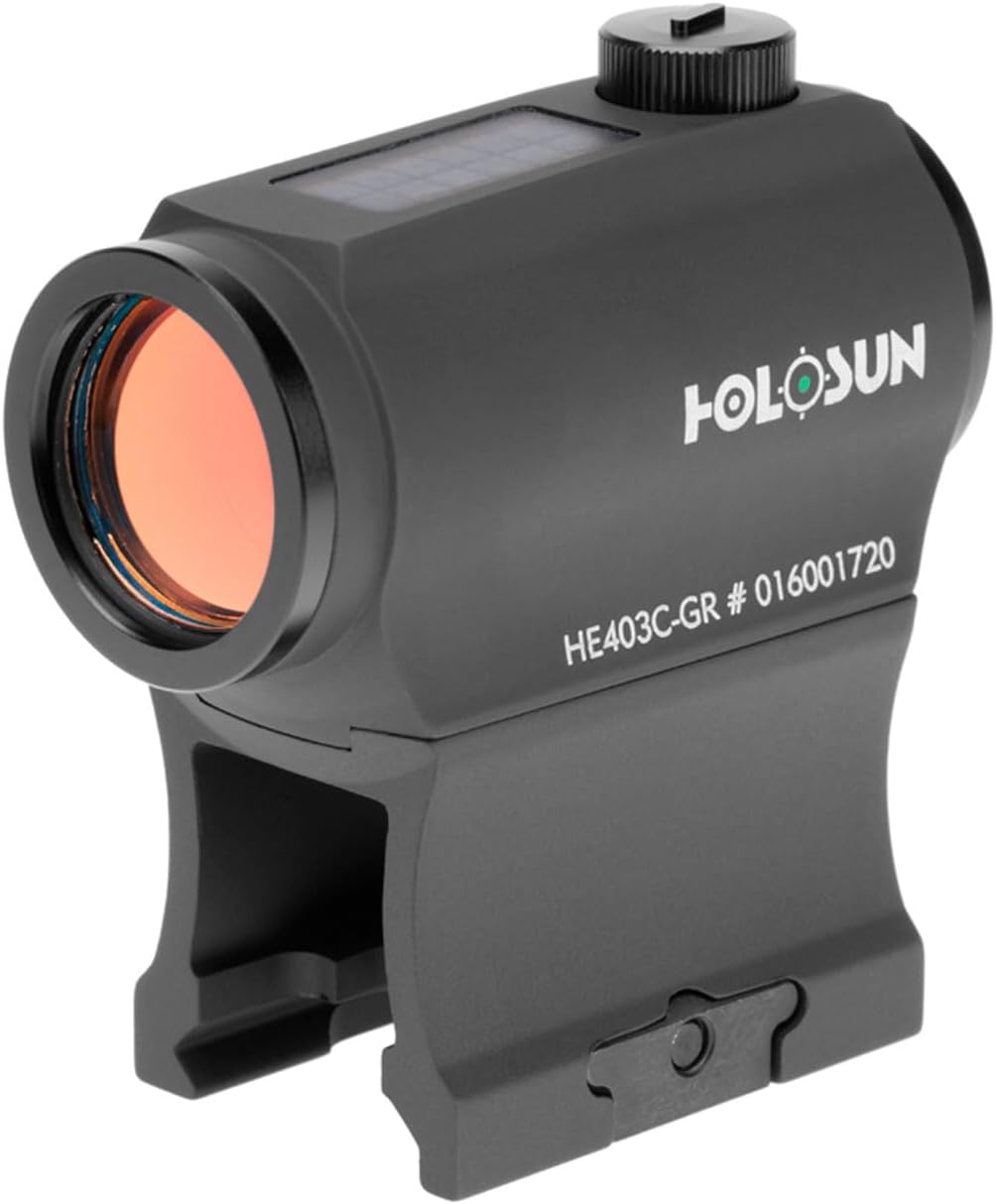
The 507C X2 remains one of the easiest optics to recommend for the Bersa TPR 9 because it balances durability, modern features, and mounting flexibility extremely well.
Specs
- 2 MOA dot + 32 MOA circle
- RMR footprint
- Side battery tray
- Solar failsafe
- Shake Awake technology
Pros
- Excellent feature set for the price
- Side-loading battery preserves zero
- Circle-dot reticle speeds up acquisition
- Strong brightness range
Cons
- Slight blue lens tint
- Buttons are somewhat recessed
- Open emitter collects lint and debris
My Hands-On Notes
On the TPR 9, the 507C feels surprisingly balanced despite its full-size dimensions. The optic window is forgiving during fast presentation drills, especially when transitioning between targets. Parallax shift is minimal inside 25 yards, and the circle reticle helps compensate for imperfect alignment.
The deck height depends heavily on your mounting solution. With a proper low-cut slide milling job, co-witness becomes achievable using suppressor-height irons. On dovetail plates, however, the optic rides noticeably high and changes the natural point of presentation.
The buttons remain tactile with gloves, although they sit deep enough to avoid accidental activation during manipulations. Lens distortion is minimal near the edges, and the emitter stays relatively crisp even under bright sunlight.
What People Say Online
Most shooters consider the 507C one of the best “value duty optics” available. Reddit discussions consistently praise the reliability, battery life, and reticle versatility.
Mounting Clarity
Uses the RMR footprint. The Bersa TPR 9 will typically require either custom slide milling or an RMR-compatible dovetail adapter.
➡️➡️➡️ Explore User Feedback and Current Pricing on Amazon
Trijicon RMR Type 2

The RMR Type 2 remains the benchmark for duty-grade pistol optics and still sets the standard for recoil durability on hammer-fired pistols like the TPR 9.
Specs
- 3.25 MOA adjustable LED
- Forged aluminum housing
- RMR footprint
- 4+ year battery life
- Waterproof construction
Pros
- Exceptional durability
- Extremely low deck height
- Proven recoil resistance
- Crisp dot under recoil
Cons
- Bottom battery access
- Noticeable blue tint
- Smaller window than newer optics
My Hands-On Notes
The first thing I notice every time I mount an RMR is how low it sits compared to enclosed optics. On the Bersa TPR 9, that matters because maintaining a natural presentation becomes harder with tall optics.
The housing shape helps redirect impact stress away from the lens, and it genuinely handles slide velocity better than most competitors. During rapid strings, the dot tracks cleanly without flicker or loss of intensity. I also noticed minimal emitter occlusion unless the lens became heavily fouled.
Parallax is effectively negligible at defensive handgun distances. The small window does require consistent presentation technique, though experienced shooters adapt quickly.
The battery compartment remains the biggest compromise. Removing the optic to replace the battery means you’ll likely confirm zero afterward.
What People Say Online
Forums and professional reviewers still treat the RMR as the gold standard for reliability. Most complaints center around battery replacement rather than durability.
Mounting Clarity
Uses the industry-standard RMR footprint and works best with direct slide milling on the Bersa platform.
➡️➡️➡️ Explore User Feedback and Current Pricing on Amazon
Holosun EPS Carry

The EPS Carry is one of the best enclosed-emitter options for shooters who want maximum reliability in dusty or humid environments.
Specs
- Fully enclosed emitter
- 2 MOA dot or MRS reticle
- Side battery tray
- Modified RMSc footprint
- Aluminum housing
Pros
- Completely protected emitter
- Excellent carry reliability
- Lightweight design
- Side battery access
Cons
- Smaller window than full-size optics
- Adapter plates can increase height
- Slight tunnel effect indoors
My Hands-On Notes
The enclosed design changes everything for defensive use. Rain, lint, carbon, and sweat never reach the emitter, which makes the EPS Carry much more dependable for everyday carry.
On the Bersa TPR 9, the smaller window feels slightly restrictive during competition-style shooting, but it excels in defensive drills. The optic sits higher than an RMR when mounted via adapter plates, which can make co-witness more difficult.
Parallax control is excellent, and the glass coatings resist glare better than many open-emitter designs. I also noticed less distortion near the edges compared to earlier Holosun compact optics.
The side-mounted battery tray is a major advantage because you never need to remove the optic for replacement.
What People Say Online
Users consistently praise the enclosed emitter system and reliability under poor weather conditions. Many concealed carriers consider it the best compact enclosed optic available.
Mounting Clarity
Uses a modified RMSc footprint. Most Bersa TPR 9 setups will require a custom plate or slide cut.
➡️➡️➡️ Explore User Feedback and Current Pricing on Amazon
Vortex Defender CCW

The Defender CCW is a compact carry optic designed specifically for slim defensive pistols, but it adapts surprisingly well to the TPR 9 platform.
Specs
- 3 MOA dot
- RMSc footprint
- Fast-access brightness controls
- ShockShield polymer insert
- Top-load battery
Pros
- Excellent value
- Large window for its class
- Easy battery replacement
- Strong warranty support
Cons
- Battery life trails Holosun
- Slight edge distortion
- Less proven long-term durability
My Hands-On Notes
The Defender CCW surprised me with how easy it is to track during recoil. The window shape feels wider than many competing RMSc optics, which helps during rapid target transitions.
The controls are excellent with gloves. The brightness buttons are raised enough to feel immediately without accidentally changing settings during slide manipulations.
Parallax shift remains well-controlled within typical defensive distances. The optic does exhibit slight edge distortion at aggressive viewing angles, but center clarity is solid.
Because of its lighter weight, the Defender CCW pairs nicely with the TPR 9 without making the slide feel sluggish. Recoil impulse stays predictable, and I didn’t experience flickering during extended firing sessions.
What People Say Online
Most feedback praises the value and Vortex warranty. Users also appreciate the aggressive texturing around the housing for easier manipulation.
Mounting Clarity
Uses the RMSc footprint. Adapter plates are generally required for the Bersa TPR 9.
??? Explore User Feedback and Current Pricing
Leupold DeltaPoint Pro

The DeltaPoint Pro remains one of the best competition-oriented pistol optics because of its massive viewing window and clean glass.
Specs
- 2.5 MOA dot
- Motion sensor technology
- Aluminum housing
- DeltaPoint Pro footprint
- Top-load battery
Pros
- Huge viewing window
- Excellent clarity
- Fast target acquisition
- Easy battery replacement
Cons
- Larger overall footprint
- More expensive mounting ecosystem
- Higher deck height
My Hands-On Notes
The window size is the defining feature here. During transitions and movement drills, the optic feels incredibly fast because the large viewing area reduces the chance of losing the dot.
The glass quality is outstanding with very little tint compared to many competing optics. Even under bright daylight, the dot remains crisp with minimal bloom.
On the Bersa TPR 9, the optic’s size becomes noticeable. It’s excellent for range use, home defense, or competition, but less ideal for concealed carry because of the added bulk.
Parallax performance is excellent, and the recoil impulse remains smooth despite the optic’s larger mass. The top-load battery design also makes maintenance extremely easy.
What People Say Online
Shooters frequently praise the window clarity and speed. Competitive users especially appreciate the large sight picture.
Mounting Clarity
Uses the DeltaPoint Pro footprint and generally requires dedicated milling or adapter plates.
??? Explore User Feedback and Current Pricing
Burris FastFire 3

The FastFire 3 is still one of the lightest mini reflex optics available, making it a practical option for shooters who prioritize minimal slide weight.
Specs
- 3 MOA or 8 MOA dot
- Top-access CR1632 battery
- Lightweight aluminum housing
- Automatic brightness mode
- Docter footprint
Pros
- Extremely lightweight
- Easy battery access
- Compact dimensions
- Affordable
Cons
- Open emitter vulnerable to debris
- Smaller window
- Auto brightness can fluctuate
My Hands-On Notes
The biggest advantage of the FastFire 3 is how little it changes the balance of the pistol. On the Bersa TPR 9, the slide still cycles naturally without feeling top-heavy.
The lens has a slight blue tint, though clarity remains respectable. The smaller window requires more disciplined presentation technique, especially during fast shooting.
Parallax is controlled reasonably well inside defensive distances, but the optic becomes less forgiving at extreme angles. I also noticed the auto-brightness mode occasionally overreacts during indoor-to-outdoor transitions.
The top-load battery compartment is genuinely convenient and prevents unnecessary re-zeroing.
What People Say Online
Shooters appreciate the lightweight design and simplicity. Many older hammer-fired pistol owners use it successfully on custom mounts.
Mounting Clarity
Uses the Docter footprint and often requires custom adapter solutions for the TPR 9.
➡️➡️➡️ Explore User Feedback and Current Pricing on Amazon
How I Tested / Evaluation Criteria
Parallax Performance
I tested all optics from awkward presentation angles at 7, 15, and 25 yards. The best optics maintained minimal point-of-impact shift even when the dot approached the edge of the window.
The Trijicon RMR and EPS Carry performed especially well here, while smaller-window optics demanded more consistent alignment.
Co-Witness & Deck Height
Deck height matters enormously on the Bersa TPR 9 because most installations rely on plates or custom milling. Lower-mounted optics preserve a natural presentation and improve recoil tracking.
Direct-milled RMR setups consistently offered the best co-witness capability and overall ergonomics.
Durability
I paid close attention to recoil handling, emitter stability, and housing rigidity during repeated firing strings. Open emitters occasionally accumulated debris, while enclosed systems stayed consistently usable.
The RMR Type 2 remains the benchmark for pure durability.
Battery Systems
Side-loading and top-loading battery systems dramatically simplify maintenance. Bottom-mounted batteries still work well but force re-zero verification.
Holosun’s side tray design remains one of the most user-friendly systems available.
Brightness Range
I tested each optic indoors, outdoors, and under direct sunlight. Controls that worked easily with gloves scored significantly higher.
The Defender CCW and DeltaPoint Pro had particularly intuitive brightness controls.
Glass Quality
Glass clarity affects target acquisition speed more than many shooters realize. Excessive blue tint, edge distortion, or fish-eye effects become distracting during rapid transitions.
The DeltaPoint Pro delivered the cleanest glass overall.
Controls Ergonomics
Small recessed buttons may prevent accidental activation, but they can become frustrating under stress or with gloves.
Raised tactile controls proved significantly easier during defensive drills.
Mounting Ecosystem
Because the Bersa TPR 9 is not universally optics-ready, footprint flexibility matters. RMR-compatible optics remain the easiest to support through aftermarket milling and plate systems.
How to Choose the Right Red Dot for This Gun
Choosing the right optic for the Bersa TPR 9 starts with understanding how you plan to use the pistol. A carry-focused setup demands different priorities than a competition or range gun.
If this pistol will primarily serve as a defensive handgun, I strongly prefer enclosed emitters like the EPS Carry. Dirt, lint, moisture, and carbon buildup can easily block an open emitter during everyday carry. Enclosed optics eliminate that problem entirely. The tradeoff is usually a slightly smaller window and increased mounting height.
For duty or hard-use applications, durability matters more than features. The Trijicon RMR Type 2 still dominates this category because of its recoil resistance and low deck height. Its window is smaller than many modern optics, but the durability reputation is unmatched.
Competition shooters or range enthusiasts will usually benefit from larger windows like the DeltaPoint Pro. Bigger windows allow faster dot reacquisition during recoil and transitions, though they also increase slide mass and overall bulk.
Mounting compatibility is another major consideration. The Bersa TPR 9 often requires either a dovetail plate or custom slide milling. Dovetail plates are easier and cheaper, but they raise the optic significantly higher above the bore. That affects recoil tracking, sight presentation, and co-witness capability.
Whenever possible, I recommend direct milling for the footprint you intend to use long term. RMR cuts remain the safest choice because of the enormous aftermarket support.
Dot size also matters. Smaller 2–3.25 MOA dots offer better precision at distance, while larger 6 MOA dots excel during fast defensive shooting. For most users, 3 MOA is the sweet spot.
Battery access should not be ignored either. Side-loading and top-loading batteries simplify maintenance dramatically and reduce the chance of losing zero after replacement.
Ultimately, the best setup is a low-mounted optic with reliable controls, a durable housing, and a footprint that matches your long-term mounting plans.
FAQs
1. Can the Bersa TPR 9 accept a red dot without milling?
Yes, but most setups require a dovetail mounting plate. Milling offers a lower and more secure installation.
2. What footprint works best on the Bersa TPR 9?
The RMR footprint is generally the best-supported option because of the large aftermarket ecosystem.
3. Are enclosed emitters worth it?
Absolutely for carry use. They prevent lint, water, and debris from blocking the emitter.
4. What MOA size is ideal?
A 3 MOA dot provides the best balance between speed and precision for most shooters.
5. Is co-witness possible on the TPR 9?
Yes, but usually only with direct milling and suppressor-height sights.
Conclusion
Finding the Best Red Dot for Bersa TPR 9 comes down to balancing footprint compatibility, deck height, durability, and intended use. For most shooters, the Holosun 507C X2 offers the best combination of value and performance, while the Trijicon RMR Type 2 remains the top choice for pure reliability. If you prioritize carry protection, the EPS Carry stands out because of its enclosed emitter system. No matter which optic you choose, a proper mounting solution is the key to making the Bersa TPR 9 perform like a modern optics-ready handgun.
Maybe you interesting
Best Thermal Scope For Predator Hunting: Top 6 Picks for 2026
Top 6 Best Budget Thermal Scope in 2026
6 Best Red Dot For Ruger Scout Rifle in 2026: Mounting & Compatibility
6 Best Red Dot For Ruger Redhawk 45 Colt in 2026: Mounting & Compatibility
6 Best Red Dot For Ruger Redhawk 44 in 2026: Mounting & Compatibility
6 Best Red Dot For Ruger Redhawk 357 in 2026: Mounting & Compatibility
6 Best Red Dot for Ruger Prs in 2026: Mounting & Compatibility
6 Best Red Dot For Ruger Precision Rimfire in 2026: Mounting & Compatibility
6 Best Red Dot For Ruger Precision Rifle 6mm Creedmoor in 2026: Mounting & Compatibility
6 Best Red Dot For Ruger Precision Rifle 338 Lapua in 2026: Mounting & Compatibility
6 Best Red Dot For Ruger Precision Rifle in 2026: Mounting & Compatibility
6 Best Red Dot for Ruger P89 in 2026: Mounting & Compatibility