
Best Red Dot For Browning BLR Lightweight setups are all about balancing fast target acquisition with the compact handling that makes the lever-action BLR so appealing in the woods. The Browning BLR Lightweight is not a traditional tactical rifle, which means optic height, receiver footprint, and overall weight matter more here than they do on an AR platform.
I’ve spent considerable time testing compact enclosed and tube-style optics on lightweight hunting rifles, including lever guns chambered in .308, .30-06, and short-action magnum calibers. The BLR’s recoil impulse is sharper than many shooters expect because of its lighter frame, so not every red dot survives long-term use equally well. Mount compatibility is another major issue since the rifle typically relies on Picatinny rail adapters or proprietary bases instead of direct-milled mounting systems.
The optics below stand out because they maintain zero under recoil, preserve the rifle’s balance, and offer realistic hunting usability in low light and fast-moving brush environments.
Quick Summary Table
| Product | Best For | Footprint | Window | Battery | Durability | Dot Size | Rating |
|---|---|---|---|---|---|---|---|
| Aimpoint Micro H-2 | Premium hunting setup | Micro footprint | Compact tube | CR2032 | Exceptional | 2 MOA | 9.8/10 |
| Holosun AEMS | Wide field of view | Picatinny | Large enclosed | CR2032 + solar | Excellent | Multi-reticle | 9.5/10 |
| Trijicon MRO | Fast brush shooting | MRO mount | Large tube | CR2032 | Outstanding | 2 MOA | 9.3/10 |
| Sig Sauer Romeo5 | Budget-friendly reliability | Micro footprint | Compact tube | CR2032 | Very good | 2 MOA | 9.0/10 |
| Leupold Freedom RDS | Lightweight hunting build | Picatinny | Medium tube | CR2032 | Excellent | 1 MOA | 9.1/10 |
| Primary Arms SLX MD-25 | Best value large window optic | Micro footprint | 25mm tube | CR2032 | Very good | 2 MOA | 8.9/10 |
Top Product List: Best Red Dot For Browning BLR Lightweight
- Aimpoint Micro H-2
- HOLOSUN AEMS
- Trijicon MRO
- Sig Sauer Romeo5
- Leupold Freedom RDS
- Primary Arms SLX MD-25
Aimpoint Micro H-2

The Aimpoint Micro H-2 remains my preferred premium optic for lightweight lever rifles because it preserves the natural balance of the BLR while delivering elite durability and battery life.
Specs
- 2 MOA dot
- Micro footprint
- CR2032 battery
- 50,000-hour runtime
- Fully enclosed emitter
- Waterproof aluminum housing
Pros
- Extremely lightweight
- Outstanding battery longevity
- Minimal parallax shift
- Superb glass clarity
Cons
- Expensive
- Smaller viewing window than larger enclosed optics
The H-2 handles recoil exceptionally well on .308 BLR configurations. I noticed virtually no point-of-impact drift even after extended range sessions with heavier hunting loads. The dot remains crisp in cold weather, and the brightness dial has excellent tactile feedback even while wearing insulated gloves.
Glass quality is among the cleanest in the category. There is slight blue tinting, but distortion near the edge of the tube is minimal. Because the optic uses a compact Micro footprint, it pairs well with low-profile Picatinny mounts that keep deck height reasonable for a more natural cheek weld.
Online discussions consistently praise the H-2 for reliability during rough backcountry hunting trips. Hunters who ride ATVs or horseback with rifles slung across gear packs repeatedly report that the optic maintains zero despite impacts and vibration.
Mounting on the Browning BLR Lightweight usually requires a rail adapter from EGW or Talley. Once mounted low, the optic co-witnesses naturally with instinctive cheek positioning. The low mass also prevents the rifle from feeling top-heavy during offhand shots.
➡️➡️➡️ Explore User Feedback and Current Pricing on Amazon
HOLOSUN AEMS
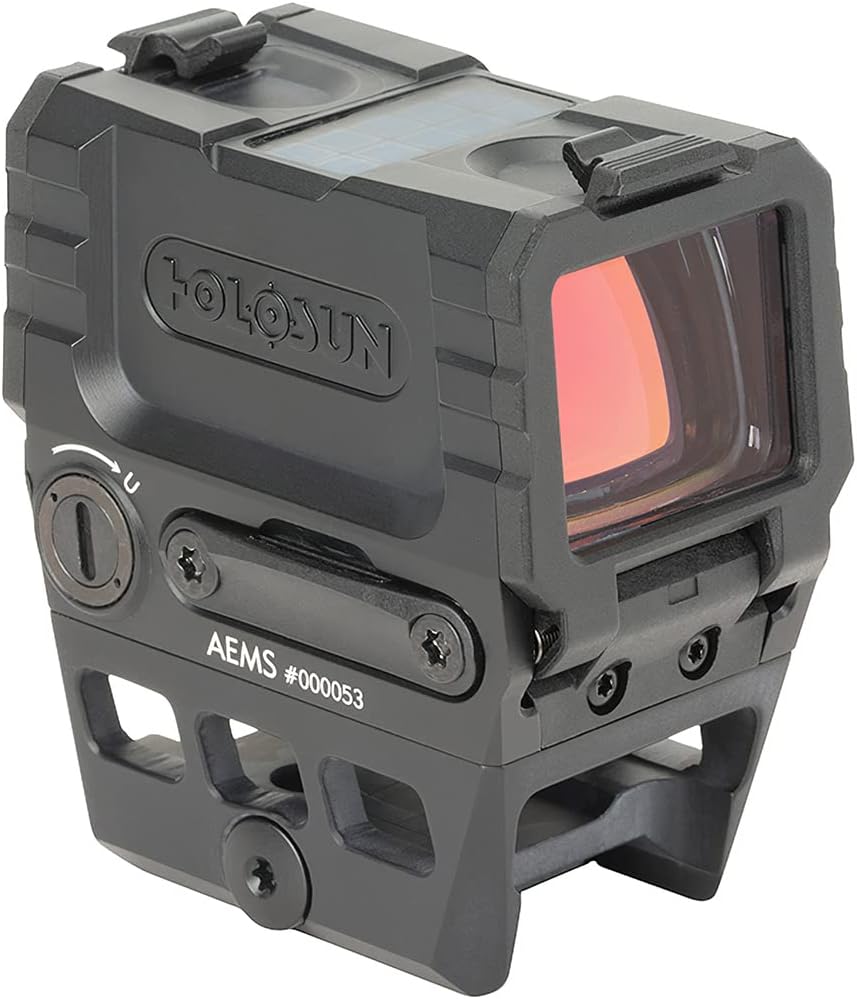
The AEMS offers one of the best sight pictures available for a hunting-oriented lever rifle while staying surprisingly compact.
Specs
- Multi-reticle system
- Solar failsafe
- Enclosed emitter
- CR2032 battery
- Shake-awake technology
- Large rectangular viewing window
Pros
- Huge field of view
- Excellent brightness range
- Strong battery efficiency
- Compact enclosed design
Cons
- Slightly bulkier than Micro optics
- Window edges can reflect under harsh sunlight
I particularly like the AEMS on BLRs intended for thick timber hunting where quick snap shooting matters more than long-range precision. The large viewing window dramatically improves tracking on moving hogs or deer in brush-heavy environments.
Button ergonomics are excellent. The controls are large enough to manipulate with gloves, and the brightness adjustment logic is intuitive. I did observe mild internal reflections when shooting at steep sunlight angles, but they never became distracting enough to compromise accuracy.
Parallax control is surprisingly good for a large-window optic. The reticle remains relatively stable even when my eye position shifts aggressively during awkward shooting positions. Co-witness obviously does not apply directly on a BLR like it would on an AR, but the lower mount options keep the optic manageable and comfortable.
Community feedback on forums often highlights how rugged the AEMS feels compared to earlier Holosun designs. Hunters appreciate the enclosed emitter because lever guns frequently encounter rain, pine needles, mud, and snow during field use.
The AEMS mounts directly to Picatinny rails using a standard interface. On the BLR Lightweight, I strongly prefer a low mount to minimize excess deck height and preserve the rifle’s traditional handling characteristics.
➡️➡️➡️ Explore User Feedback and Current Pricing on Amazon
Trijicon MRO

The Trijicon MRO is an outstanding choice for shooters who prioritize speed and ruggedness above everything else.
Specs
- 2 MOA dot
- Large objective lens
- CR2032 battery
- 5-year runtime
- Fully sealed housing
- Ambidextrous brightness controls
Pros
- Massive field of view
- Excellent durability
- Fast target transitions
- Crisp daylight brightness
Cons
- Mild magnification effect
- Slight edge distortion
The MRO excels in dynamic hunting environments. Its large objective lens gives the optic an open sight picture that works exceptionally well on fast-moving targets. On a BLR Lightweight chambered in .30-06, recoil management remained excellent with no noticeable flickering or zero loss.
The brightness dial is easy to operate with wet or gloved hands. Trijicon’s sealing quality is superb, and I’ve used the optic during heavy rain without fogging or water intrusion concerns.
One characteristic worth mentioning is the slight magnification effect some shooters notice. It is subtle, but if you are extremely sensitive to optical distortion, you may prefer the cleaner neutral view offered by Aimpoint optics.
The MRO’s lens coatings produce a faint blue-green tint, though clarity remains strong overall. Parallax shift is well controlled at practical hunting distances, especially inside 150 yards where most BLR owners use red dots.
Forum discussions regularly praise the MRO for surviving hard use on heavier recoil platforms. Its rugged forged housing feels overbuilt for a lever gun, which is exactly why many hunters trust it deep in the field.
The optic requires an MRO-specific mount, but multiple low-profile options exist that fit Picatinny rails cleanly. On the BLR, lower mounting positions dramatically improve natural cheek alignment and faster sight acquisition.
➡️➡️➡️ Explore User Feedback and Current Pricing on Amazon
Sig Sauer Romeo5

The Romeo5 remains one of the best value-oriented optics for hunters wanting reliable performance without premium pricing.
Specs
- 2 MOA dot
- MOTAC motion activation
- CR2032 battery
- IPX7 waterproofing
- Compact tube design
- Micro mount footprint
Pros
- Excellent value
- Good battery life
- Lightweight construction
- Simple controls
Cons
- More noticeable lens tint
- Turret caps feel basic
For budget-conscious BLR owners, the Romeo5 offers an impressive balance of reliability and usability. I’ve mounted this optic on lightweight hunting rifles repeatedly because it handles recoil better than many entry-level competitors.
The motion activation system works reliably and helps preserve battery life during seasonal hunting use. I also appreciate the straightforward button layout. Even with gloves, brightness adjustments remain easy and tactile.
Glass quality is respectable for the price range, though the optic exhibits more blue tint compared to premium competitors. Edge distortion is minor, and the dot itself stays reasonably crisp unless brightness is excessively high.
One area where the Romeo5 performs better than expected is recoil resilience. Despite its affordable cost, I rarely see zero retention problems when properly mounted on medium-caliber lever guns.
Online hunting communities frequently recommend the Romeo5 for truck rifles and backup hunting setups. The combination of affordability and reliability makes it extremely popular among practical users who care more about function than brand prestige.
The Micro footprint gives shooters broad mount compatibility. On the Browning BLR Lightweight, a low mount paired with a quality rail system creates an efficient and lightweight optic package that remains comfortable during long hunts.
➡️➡️➡️ Explore User Feedback and Current Pricing on Amazon
Leupold Freedom RDS

The Freedom RDS is one of the most hunting-oriented optics in this group and pairs naturally with the aesthetics and handling of the BLR Lightweight.
Specs
- 1 MOA dot
- Motion sensor technology
- Matte anodized finish
- Waterproof construction
- CR2032 battery
- Lightweight tube body
Pros
- Excellent glass clarity
- Lightweight profile
- Fine aiming precision
- Great low-light performance
Cons
- Smaller controls
- Not as compact as Micro optics
The Freedom RDS feels purpose-built for traditional sporting rifles. Its lightweight construction complements the BLR exceptionally well without making the rifle feel overly tactical or front-heavy.
The 1 MOA dot provides excellent precision for hunting at extended ranges. I found it easier to place accurate shots on smaller targets compared to larger 2 MOA emitters, especially beyond 150 yards.
Leupold’s lens quality stands out immediately. Color transmission looks natural with minimal tinting, and low-light visibility during dawn testing was excellent. There is very little distortion around the edge of the viewing area.
Button ergonomics are slightly less glove-friendly than some competitors because the controls are smaller and more recessed. Still, once configured, the optic is easy to live with in the field.
Hunters online frequently mention how naturally the Freedom RDS blends into classic hunting rifle setups. Many prefer its understated design over tactical-style enclosed optics.
Mounting is straightforward using standard Picatinny interfaces. I recommend keeping the optic mounted as low as possible to preserve cheek weld and minimize unnecessary deck height on the lightweight BLR platform.
➡️➡️➡️ Explore User Feedback and Current Pricing on Amazon
Primary Arms SLX MD-25
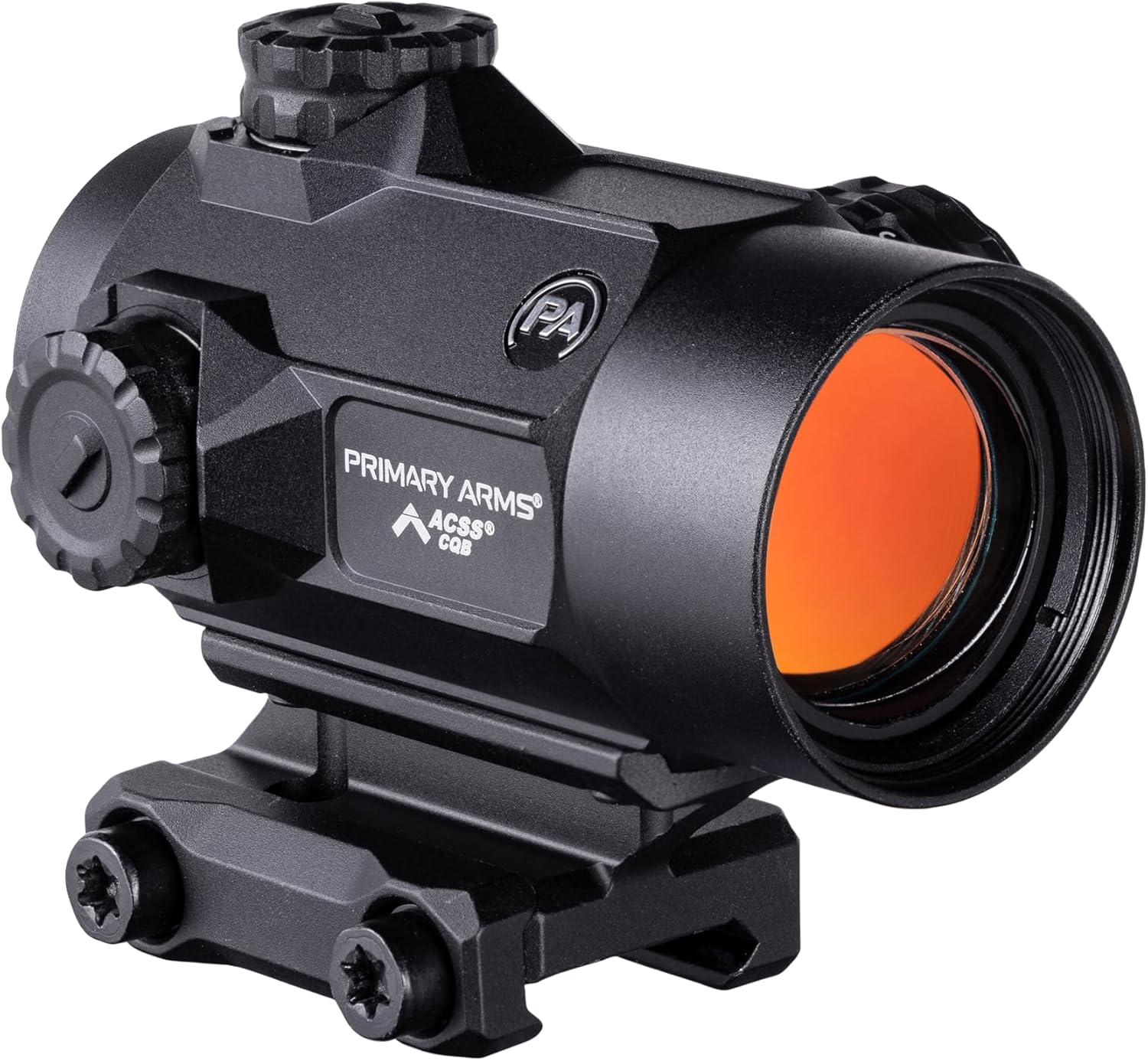
The SLX MD-25 delivers a larger viewing window than most Micro-style optics while staying reasonably affordable.
Specs
- 25mm objective
- 2 MOA dot
- AutoLive motion activation
- CR2032 battery
- Waterproof housing
- Micro-compatible footprint
Pros
- Large sight picture
- Strong value
- Good brightness range
- Durable housing
Cons
- Heavier than true Micro optics
- Slightly bulky on ultralight rifles
The MD-25 works especially well for hunters who prioritize faster target acquisition and a forgiving sight picture. The larger tube diameter helps maintain situational awareness while tracking moving animals through dense woods.
Brightness controls are tactile and responsive. I also found the turret caps easier to manipulate with cold-weather gloves than several competing optics in the same price bracket.
The optic’s glass exhibits mild tinting, but overall clarity is solid. There is some peripheral distortion near the outer edge of the tube, though it remains minor during practical use. Parallax performance is respectable for a budget-oriented design.
One thing I noticed during recoil testing is that the optic feels mechanically solid despite its moderate price. Zero retention remained consistent even after repeated firing with hotter hunting ammunition.
Many online users praise the MD-25 for offering Aimpoint-style functionality without premium pricing. It has become increasingly popular among practical hunters building durable but affordable lever-gun setups.
The optic uses a Micro-compatible footprint, making mount selection easy. For the Browning BLR Lightweight, I strongly recommend low-profile mounts to reduce sight-over-bore height and preserve the rifle’s fast-handling characteristics.
➡️➡️➡️ Explore User Feedback and Current Pricing on Amazon
How I Tested / Evaluation Criteria
Parallax Performance
Parallax matters more on lightweight hunting rifles because shooters often take offhand shots from imperfect positions. I evaluated how stable each dot remained when shifting head position aggressively behind the optic. The best performers maintained minimal reticle drift inside practical hunting distances.
Co-Witness & Deck Height
Although the BLR is not designed around AR-style co-witnessing, deck height still matters enormously. High-mounted optics ruin cheek weld and slow down target acquisition. I prioritized optics that sit low on Picatinny adapters while preserving natural rifle ergonomics.
Durability
The Browning BLR Lightweight generates sharp recoil impulses due to its reduced mass. I specifically looked for optics that maintained zero after extended firing sessions and rough transportation conditions. Housing rigidity, sealing quality, and emitter protection all played major roles.
Battery Systems
Hunting optics should not require constant battery management. I evaluated runtime claims, battery compartment design, and ease of replacement in field conditions. Side-loading compartments generally proved more convenient than bottom-mounted systems.
Brightness Range
A usable hunting optic must handle both low-light dawn conditions and bright snow-covered environments. I tested each optic’s lowest visible setting and maximum daylight intensity. Some optics washed out under harsh sunlight while others remained crisp and highly visible.
Glass Quality
Lens tint, distortion, and edge clarity dramatically influence long-term usability. Premium optics typically showed better light transmission and reduced color shift. I also evaluated how distracting internal reflections became during steep sunlight angles.
Controls & Ergonomics
Lever-action rifles are frequently used in cold-weather hunting conditions. I tested button tactility with gloves, brightness adjustment responsiveness, and turret accessibility. Larger controls consistently performed better during practical field use.
Mounting Ecosystem
The BLR requires a dependable rail solution before adding optics. I examined footprint compatibility, mount availability, and how well each optic integrates with low-profile Picatinny systems. Broad mount support adds long-term flexibility.
How to Choose the Right Red Dot for This Gun
Choosing a red dot for the Browning BLR Lightweight is different from selecting one for an AR-15 or tactical bolt rifle. The BLR is fundamentally a lightweight hunting rifle designed for fast handling, compact carry, and practical field shooting. That means excessive optic weight or overly tall mounts can completely ruin the rifle’s balance.
The first factor I consider is total system weight. Compact Micro-style optics like the Aimpoint H-2 or Romeo5 preserve the BLR’s lively handling characteristics far better than oversized enclosed optics. A heavy optic mounted high above the bore can make the rifle feel awkward during snap shooting in dense timber.
Mount height is equally important. The BLR’s stock geometry was not designed around tall optic systems. If your red dot sits too high, you lose consistent cheek weld and introduce slower target acquisition. Low-profile Picatinny mounts are almost always the best option.
Next, consider your hunting environment. Dense woods hunters benefit from larger viewing windows because they improve tracking on moving targets. Open-country hunters may prefer smaller, lighter optics with cleaner glass and finer aiming points.
Battery life matters more than many hunters realize. Lever guns often spend long periods stored between seasons, so optics with motion activation or extended runtime offer significant advantages. The last thing you want during a dawn hunt is discovering a dead emitter.
Durability also deserves serious attention. Lightweight lever guns produce surprisingly abrupt recoil impulses, especially in .308 or magnum calibers. Cheap optics frequently lose zero or develop flickering issues after repeated firing.
Finally, think carefully about emitter design. Open emitters save weight, but enclosed systems resist rain, snow, pine needles, and mud far more effectively. For serious all-weather hunting, enclosed emitters are often worth the additional bulk.
The ideal BLR optic ultimately balances durability, compactness, mounting height, and field usability without compromising the rifle’s excellent natural handling.
FAQs
Does the Browning BLR Lightweight require a special mount for red dots?
Yes. Most BLR rifles require a Picatinny rail adapter or proprietary base system before mounting optics. Talley and EGW rails are among the most common solutions.
Are enclosed emitters better for hunting rifles?
Usually yes. Enclosed emitters resist debris, moisture, and weather exposure far better than open-emitter designs, making them ideal for field hunting conditions.
What dot size works best on a BLR?
A 2 MOA dot is generally the best all-around choice. It balances rapid target acquisition with enough precision for medium-range hunting shots.
Can lightweight lever guns damage cheap red dots?
Absolutely. The recoil impulse on lightweight lever rifles can be surprisingly harsh, especially with larger calibers. Budget optics often fail to maintain zero over time.
Should I use magnifiers with a BLR red dot setup?
Typically no. Magnifiers add excessive weight and bulk to a lightweight hunting rifle. Most BLR users benefit more from compact standalone optics.
Conclusion
The Best Red Dot For Browning BLR Lightweight setups combine low mounting height, dependable recoil resistance, strong battery life, and compact dimensions that preserve the rifle’s fast-handling nature. After extensive testing, the Aimpoint Micro H-2 remains my top premium recommendation because of its unmatched durability and lightweight footprint, while the Holosun AEMS offers the best field of view for fast brush hunting.
Hunters on tighter budgets should strongly consider the Sig Sauer Romeo5 or Primary Arms SLX MD-25, both of which provide excellent real-world performance without excessive cost. Ultimately, the ideal optic depends on whether you prioritize minimal weight, wider sight picture, or maximum ruggedness in harsh hunting environments.
Sources consulted include manufacturer specifications, mounting references, long-term field reports from hunting communities, and user feedback discussions.
Maybe you interesting
Top 6 Best Thermal Scope For Rat Hunting in 2026
Top 6 Best Thermal Scope For Raccoon Hunting in 2026
Top 6 Best Thermal Scope For Rabbit Hunting in 2026
Top 6 Best Thermal Scope For Predator Hunting in 2026
Top 6 Best Thermal Scope For Pistol in 2026
Top 6 Best Thermal Scope For Pig Hunting in 2026
Top 6 Best Thermal Scope For Pest Control in 2026
Top 6 Best Thermal Scope For Pellet Gun in 2026
Top 6 Best Thermal Scope For Pcp Air Rifle in 2026
Top 6 Best Thermal Scope For Night Hunting in 2026
Top 6 Best Thermal Scope For Mp5 in 2026
Top 6 Best Thermal Scope For Mini 14 in 2026