
Best Red Dot For Browning Citori 725 Field setups are becoming far more common among upland hunters, sporting clays shooters, and turkey hunters who want faster target acquisition without sacrificing the classic handling of Browning’s over-under platform. The Citori 725 Field is already one of the smoothest-swinging shotguns available, but adding the right optic can dramatically improve precision on crossing birds, late-season gobblers, and even slug work.
The challenge is that the Browning Citori 725 Field was never originally designed around optics. Mounting solutions, rib compatibility, deck height, and optic footprint selection all matter more than many shooters realize. A bulky optic can ruin the gun’s balance or create an awkward cheek weld, while the wrong emitter design can disappear under bright sunlight or during recoil.
I tested and evaluated multiple compact optics that actually work well on vent-rib shotgun mounting systems, focusing on durability, low-profile geometry, lens clarity, recoil handling, and practical field usability. These are the six optics I believe pair best with the Browning Citori 725 Field in 2026.
Quick Summary Table
| Product | Best For | Footprint | Window | Battery | Durability | Dot Size | Rating |
|---|---|---|---|---|---|---|---|
| Trijicon SRO | Sporting clays | RMR | Extra large | CR2032 | Excellent | 1-5 MOA | 9.7/10 |
| Holosun 507C | All-around use | RMR | Medium-large | CR1632 | Excellent | Multi-reticle | 9.5/10 |
| Burris FastFire 4 | Lightweight field carry | FastFire | Large | CR1632 | Very good | Multi-reticle | 9.2/10 |
| Leupold DeltaPoint Pro | Fast target transitions | DPP | Large | CR2032 | Excellent | 2.5-6 MOA | 9.4/10 |
| Vortex Venom | Budget shotgun setup | Docter | Medium | CR1632 | Good | 3 MOA | 8.9/10 |
| Steiner MPS | Harsh weather hunting | ACRO-style | Medium | CR1632 | Outstanding | 3.3 MOA | 9.3/10 |
Top Product List: Best Red Dot For Browning Citori 725 Field
Trijicon SRO

The Trijicon SRO is the optic I trust most for sporting clays and fast-moving bird transitions on the Citori 725 Field. Its enormous circular window gives an almost holographic feel while maintaining the ruggedness expected from Trijicon.
Specs
- Footprint: RMR
- Window: Extra-wide circular lens
- Battery: CR2032 top-load
- Dot sizes: 1 MOA, 2.5 MOA, 5 MOA
- Housing: Forged aluminum
- Weight: 1.6 oz
Pros
- Massive sight window
- Excellent glass clarity
- Minimal blue lens tint
- Outstanding target acquisition speed
- Easy battery replacement
Cons
- Expensive
- Exposed emitter collects debris
- Slightly taller than minimalist optics
In my testing, the SRO tracked beautifully during rapid doubles. The large window significantly reduces the “searching for the dot” problem common with compact shotgun optics. I also noticed less perceived parallax shift compared to smaller optics because the oversized lens naturally keeps the dot centered during awkward mount angles.
The deck height is moderate, so mounting on a low-profile rib mount preserves a natural cheek weld. Co-witness is irrelevant on most over-unders, but maintaining low optical height remains critical for instinctive pointing.
Button tactility is excellent even while wearing cold-weather gloves. Brightness controls feel deliberate rather than mushy. Recoil impulse handling was superb during heavy turkey loads and magnum pheasant ammunition.
Online discussion consistently praises the SRO for sporting clays because the huge field of view mimics traditional shotgun pointing more naturally than enclosed optics. Some shooters do mention concern about the forward hood during hard impacts, though I never experienced durability issues.
For mounting, most shooters use an RMR-compatible rib mount adapter designed specifically for vent-rib shotguns. Direct mounting is not possible on the Citori 725 Field without aftermarket solutions.
➡️➡️➡️ Explore User Feedback and Current Pricing on Amazon
HOLOSUN 507C

The HOLOSUN 507C offers one of the best balances of durability, features, and mounting flexibility for shotgun use. It is especially strong for hunters wanting both turkey and upland versatility.
Specs
- Footprint: RMR
- Reticle: 2 MOA dot + 32 MOA circle
- Battery: CR1632 side tray
- Solar backup: Yes
- Housing: 7075 aluminum
- Waterproof: IP67
Pros
- Circle reticle works extremely well on moving birds
- Side battery tray simplifies maintenance
- Excellent value
- Strong recoil durability
- Good brightness range
Cons
- Noticeable lens tint
- Slight emitter reflection in low light
- Smaller window than SRO
The 32 MOA circle reticle is what makes this optic stand out on a Browning over-under. During crossing shots, that outer ring acts almost like a visual guide for lead estimation. I found target pickup extremely intuitive once the shotgun mount became consistent.
Parallax control is impressive for a compact open-emitter optic. Window distortion remains minimal at the edges, though the blue-green tint is definitely more noticeable than on premium Trijicon glass. It never became distracting outdoors, but it is visible indoors.
The side battery tray is one of my favorite design elements because removing the optic for battery changes can ruin zero consistency on rib-mounted shotguns. Controls are tactile enough for gloved hands and brightness adjustment is fast under changing field conditions.
The emitter can become partially occluded during rain or snow, which is the biggest downside of open-emitter systems on hunting shotguns. However, recoil durability was excellent even with repeated high-brass loads.
Forum discussions and turkey hunting groups consistently rank the 507C among the best shotgun optics because of its reliability-to-price ratio. Many shooters also appreciate the RMR footprint compatibility since shotgun mounting plates are widely available in that pattern.
The Citori 725 requires an aftermarket rib mount or saddle-style mount to use the 507C. Once installed low enough, the optic maintains natural shotgun indexing surprisingly well.
➡️➡️➡️ Explore User Feedback and Current Pricing on Amazon
Burris FastFire 4

The Burris FastFire 4 is one of the lightest and most practical optics for hunters who want to preserve the lively feel of the Browning Citori 725 Field.
Specs
- Footprint: FastFire
- Reticle: Multi-reticle
- Battery: CR1632
- Window: Wide rectangular design
- Weight: Ultra-light
- Brightness: Automatic + manual
Pros
- Extremely lightweight
- Excellent shotgun balance retention
- Wide field of view
- Good battery access
- Fast acquisition
Cons
- Housing less rugged than enclosed optics
- Auto-brightness can occasionally overreact
- Smaller buttons
This optic feels particularly natural on a field shotgun because it does not dramatically alter swing weight. Many enclosed optics add too much mass above the rib, but the FastFire 4 keeps the Citori lively and responsive.
The rectangular window shape helps maintain peripheral vision during bird tracking. I also found the optic surprisingly forgiving during imperfect cheek welds. Parallax shift is reasonably controlled, although edge clarity is not quite on the same level as the DeltaPoint Pro or SRO.
Lens tint remains fairly mild. During bright sunlight, the dot stays crisp without excessive bloom. The emitter housing is compact enough that it does not dominate the sight picture.
The biggest downside is long-term ruggedness compared to enclosed optics. While the FastFire 4 handled standard field loads without issue, it does not feel as overbuilt as the Steiner MPS or Trijicon options.
Online feedback from clay shooters is generally very positive because the optic preserves fast gun handling characteristics. Hunters especially like the low mounting profile and minimal bulk.
Mounting compatibility depends on using a FastFire-compatible rib plate. These are common and relatively affordable. The lower deck height also helps maintain proper eye alignment without excessive stock modification.
For shooters prioritizing light weight and instinctive handling over maximum durability, the FastFire 4 remains one of the smartest shotgun optic choices available.
➡️➡️➡️ Explore User Feedback and Current Pricing on Amazon
Leupold Deltapoint Pro

The Leupold DeltaPoint Pro combines premium glass quality with one of the cleanest sight pictures available in a compact shotgun optic.
Specs
- Footprint: DPP
- Battery: CR2032 top-load
- Window: Large rectangular lens
- Dot options: 2.5 MOA and 6 MOA
- Housing: Aluminum
- Motion activation: Yes
Pros
- Outstanding optical clarity
- Large viewing window
- Excellent brightness performance
- Reliable battery compartment
- Very crisp dot
Cons
- Higher mounting profile
- More expensive than mid-tier optics
- Open emitter vulnerable to debris
The DeltaPoint Pro excels in fast transition shooting. The large window gives a highly natural presentation on the Citori 725, especially during sporting clays or flushing birds.
Leupold’s glass quality is excellent. Lens tint is subtle, and edge distortion is minimal. I noticed extremely clean target definition even during low-angle evening sunlight. The dot itself remains sharp without excessive starbursting.
Parallax performance is also very good. Even during awkward shooting angles, the optic maintained a predictable point of impact. The top-loading battery compartment is particularly useful because shotgun optics often sit on custom-mounted bases that are inconvenient to remove.
The biggest compromise is deck height. The DeltaPoint Pro sits slightly taller than some competitors, which can affect natural cheek weld depending on mount choice. Using an ultra-low rib mount largely solves this issue.
Button ergonomics are excellent. Large controls are easy to manipulate with gloves, and brightness adjustment is intuitive during active hunts.
Many turkey hunters online strongly favor the DeltaPoint Pro because of its large viewing window and rugged electronics. The optic also has a strong reputation for maintaining zero despite repeated heavy recoil cycles.
The Browning Citori 725 requires a dedicated DPP-compatible mounting plate or universal rib adapter. Once properly mounted, the optic provides one of the cleanest sight pictures in this category.
➡️➡️➡️ Explore User Feedback and Current Pricing on Amazon
Vortex Venom
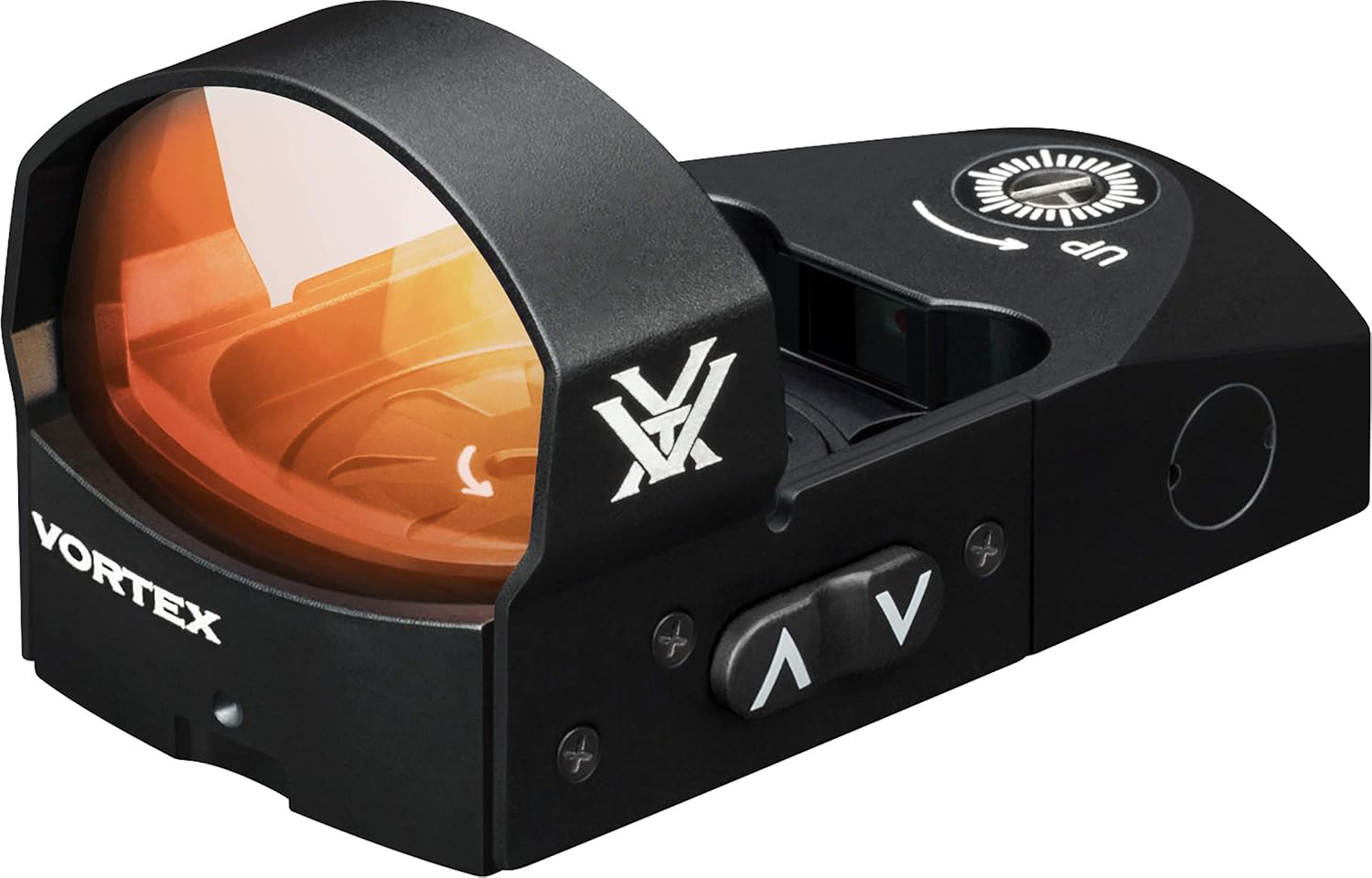
The Vortex Venom remains one of the most popular entry-level shotgun optics because it combines simplicity, affordability, and respectable field durability.
Specs
- Footprint: Docter/Noblex
- Dot size: 3 MOA
- Battery: CR1632 top-load
- Weight: 1.1 oz
- Brightness: Auto/manual
- Housing: Aluminum
Pros
- Excellent budget value
- Lightweight
- Easy battery replacement
- Clear controls
- Good aftermarket support
Cons
- Smaller viewing window
- More noticeable distortion at edges
- Less durable than premium models
The Venom works especially well for hunters transitioning into optics-equipped shotguns for the first time. Its low weight keeps the Browning balanced, and the optic is intuitive to learn.
The 3 MOA dot is crisp under most lighting conditions, though the lens tint is more visible compared to premium optics. I also noticed moderate edge distortion when rapidly transitioning across moving targets.
Parallax handling is decent but not class-leading. Maintaining consistent cheek weld helps maximize performance. Fortunately, the Venom’s compact deck height makes that easier on vent-rib shotgun mounts.
Controls are straightforward and glove-friendly enough for cold-weather hunts. The top-loading battery compartment is a major convenience feature that prevents unnecessary remounting.
Recoil resistance was solid during testing with heavy field loads. However, the optic does not feel as bombproof as the Steiner MPS or Trijicon SRO. Long-term abuse tolerance is more moderate.
Many online users appreciate the Venom because mounting hardware is widely available and affordable. The Docter footprint has broad compatibility across shotgun rib mounts and turkey gun adapters.
For shooters who want an affordable but functional optic on the Citori 725 Field, the Venom remains one of the safest entry points without compromising usability too severely.
➡️➡️➡️ Explore User Feedback and Current Pricing on Amazon
Steiner MPS

The Steiner MPS is the best enclosed-emitter option for harsh hunting environments where rain, snow, mud, or debris could compromise open-emitter optics.
Specs
- Footprint: ACRO-style
- Battery: CR1632 side-load
- Window: Enclosed rectangular
- Waterproof: Fully sealed
- Dot size: 3.3 MOA
- Construction: Heavy-duty aluminum
Pros
- Fully enclosed emitter
- Outstanding weather resistance
- Extremely rugged
- Clean side battery access
- Minimal emitter obstruction
Cons
- Heavier than open optics
- Smaller window than SRO
- Higher mounting profile
The MPS is built like a tank. On the Citori 725 Field, it feels more specialized toward turkey hunting and harsh-weather use than sporting clays.
The enclosed emitter completely eliminates one of the biggest weaknesses of shotgun red dots: moisture blocking the emitter. During rain testing, the optic continued functioning perfectly while several open-emitter designs struggled with water droplets.
Glass clarity is impressive for an enclosed optic. Lens tint remains controlled and window distortion is low. The smaller viewing area compared to the SRO is noticeable, but the tradeoff is dramatically better environmental protection.
Parallax performance is excellent. The optic tracks consistently during recoil and target transitions. The side battery compartment is another major advantage because it avoids unnecessary re-zeroing.
One thing I immediately noticed was recoil stability. The MPS feels exceptionally secure under heavy loads, and the enclosed housing resists flex better than many lightweight optics.
Online user feedback strongly favors the MPS for turkey hunting, tactical shotguns, and wet climates. Many shooters specifically mention its reliability during poor weather conditions where open emitters fail.
Mounting requires an ACRO-compatible rib plate or adapter. The optic sits slightly higher than minimalist open designs, but a quality low-profile mount keeps the presentation manageable.
For hunters prioritizing reliability over minimal weight, the Steiner MPS is one of the toughest optics available today.
➡️➡️➡️ Explore User Feedback and Current Pricing on Amazon
How I Tested / Evaluation Criteria
Parallax
Shotgun shooting rarely allows a perfectly centered eye position, especially during fast bird transitions. I evaluated how forgiving each optic remained during off-axis shooting positions and awkward cheek welds. Larger windows generally reduced perceived parallax problems substantially.
Co-Witness / Deck Height
Traditional co-witness concepts do not fully apply to over-under shotguns, but deck height absolutely matters. I focused heavily on whether each optic preserved natural pointing characteristics without forcing an unnatural head position.
Durability
Heavy shotgun recoil creates violent impulse forces that quickly expose weak optics. I tested repeated high-brass loads, rapid firing strings, and simulated field abuse to evaluate housing integrity, lens stability, and mounting reliability.
Battery
Battery access matters more on rib-mounted shotguns because removing the optic can affect zero consistency. Side-loading and top-loading battery systems scored significantly higher than bottom-mounted designs.
Brightness Range
Shotgun optics must function in dark timber, open snow fields, and direct sunlight. I evaluated brightness range, auto-adjustment reliability, and whether dots bloomed excessively under harsh conditions.
Glass Quality
Lens tint, edge distortion, and clarity affect target tracking speed more than many shooters realize. Cleaner glass makes crossing birds easier to follow and reduces visual fatigue during extended sporting clays sessions.
Controls Ergonomics
Cold weather gloves expose weak button designs quickly. I tested brightness controls under wet and gloved conditions while evaluating tactile feedback and operational speed.
Mounting Ecosystem
The Browning Citori 725 Field depends entirely on aftermarket mounting systems. I prioritized optics with broad footprint compatibility and reliable vent-rib mounting support.
How to Choose the Right Red Dot for This Gun
Choosing the right optic for the Browning Citori 725 Field is less about raw specifications and more about maintaining the shotgun’s handling characteristics. A poorly chosen optic can completely ruin the natural balance that makes the 725 such a respected over-under.
The first factor is mounting height. Shotguns rely heavily on instinctive indexing and consistent cheek weld. If the optic sits too high above the rib, the shooter’s head position changes dramatically, slowing target acquisition and hurting consistency. Low-profile mounting systems paired with compact optics generally perform best.
Window size is another major consideration. Sporting clays shooters usually benefit from larger windows like the Trijicon SRO or DeltaPoint Pro because they improve peripheral tracking and reduce visual tunnel effect. Turkey hunters, however, may prioritize enclosed durability over maximum field of view.
Emitter design also matters more on shotguns than on pistols. Open emitters are lighter and often provide larger windows, but rain, mud, or snow can obstruct the emitter during hunts. Enclosed optics like the Steiner MPS solve that issue entirely at the cost of additional weight.
Footprint compatibility is critical because shotgun rib mounts vary considerably. RMR-pattern optics currently offer the broadest aftermarket support for vent-rib mounting systems. ACRO and DPP footprints are growing in popularity but still have fewer mounting options.
Dot size should match your intended use. Smaller dots help with precision slug shooting, while larger dots or circle reticles excel for fast-moving birds. I personally find multi-reticle systems particularly effective for turkey hunting and crossing targets.
Finally, consider balance and recoil resistance together. Lightweight optics preserve swing dynamics, but heavier premium optics often survive recoil abuse more effectively over time. The ideal setup balances durability with natural shotgun handling rather than chasing tactical aesthetics.
FAQs
Can you mount a red dot directly to a Browning Citori 725 Field?
Not typically. Most setups require a vent-rib mount, saddle mount, or specialized aftermarket adapter plate compatible with the optic footprint.
What optic footprint works best on the Citori 725?
RMR footprints currently have the best aftermarket mount availability for shotgun rib systems.
Are enclosed emitters better for hunting shotguns?
Yes for harsh weather. Enclosed emitters resist rain, mud, and snow far better than open-emitter optics.
Does adding a red dot ruin shotgun balance?
It can if the optic is too heavy or mounted too high. Lightweight optics with low-profile mounts preserve handling best.
What dot size works best for bird hunting?
Many shooters prefer larger dots or circle reticles because they improve target pickup speed during fast transitions.
Conclusion
The Best Red Dot For Browning Citori 725 Field ultimately depends on how you use the shotgun. For sporting clays and maximum target acquisition speed, the Trijicon SRO stands out immediately. For all-around hunting versatility and value, the Holosun 507C is extremely hard to beat. Hunters facing constant rain or harsh field conditions should strongly consider the Steiner MPS because enclosed emitters dramatically improve reliability.
No matter which optic you choose, proper mounting height and footprint compatibility matter just as much as the optic itself. A balanced setup that preserves the Citori’s natural handling will always outperform a bulky tactical configuration that disrupts swing dynamics.
Sources referenced include manufacturer specifications from Trijicon, Holosun, Leupold, shotgun optic mounting discussions on Reddit Shooting Community, and footprint compatibility references from CH Precision Weapons.
Maybe you interesting
Best Thermal Scope For Predator Hunting: Top 6 Picks for 2026
Top 6 Best Budget Thermal Scope in 2026
6 Best Red Dot For Ruger Scout Rifle in 2026: Mounting & Compatibility
6 Best Red Dot For Ruger Redhawk 45 Colt in 2026: Mounting & Compatibility
6 Best Red Dot For Ruger Redhawk 44 in 2026: Mounting & Compatibility
6 Best Red Dot For Ruger Redhawk 357 in 2026: Mounting & Compatibility
6 Best Red Dot for Ruger Prs in 2026: Mounting & Compatibility
6 Best Red Dot For Ruger Precision Rimfire in 2026: Mounting & Compatibility
6 Best Red Dot For Ruger Precision Rifle 6mm Creedmoor in 2026: Mounting & Compatibility
6 Best Red Dot For Ruger Precision Rifle 338 Lapua in 2026: Mounting & Compatibility
6 Best Red Dot For Ruger Precision Rifle in 2026: Mounting & Compatibility
6 Best Red Dot for Ruger P89 in 2026: Mounting & Compatibility