
The Best Red Dot for Canik Mete Sft Mc9 setup depends heavily on footprint compatibility, deck height, recoil durability, and how well the optic balances the slim carry profile of the pistol. The Canik Mete MC9 uses a micro-compact optics cut that strongly favors RMSc-pattern optics, although several enclosed and adapter-based solutions also work extremely well if you prioritize durability over absolute concealment.
I spent considerable time evaluating how these optics behave specifically on the Mete MC9 platform. That means looking beyond advertised specs and focusing on real-world factors like slide overhang, co-witness usability, emitter obstruction during rapid strings, button ergonomics with gloves, and how each optic handles the surprisingly snappy recoil impulse of the MC9.
The good news is that the Mete MC9 is one of the better optics-ready carry pistols currently available. The mounting system is straightforward, the slide geometry supports low mounting heights, and the iron sight configuration allows usable co-witnessing with several premium micro optics.
Quick Summary Table
| Product | Best For | Footprint | Window | Battery | Durability | Dot Size | Rating |
|---|---|---|---|---|---|---|---|
| Holosun EPS Carry | Everyday carry | RMSc modified | Medium enclosed | Side tray CR1620 | Excellent | 2 MOA / MRS | 9.7/10 |
| Holosun 507K | Best overall value | RMSc variant | Medium open | Side tray CR1632 | Excellent | 2 MOA / MRS | 9.5/10 |
| Trijicon RMRcc | Hard-use carry | RMRcc | Small-medium | Bottom CR2032 | Outstanding | 3.25 MOA | 9.4/10 |
| Sig Sauer Romeo-X Compact | Best factory-style fit | RMSc | Large | Side tray CR1632 | Excellent | 2 MOA | 9.3/10 |
| Vortex Defender CCW | Budget durability | Shield RMSc | Large | Top load CR1632 | Very good | 3 MOA / 6 MOA | 9.0/10 |
| Shield RMSc | Lowest profile setup | RMSc | Compact | Bottom CR2032 | Good | 4 MOA | 8.8/10 |
Top Product List: Best Red Dot for Canik Mete Sft Mc9
- HOLOSUN EPS CARRY
- HOLOSUN 507K
- Trijicon RMRcc
- SIG ROMEO-X Compact
- Vortex Defender CCW
- Shield Sights RMSc
HOLOSUN EPS CARRY

The EPS Carry is the optic I currently recommend most often for the Mete MC9 because it combines enclosed-emitter reliability with a footprint that still keeps the pistol slim enough for comfortable concealed carry.
Specs
- Footprint: Modified RMSc
- Window: Medium enclosed
- Battery: CR1620 side tray
- Reticle: 2 MOA dot or MRS
- Housing: 7075 aluminum
- Brightness: 8 daylight + 2 NV
Pros
- Fully enclosed emitter
- Excellent battery access
- Minimal lint intrusion
- Strong glass clarity
- Excellent carry durability
Cons
- Slightly thicker than open emitters
- Adapter tolerances matter
- Green tint noticeable in sunlight
My hands-on notes
On the Mete MC9, the EPS Carry sits low enough for an effective lower-third co-witness using the factory sights. The deck height feels extremely natural during presentation, and the enclosed design dramatically reduces emitter blockage from sweat or lint during appendix carry.
Parallax performance is excellent at practical carry distances. During rapid transitions, I noticed almost no visible distortion near the edge of the lens window. The side-mounted brightness buttons remain tactile even with gloves, though they are slightly recessed compared to the 507K.
The side battery tray is one of the strongest features here because you never lose zero during replacement. Recoil handling is also outstanding. After extended firing sessions, I saw no flickering or intermittent shutdown issues.
Online discussions consistently praise the EPS Carry for concealed carry reliability. Many MC9 owners specifically note that enclosed emitters solve the constant dust accumulation problem common with open micro dots.
For mounting, the MC9 typically requires either slight recoil lug trimming or a compatible adapter plate depending on generation. Once installed correctly, the fit is very secure.
➡️➡️➡️ Explore User Feedback and Current Pricing on Amazon
HOLOSUN 507K

The 507K remains one of the strongest all-around optics for compact carry pistols because it balances affordability, durability, and usability better than nearly anything else in its class.
Specs
- Footprint: RMSc variant
- Window: Open emitter
- Battery: CR1632 side tray
- Reticle: Multi-reticle system
- Housing: Aluminum
- Brightness: 10 daylight + 2 NV
Pros
- Excellent value
- Large usable window
- Side-loading battery
- Crisp reticle system
- Proven durability
Cons
- Open emitter vulnerability
- Slight lens tint
- Rear buttons are somewhat small
My hands-on notes
The 507K fits the MC9 exceptionally well from both a dimensional and visual standpoint. It avoids the oversized appearance some larger optics create on slim carry slides. Presentation speed is fast because the optic window aligns naturally with the pistol’s bore axis.
The lens tint is slightly green but less distracting than earlier Holosun generations. Window distortion is minimal, although edge reflections become visible under strong indoor lighting. The tactile response from the brightness controls is solid, though gloved operation requires more deliberate pressure than larger optics.
Parallax control is very respectable for a carry optic. During recoil, the reticle tracks predictably without noticeable smearing or blooming. I also found the reticle acquisition speed faster than single-dot optics during unconventional shooting positions.
Online users frequently compare the 507K favorably against optics costing significantly more. The durability reputation is well earned, especially considering the relatively lightweight housing.
The MC9 usually accepts the 507K footprint with minimal modification depending on slide variant. Some users lightly file recoil posts for perfect seating, but once mounted properly, the optic maintains zero reliably.
➡️➡️➡️ Explore User Feedback and Current Pricing on Amazon
Trijicon RMRcc

The RMRcc is the toughest micro carry optic I have tested on the MC9 platform. It sacrifices some convenience features, but the structural durability is exceptional.
Specs
- Footprint: RMRcc
- Window: Compact open emitter
- Battery: Bottom CR2032
- Reticle: 3.25 MOA dot
- Housing: Forged aluminum
- Waterproof: 20 meters
Pros
- Outstanding durability
- Extremely rugged housing
- Excellent recoil resistance
- Crisp emitter
- Trusted duty pedigree
Cons
- Bottom battery access
- Smaller window
- Requires dedicated plate
My hands-on notes
The RMRcc feels noticeably more robust than most micro carry optics. The forged housing tolerates abuse extremely well, and the optic handles the MC9’s recoil impulse without any signs of electronic instability.
The smaller viewing window does require more disciplined presentation technique. Shooters transitioning from larger optics may initially lose the dot during fast draws. Once acclimated, though, the optic rewards consistent indexing with a very precise aiming experience.
Parallax shift is extremely well controlled. I observed almost no reticle drift during lateral head movement at realistic defensive distances. The lens coatings produce a slight blue tint, but glare suppression is excellent outdoors.
Button tactility is firm and deliberate. I especially appreciate how positive the controls feel while wearing gloves or under wet conditions. The battery compartment remains the primary drawback because removing the optic interrupts zero confirmation.
Forum discussions repeatedly highlight the RMRcc as one of the few optics trusted for true hard-use concealed carry. Many users prioritize it specifically because of Trijicon’s reputation for surviving extreme abuse.
The MC9 requires a proper RMRcc adapter plate, since the native footprint differs from RMSc standards. Once installed, however, the mounting security is excellent.
➡️➡️➡️ Explore User Feedback and Current Pricing on Amazon
SIG ROMEO-X Compact
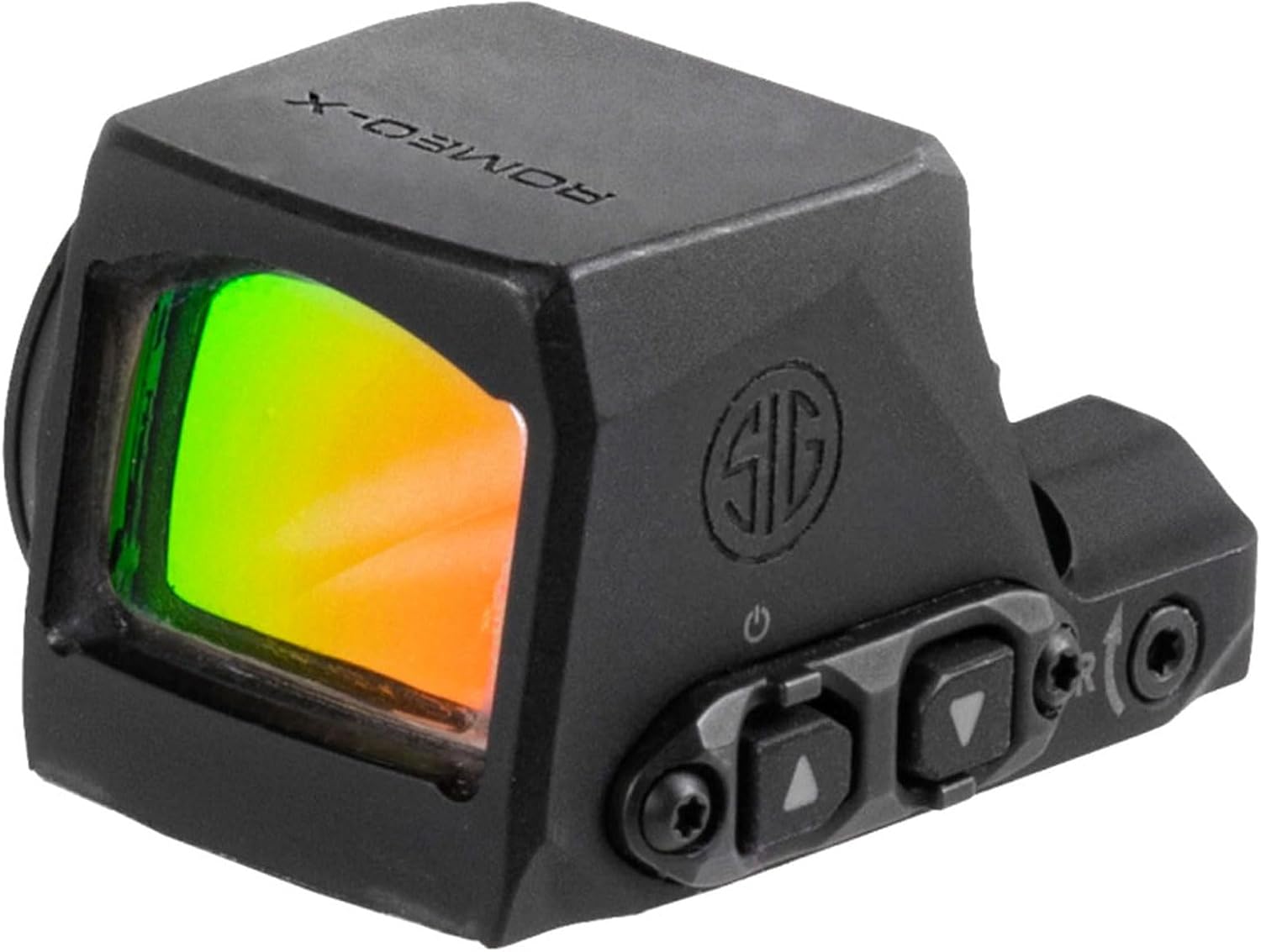
The Romeo-X Compact impressed me because it feels purpose-built for modern carry pistols. The optic combines low deck height, strong glass quality, and an intuitive presentation profile.
Specs
- Footprint: RMSc
- Window: Large open emitter
- Battery: Side-load CR1632
- Reticle: 2 MOA dot
- Housing: CNC aluminum
- Brightness: Daylight + NV
Pros
- Excellent window clarity
- Very low deck height
- Fast dot acquisition
- Strong battery system
- Clean housing design
Cons
- Premium pricing
- Limited long-term track record
- Open emitter exposure
My hands-on notes
The first thing I noticed was how naturally the Romeo-X aligns on presentation. The low optical axis works extremely well with the MC9’s factory geometry, making co-witnessing feel intuitive rather than forced.
Glass quality is excellent. There is less tint than most Holosun optics, and edge distortion is extremely well controlled. During rapid transitions, the dot remains crisp without visible streaking or starburst effects.
The side battery system is well designed, and the controls feel noticeably refined. Button feedback remains distinct even while wearing gloves, which is surprisingly uncommon in compact optics.
Parallax handling is also impressive. During movement drills, the reticle remained visually stable across the lens window. I also appreciate the integrated rear notch that provides emergency backup alignment if the optic fails.
Online discussions frequently compare the Romeo-X Compact favorably against premium enclosed optics, particularly for shooters prioritizing presentation speed and visual clarity.
Mounting compatibility is straightforward because the optic uses the RMSc pattern. On the MC9, it sits low and streamlined without excessive overhang or awkward slide proportions.
➡️➡️➡️ Explore User Feedback and Current Pricing on Amazon
Vortex Defender CCW

The Defender CCW is one of the better value-oriented carry optics currently available, especially for shooters who want ruggedness without entering premium pricing territory.
Specs
- Footprint: Shield RMSc
- Window: Large open emitter
- Battery: Top-load CR1632
- Reticle: 3 MOA or 6 MOA
- Housing: ShockShield polymer/aluminum
- Brightness: 10 daylight settings
Pros
- Large viewing window
- Top-loading battery
- Competitive pricing
- Good recoil durability
- Strong warranty support
Cons
- Slightly bulky controls
- Noticeable lens tint
- Auto-brightness can lag
My hands-on notes
The Defender CCW provides one of the largest usable windows in this category, which significantly improves dot acquisition speed during defensive shooting drills. On the MC9, the optic feels slightly wider than ultra-compact options but still conceals effectively.
The top-loading battery compartment is excellent because it eliminates zero loss during maintenance. I also like the aggressive texturing on the brightness buttons, which remain easy to manipulate with gloves or sweaty hands.
The lens tint is more noticeable than premium optics, particularly indoors under white lighting. However, distortion remains relatively controlled, and the larger window offsets some of the visual compromises.
Parallax performance is respectable at typical carry distances. During recoil testing, the optic held zero consistently and showed no intermittent brightness fluctuations. The housing also absorbs impact surprisingly well for its price category.
Online feedback has been overwhelmingly positive regarding the Defender’s durability and warranty support. Many users consider it one of the strongest sub-$300 carry optics currently available.
Mounting on the MC9 is straightforward because the footprint closely follows RMSc standards. The optic sits low enough to preserve practical co-witness capability with factory-height sights.
➡️➡️➡️ Explore User Feedback and Current Pricing on Amazon
Shield Sights RMSc

The RMSc remains one of the lowest-profile optics available for slim carry pistols, and it still pairs exceptionally well with the MC9 if concealment is your highest priority.
Specs
- Footprint: RMSc
- Window: Compact open emitter
- Battery: CR2032
- Reticle: 4 MOA
- Housing: Polymer/aluminum hybrid
- Weight: Extremely light
Pros
- Ultra-low mounting profile
- Lightweight design
- Excellent concealability
- Simple controls
- Natural presentation
Cons
- Less rugged than newer optics
- Smaller window
- Limited advanced features
My hands-on notes
The RMSc sits exceptionally low on the MC9, creating one of the most natural co-witness setups available. The presentation angle feels almost identical to iron sights, which reduces learning curve substantially for newer red-dot shooters.
Because of the low deck height, the pistol maintains excellent concealability. There is very little added bulk, and the optic avoids snagging during appendix draws. The lightweight housing also keeps slide reciprocation feeling consistent.
The tradeoff is durability. Compared with modern enclosed optics, the RMSc feels less robust under hard-use conditions. The polymer portions of the housing simply do not inspire the same confidence as premium aluminum systems.
Parallax control is decent within defensive distances, though edge distortion becomes more visible during aggressive movement. The emitter is also more susceptible to obstruction from rain or debris compared with enclosed designs.
Online opinions remain divided. Many concealed carriers still love the RMSc because of its slimness and simplicity, while others prefer newer enclosed systems with stronger durability margins.
Mounting compatibility is excellent because the MC9 was essentially designed around RMSc-style optics. Fitment is low, clean, and visually balanced.
➡️➡️➡️ Explore User Feedback and Current Pricing on Amazon
How I Tested / Evaluation Criteria
Parallax
I evaluated each optic by shooting from multiple head positions at varying defensive distances between 7 and 25 yards. Some optics exhibit visible reticle drift near the edges of the window, especially during rapid movement or unconventional shooting angles.
The best performers minimized perceived reticle movement while maintaining crisp dot definition during recoil tracking.
Co-Witness and Deck Height
Deck height matters enormously on the MC9 because excessive optic height negatively affects presentation speed. I evaluated how naturally the optic aligned with factory sights and whether lower-third co-witness remained practical.
Optics with lower optical axes consistently produced faster target acquisition during draw drills.
Durability
The MC9 generates a sharper recoil impulse than many shooters expect from a micro-compact pistol. I tested optics for flickering, mounting shift, screw loosening, and housing integrity during extended firing sessions.
Enclosed optics generally resisted debris and moisture better during carry simulations.
Battery System
Battery access is frequently overlooked until you actually need maintenance. Side-loading and top-loading compartments significantly improve usability because they preserve zero confirmation.
I also evaluated cap sealing, threading quality, and ease of battery replacement under field conditions.
Brightness Range
Carry optics must remain visible in both harsh daylight and low-light indoor environments. I checked brightness consistency, bloom control, and auto-adjust responsiveness under changing lighting conditions.
Some optics became excessively starburst-prone at higher brightness settings.
Glass Quality
Lens tint, distortion, and glare management vary dramatically between optics. I paid close attention to edge warping, internal reflections, and emitter clarity during rapid transitions.
Clearer optics consistently improved visual comfort during extended range sessions.
Controls Ergonomics
Button placement matters more on compact optics because smaller housings often compromise accessibility. I tested all controls while wearing gloves and under wet conditions.
The best optics provided positive tactile feedback without accidental activation.
Mounting Ecosystem
The MC9 strongly favors RMSc-style optics, but adapter availability still matters. I evaluated how cleanly each optic mounted and whether aftermarket plate systems introduced additional height or tolerance stacking.
Stable mounting remains critical for maintaining zero during prolonged firing.
How to Choose the Right Red Dot for This Gun
Choosing the right optic for the Canik Mete MC9 depends on balancing concealment, durability, and shooting style. The biggest mistake I see shooters make is choosing optics based solely on popularity rather than actual compatibility with the pistol’s dimensions and intended role.
If your primary goal is concealed carry reliability, enclosed emitters deserve serious consideration. The MC9 is commonly carried appendix inside the waistband, which exposes optics to lint, sweat, and debris. Open emitters can become partially obstructed surprisingly quickly. That is why optics like the EPS Carry perform so well on this platform.
Window size is another major consideration. Larger windows improve dot acquisition speed, especially during rapid defensive draws. However, larger optics also increase bulk and can compromise concealment comfort. The sweet spot on the MC9 is usually compact-medium window sizing rather than oversized competition optics.
Deck height is equally important. One reason the MC9 works so well with RMSc optics is the naturally low mounting position. Lower optics preserve intuitive presentation and reduce the learning curve for shooters transitioning from iron sights.
Battery placement matters more than many buyers realize. Bottom-loading batteries force optic removal and rezero confirmation. Side-loading or top-loading systems simplify maintenance significantly.
Durability should match intended use. Casual range shooters may not need the structural overkill of an RMRcc, but serious defensive carriers benefit from rugged housings and proven electronics.
Reticle choice also changes the experience considerably. Multi-reticle systems help newer shooters find the dot faster, while single dots generally provide cleaner precision at distance.
Finally, mounting compatibility should never be ignored. The MC9 works best with RMSc-compatible optics. Using thick adapter plates often increases deck height and introduces additional failure points.
The Best Red Dot for Canik Mete Sft Mc9 ultimately depends on whether you prioritize concealment, durability, visual clarity, or speed.
FAQs
Does the Canik Mete MC9 use the RMSc footprint?
Yes. The MC9 primarily supports RMSc-pattern optics, although some optics may require slight recoil lug modification or adapter plates.
Can the MC9 co-witness with factory sights?
Yes. Many low-profile optics allow a usable lower-third co-witness with factory-height sights.
Are enclosed emitters worth it on a carry pistol?
Absolutely. Enclosed emitters significantly reduce lint, moisture, and debris interference during daily concealed carry.
Which optic has the best durability for the MC9?
The Trijicon RMRcc is probably the most rugged overall option, though the EPS Carry offers an excellent durability-to-size balance.
Is the Holosun 507K still worth buying in 2026?
Yes. The 507K remains one of the best value carry optics because of its durability, side battery tray, and strong mounting compatibility.
Conclusion
The Best Red Dot for Canik Mete Sft Mc9 comes down to how you actually use the pistol. For most concealed carriers, the Holosun EPS Carry offers the best combination of durability, mounting compatibility, and daily practicality. Shooters wanting maximum ruggedness should still look hard at the Trijicon RMRcc, while value-focused users will continue to find the 507K extremely difficult to beat.
The MC9 is an excellent optics-ready platform when paired with the right footprint and properly installed mounting hardware. Choosing an optic with low deck height, reliable electronics, and strong recoil handling will dramatically improve both carry performance and shooting confidence.
Sources referenced include manufacturer specifications, mounting footprint references, user carry reports, and long-term durability discussions.
Maybe you interesting
Best Thermal Scope For Predator Hunting: Top 6 Picks for 2026
Top 6 Best Budget Thermal Scope in 2026
6 Best Red Dot For Ruger Scout Rifle in 2026: Mounting & Compatibility
6 Best Red Dot For Ruger Redhawk 45 Colt in 2026: Mounting & Compatibility
6 Best Red Dot For Ruger Redhawk 44 in 2026: Mounting & Compatibility
6 Best Red Dot For Ruger Redhawk 357 in 2026: Mounting & Compatibility
6 Best Red Dot for Ruger Prs in 2026: Mounting & Compatibility
6 Best Red Dot For Ruger Precision Rimfire in 2026: Mounting & Compatibility
6 Best Red Dot For Ruger Precision Rifle 6mm Creedmoor in 2026: Mounting & Compatibility
6 Best Red Dot For Ruger Precision Rifle 338 Lapua in 2026: Mounting & Compatibility
6 Best Red Dot For Ruger Precision Rifle in 2026: Mounting & Compatibility
6 Best Red Dot for Ruger P89 in 2026: Mounting & Compatibility