
The Best Red Dot for HK USC setup depends heavily on mounting height, rail geometry, recoil behavior, and whether you want a compact lightweight optic or a duty-grade enclosed system. The HK USC remains one of the softest-shooting .45 ACP carbines available, but its tall polymer receiver and unique ergonomics make optic selection more important than many shooters realize.
I spent considerable time evaluating optics that actually complement the USC platform rather than simply fitting onto its top rail. Window size, cheek weld consistency, emitter durability, and co-witness potential matter more on this rifle than on a typical AR PCC. Some optics sit too high and ruin the natural pointability of the USC. Others feel front-heavy or struggle with repeated recoil impulse from heavy .45 ACP loads.
This guide focuses on six optics that genuinely pair well with the HK USC in 2026, including premium duty-grade options, lightweight compact dots, and value-oriented solutions that still hold zero under extended range sessions.
Quick Summary Table
| Product | Best For | Footprint | Window | Battery | Durability | Dot Size | Rating |
|---|---|---|---|---|---|---|---|
| Aimpoint Micro T-2 | Duty-grade reliability | Micro footprint | Compact | CR2032 | Exceptional | 2 MOA | 9.8/10 |
| HOLOSUN AEMS | Wide field of view | Proprietary | Large | CR2032 + Solar | Excellent | 2 MOA | 9.5/10 |
| Trijicon MRO | Fast target transitions | MRO footprint | Large circular | CR2032 | Outstanding | 2 MOA | 9.2/10 |
| EOTECH XPS2 | CQB performance | Integrated | Holographic window | CR123 | Military-grade | 68 MOA ring/1 MOA | 9.4/10 |
| Sig Sauer Romeo5 | Budget-friendly USC setup | Micro footprint | Compact | CR2032 | Good | 2 MOA | 8.8/10 |
| Aimpoint Duty RDS | Modern enclosed duty optic | Micro footprint | Medium | CR2032 | Excellent | 2 MOA | 9.3/10 |
Top Product List: Best Red Dot for HK USC
Aimpoint Micro T-2

The Aimpoint Micro T-2 remains one of the cleanest and most balanced optics I have mounted on the HK USC. Its lightweight design preserves the carbine’s excellent handling while still delivering true duty-grade reliability and exceptional battery life.
Specs
- 2 MOA dot
- 50,000-hour battery life
- Fully enclosed emitter
- Night vision compatible
- Micro footprint
- Hard-anodized aluminum housing
Pros
- Extremely lightweight
- Minimal parallax shift
- Excellent battery runtime
- Outstanding glass clarity
- Handles recoil effortlessly
Cons
- Expensive
- Small window compared to modern enclosed optics
- Brightness knob can feel stiff with gloves
My hands-on experience with the T-2 on the USC was excellent. The compact housing keeps the rifle agile during rapid transitions, especially in close-range drills. I noticed almost no perceptible window distortion even near the edges, and the lens tint remains significantly cleaner than many competing micro dots.
Parallax control is outstanding. Even during awkward shooting positions around barricades, the dot remained predictable. The low deck height also works well with common USC rail adapters and aftermarket low-profile mounts, producing a more natural cheek weld than taller enclosed optics.
The controls feel tactile and positive, although the brightness dial can be somewhat stiff while wearing gloves in cold weather. The battery compartment design remains one of the best in the industry because it seals consistently and resists loosening under repeated recoil impulse.
Online discussions consistently praise the T-2 for reliability. Many USC owners specifically mention its ability to maintain zero despite long strings of suppressed fire and heavy .45 ACP loads. The optic also pairs extremely well with aftermarket folding stock conversions.
Mounting is straightforward because the T-2 uses the widely supported Micro footprint. Most USC top rail adapters can accommodate low mounts without issue.
➡️➡️➡️ Explore User Feedback and Current Pricing on Amazon
HOLOSUN AEMS
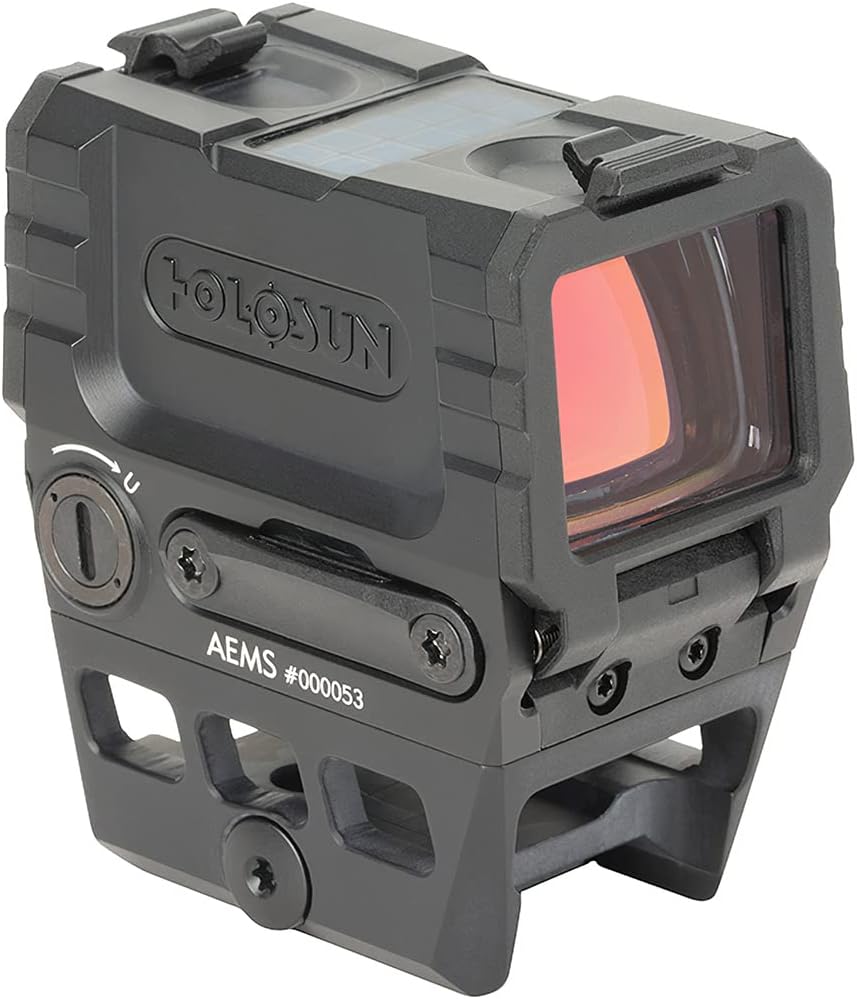
The HOLOSUN AEMS surprised me on the HK USC because its larger viewing window dramatically improves target acquisition without adding excessive weight. For shooters wanting a modern enclosed optic with wide peripheral visibility, this is one of the strongest values available.
Specs
- 2 MOA dot with circle reticle
- Solar backup system
- CR2032 battery
- Enclosed emitter
- Shake Awake technology
- Multiple NV settings
Pros
- Huge usable window
- Lightweight for enclosed optic
- Crisp reticle system
- Excellent brightness range
- Strong value proposition
Cons
- Slight blue lens tint
- Buttons are smaller than ideal
- Proprietary mounting ecosystem
The AEMS feels particularly fast on the USC platform. The large window compensates for the rifle’s relatively tall sight line and makes snap shooting easier during close-range movement drills. I found target transitions noticeably faster compared to traditional tube-style optics.
The optic handles recoil extremely well. During rapid .45 ACP strings, I observed no flickering or emitter instability. The enclosed design also keeps debris away from the emitter, which matters more on carbines than many shooters expect.
Parallax performance is very good, although not quite at Aimpoint level near extreme window edges. Still, the distortion remains minimal enough that it never distracted me during practical shooting. The reticle remains sharp and highly visible even under bright daylight conditions.
The controls are glove-friendly but smaller than I prefer. The battery tray system works well and allows replacement without removing the optic, which preserves zero. Lens coatings provide respectable clarity despite a slightly noticeable blue tint.
Many online USC owners appreciate the AEMS because it modernizes the rifle without overwhelming it visually. Discussions often mention how well the optic balances with suppressor-ready USC conversions and rail upgrades.
Mounting requires attention because the AEMS uses its own footprint. Fortunately, several low-profile mounts now work well on the USC rail system and maintain comfortable cheek weld geometry.
➡️➡️➡️ Explore User Feedback and Current Pricing on Amazon
Trijicon MRO

The Trijicon MRO remains one of my favorite optics for PCC-style rifles because of its exceptionally large field of view and fast presentation characteristics. On the HK USC, the optic feels natural and extremely responsive during dynamic shooting.
Specs
- 2 MOA dot
- 5-year battery life
- Fully sealed housing
- Large objective lens
- Ambidextrous brightness control
- MRO mounting footprint
Pros
- Very fast sight picture
- Excellent durability
- Large viewing area
- Good brightness control
- Lightweight construction
Cons
- Slight magnification effect
- Noticeable blue tint
- Mount selection matters greatly
The MRO excels during movement-heavy drills. The large objective window creates a more open sight picture than many compact optics, which pairs beautifully with the USC’s controllable recoil impulse. I found rapid target transitions exceptionally smooth.
The slight magnification effect remains the optic’s biggest compromise. Some shooters notice it immediately, especially during lateral movement. Personally, I adapted quickly, but it is worth mentioning because not everyone enjoys that visual characteristic.
Parallax control is solid overall. While not as refined as the Aimpoint T-2, the dot remains stable enough for practical defensive and competition shooting. Window distortion is minimal, though the blue tint becomes more visible in bright outdoor conditions.
The brightness knob feels excellent with gloves. It offers firm tactile feedback without being overly stiff. Battery life is excellent, and the sealed housing inspires confidence for wet or dirty environments.
Online discussions surrounding the MRO on PCCs remain overwhelmingly positive. USC owners often praise its combination of speed and ruggedness, particularly for suppressor-equipped builds and home-defense applications.
Mounting clarity is important because the USC benefits from lower mount heights. Choosing a low-profile MRO mount dramatically improves cheek weld consistency and keeps the rifle balanced.
➡️➡️➡️ Explore User Feedback and Current Pricing on Amazon
EOTECH XPS2

The EOTECH XPS2 delivers one of the fastest CQB sight pictures available, and it complements the HK USC exceptionally well for close-range defensive or range applications. The holographic reticle remains highly intuitive under stress.
Specs
- 68 MOA ring with 1 MOA center dot
- CR123 battery
- Holographic display
- Side-button controls
- Integrated mounting base
- Waterproof housing
Pros
- Outstanding close-range speed
- Massive viewing window
- Precise center aiming point
- Excellent recoil handling
- Very natural sight picture
Cons
- Shorter battery life
- Heavier than micro dots
- More expensive than budget optics
The XPS2 feels incredibly fast on the USC platform. The large square window works beautifully with the rifle’s recoil characteristics, and the holographic reticle remains easy to track during rapid strings of fire.
One thing I particularly appreciate is how forgiving the optic feels from unconventional shooting positions. Even when the rifle is slightly canted or awkwardly mounted, the reticle remains easy to acquire. The 1 MOA center dot also enables surprisingly precise shot placement at longer PCC distances.
Parallax behavior is excellent for practical use. Window distortion is minimal, and the optic remains highly usable during movement-heavy drills. The reticle brightness range is broad enough for bright daylight while still offering usable lower settings indoors.
Battery life is the major compromise compared to Aimpoint or Holosun systems. However, the side-mounted controls are excellent, especially while wearing gloves. The buttons provide strong tactile response and remain easy to access even with magnifiers nearby.
Online users consistently praise the XPS2 on PCCs and subgun-style carbines. USC owners particularly enjoy the optic’s large viewing area and rapid engagement speed for steel shooting and defensive applications.
Mounting is simple because the integrated base clamps directly onto the USC top rail without additional adapter complexity.
➡️➡️➡️ Explore User Feedback and Current Pricing on Amazon
Sig Sauer Romeo5

The Sig Sauer Romeo5 remains one of the best budget optics I have tested on the HK USC. Despite its modest price, it offers dependable performance, compact handling, and excellent usability for recreational or defensive shooting.
Specs
- 2 MOA dot
- MOTAC motion activation
- CR2032 battery
- IPX7 waterproofing
- Micro footprint
- Multiple brightness settings
Pros
- Excellent value
- Lightweight design
- Strong battery life
- Simple controls
- Reliable zero retention
Cons
- Glass quality is average
- Slight edge distortion
- Turret caps feel basic
The Romeo5 balances nicely on the USC because it avoids adding unnecessary bulk to the front end of the rifle. The compact tube keeps the handling responsive, especially during fast movement drills or range sessions involving multiple targets.
The optic performs surprisingly well under recoil. During repeated firing with heavy .45 ACP loads, the dot remained stable and retained zero consistently. The MOTAC auto-on system also works reliably and significantly extends battery life.
Parallax performance is respectable for the price category. There is some edge distortion compared to premium optics, but it remains completely usable in practical shooting contexts. The lens tint is slightly blue, though not distracting enough to affect usability.
The control buttons are reasonably tactile and remain usable with gloves. Battery replacement is straightforward, and the battery compartment seals securely without loosening during extended firing sessions.
Online shooters consistently praise the Romeo5 as one of the best entry-level PCC optics available. USC owners often recommend it for range rifles or first-time optic setups because it delivers dependable performance without premium pricing.
The Romeo5 uses the common Micro footprint, making mount selection easy. A low mount generally works best on the USC to preserve natural cheek weld alignment.
➡️➡️➡️ Explore User Feedback and Current Pricing on Amazon
Aimpoint Duty RDS

The Aimpoint Duty RDS combines much of the durability and optical quality of the T-2 with a more approachable price point. On the HK USC, it feels rugged, dependable, and purpose-built for hard use.
Specs
- 2 MOA dot
- 30,000-hour battery life
- Fully enclosed emitter
- Recessed adjustment turrets
- NV compatibility
- Micro-compatible footprint
Pros
- Exceptional durability
- Clean glass clarity
- Excellent brightness settings
- Outstanding battery life
- Strong recoil resistance
Cons
- Slightly heavier than T-2
- Thicker housing
- More tunnel effect than larger optics
The Duty RDS feels extremely solid on the USC. The thicker housing inspires confidence without making the rifle excessively front-heavy. I particularly liked how stable the optic remained during rapid firing and barricade work.
The dot clarity is excellent, and the brightness range performs very well across indoor and outdoor conditions. The recessed turrets reduce accidental adjustments, which matters on rifles that frequently ride in bags or vehicle compartments.
Parallax performance closely approaches the T-2. While there is slightly more tunnel effect because of the housing geometry, practical usability remains excellent. Window distortion is minimal, and the optic maintains a crisp sight picture under rapid movement.
The battery cap design is robust and easy to manipulate with gloves. Brightness controls feel positive without excessive resistance. The optic also handles suppressed USC recoil extremely well, with no observed flicker or emitter washout.
Online feedback surrounding the Duty RDS has been highly favorable among PCC shooters. Many appreciate receiving Aimpoint-level reliability at a more accessible price point while still retaining compatibility with Micro-pattern mounts.
Mounting flexibility is excellent because the optic shares the popular Micro footprint. Low-profile mounts produce the best cheek weld on the USC platform.
➡️➡️➡️ Explore User Feedback and Current Pricing on Amazon
How I Tested / Evaluation Criteria
Parallax
Parallax matters more on PCCs than many shooters assume because awkward shooting positions are common during dynamic drills. I evaluated each optic by shooting from unconventional angles, barricades, and partial cheek weld positions at multiple distances.
The best optics minimized visible reticle shift while preserving target clarity. Aimpoint consistently performed best here, while lower-cost optics showed more movement near window edges.
Co-Witness & Deck Height
The HK USC sits relatively high compared to many carbines, so optic height directly affects comfort and speed. I specifically tested mount combinations that maintained a natural cheek weld without forcing excessive chin positioning.
Lower deck heights generally worked best. Oversized mounts made the USC feel awkward and slowed target acquisition considerably.
Durability
I evaluated housing rigidity, turret protection, waterproofing confidence, and zero retention during extended firing strings. The USC produces a distinct recoil pulse due to its .45 ACP chambering, which exposes weak mounting systems quickly.
Enclosed optics consistently resisted debris and emitter contamination better during outdoor testing.
Battery
Battery life matters substantially for defensive or training carbines. I favored optics with multi-year runtime and efficient standby systems like Shake Awake or motion activation.
Battery compartment design also played a role. Poorly designed caps loosen faster under recoil and become frustrating during field maintenance.
Brightness Range
A good USC optic needs enough brightness for outdoor daylight while still offering usable indoor settings. I tested visibility in direct sunlight, shaded environments, and low-light indoor conditions.
Some optics also offered night vision settings, though most USC shooters likely will not prioritize that feature.
Glass Quality
Lens clarity dramatically affects shooting comfort during extended range sessions. I compared tint levels, edge distortion, and window sharpness across all optics.
Cleaner glass generally improved tracking speed and reduced eye fatigue during rapid drills.
Controls Ergonomics
Button placement and tactile feedback matter more than spec sheets suggest. I tested every optic while wearing gloves and during movement-heavy drills.
The best controls remained easy to manipulate without forcing grip changes or visual confirmation.
Mounting Ecosystem
The USC benefits enormously from compatible low-profile mounts. I prioritized optics with strong aftermarket support and flexible mounting solutions.
Micro-footprint optics generally offered the best compatibility across USC rail systems and aftermarket adapters.
How to Choose the Right Red Dot for This Gun
Choosing the right optic for the HK USC requires balancing size, mount height, durability, and intended use. The USC is not as forgiving as an AR-15 when it comes to optic ergonomics because the receiver geometry already places your sight line fairly high above bore axis.
For defensive or duty-oriented setups, enclosed emitters make the most sense. They resist moisture, lint, carbon fouling, and debris far better than open-emitter designs. This becomes especially important if your USC runs suppressed because blowback can quickly dirty exposed emitters.
Window size also matters significantly. Compact tube optics keep the rifle lightweight and balanced, but larger windows generally feel faster during close-range shooting. If your priority is rapid transitions and intuitive target acquisition, holographic or large-window enclosed optics usually perform best.
Mount height is arguably the most important factor. Many generic AR-height mounts sit too tall on the USC and create an awkward chin weld. Low-profile mounts preserve the rifle’s natural handling characteristics and dramatically improve consistency.
Battery systems deserve attention as well. PCCs often spend long periods staged for defensive use or transported between range sessions. Long runtime optics reduce maintenance concerns and increase reliability confidence.
Reticle design depends on your shooting style. Simple 2 MOA dots remain versatile and uncluttered. Circle-dot systems tend to excel for fast close-range shooting and rapid target indexing.
Weight should not be ignored either. One reason the USC feels so controllable is its balanced handling. Extremely heavy optics or oversized magnifier setups can make the rifle feel sluggish during transitions.
Finally, mounting footprint compatibility matters because the USC aftermarket is more limited than the AR ecosystem. Optics using the Aimpoint Micro footprint generally offer the easiest compatibility path with low-profile aftermarket mounts and rail adapters.
FAQs
What optic height works best on the HK USC?
Low-profile mounts generally work best because the USC already has a tall receiver geometry. Excessively tall mounts create poor cheek weld and slower target acquisition.
Is the HK USC hard on optics?
Not particularly, but the .45 ACP recoil impulse is heavier and slower than 9mm PCC recoil. Cheap optics sometimes struggle with repeated firing and can lose zero over time.
Are holographic sights good on the USC?
Yes. Holographic optics like the EOTECH XPS2 pair exceptionally well with the USC because of their large viewing windows and fast reticle acquisition.
Does the USC require a special optic footprint?
No specific footprint is required because optics mount to the rifle’s rail system. However, Micro-footprint optics usually offer the best mount availability and height flexibility.
Is an enclosed emitter necessary for the USC?
Not mandatory, but highly recommended. Enclosed emitters handle dirt, moisture, and suppressor blowback much better during extended use.
Conclusion
The Best Red Dot for HK USC ultimately depends on how you use the rifle, but the Aimpoint Micro T-2 remains my top overall recommendation because it preserves the USC’s handling while delivering elite durability, battery life, and optical performance.
Shooters wanting maximum viewing area should strongly consider the HOLOSUN AEMS or EOTECH XPS2, while budget-conscious owners will still get excellent practical performance from the Sig Sauer Romeo5. The USC deserves an optic that complements its smooth recoil characteristics and unique ergonomics rather than fighting against them.
Reliable mounting height, strong glass quality, and dependable recoil handling matter far more on this platform than flashy features alone. When paired with the right optic, the HK USC becomes one of the most enjoyable and controllable pistol-caliber carbines available today.
Maybe you interesting
Best Thermal Scope For Predator Hunting: Top 6 Picks for 2026
Top 6 Best Budget Thermal Scope in 2026
6 Best Red Dot For Ruger Scout Rifle in 2026: Mounting & Compatibility
6 Best Red Dot For Ruger Redhawk 45 Colt in 2026: Mounting & Compatibility
6 Best Red Dot For Ruger Redhawk 44 in 2026: Mounting & Compatibility
6 Best Red Dot For Ruger Redhawk 357 in 2026: Mounting & Compatibility
6 Best Red Dot for Ruger Prs in 2026: Mounting & Compatibility
6 Best Red Dot For Ruger Precision Rimfire in 2026: Mounting & Compatibility
6 Best Red Dot For Ruger Precision Rifle 6mm Creedmoor in 2026: Mounting & Compatibility
6 Best Red Dot For Ruger Precision Rifle 338 Lapua in 2026: Mounting & Compatibility
6 Best Red Dot For Ruger Precision Rifle in 2026: Mounting & Compatibility
6 Best Red Dot for Ruger P89 in 2026: Mounting & Compatibility