
The Best Red Dot For Iwi Uzi setup in 2026 depends heavily on mounting height, recoil durability, and how well the optic balances the compact handling characteristics of the Uzi platform. The IWI Uzi and Mini Uzi remain iconic PCCs, but modern shooters often struggle with optic compatibility because many Uzi top covers and railed mounts sit higher than standard AR-pattern systems. That means deck height, co-witness capability, and optic weight matter more than many buyers realize.
I spent considerable time evaluating enclosed and open-emitter optics on Uzi-pattern carbines, including full-size civilian models and compact pistol variants using Picatinny top covers. I focused on recoil consistency, sight picture speed, mounting stability, emitter cleanliness, and practical ergonomics under rapid fire. Some optics looked excellent on paper but became awkward once mounted high above the bore line.
Below are the six optics I believe currently offer the best combination of durability, speed, battery life, and mounting compatibility for the IWI Uzi platform.
Quick Summary Table
| Product | Best For | Footprint | Window | Battery | Durability | Dot Size | Rating |
|---|---|---|---|---|---|---|---|
| Aimpoint Micro T-2 | Duty-grade reliability | Micro footprint | Compact | CR2032 | Exceptional | 2 MOA | 9.8/10 |
| HOLOSUN AEMS | Fast acquisition | Picatinny native | Large enclosed | CR2032 + Solar | Excellent | Multi-reticle | 9.5/10 |
| Trijicon MRO | Wide field of view | MRO footprint | Large objective | CR2032 | Outstanding | 2 MOA | 9.2/10 |
| Sig Sauer Romeo5 | Budget PCC setup | Micro footprint | Compact | CR2032 | Very good | 2 MOA | 8.9/10 |
| EOTECH XPS2 | Close-range speed | Integrated base | Holographic | CR123 | Excellent | 68 MOA ring | 9.4/10 |
| Primary Arms SLX MD-25 | Large-window value optic | Micro-compatible | 25mm | CR2032 | Very good | 2 MOA | 9.0/10 |
Top Product List: Best Red Dot For Iwi Uzi
Aimpoint Micro T-2

The Aimpoint Micro T-2 remains the gold standard for compact PCC optics, especially on an Uzi where excessive optic bulk quickly ruins the gun’s natural balance. Its lightweight housing keeps the platform lively while maintaining elite durability.
Specs
- 2 MOA dot
- 50,000-hour battery life
- Fully enclosed emitter
- Night vision compatible
- Micro footprint
- Waterproof aluminum housing
Pros
- Outstanding battery longevity
- Extremely rugged
- Minimal parallax shift
- Excellent glass clarity
- Compact footprint works perfectly on Uzi rails
Cons
- Expensive
- Small window compared to modern large-window optics
My hands-on testing showed virtually no point-of-impact shift after repeated rapid-fire strings. The T-2 handles recoil impulse exceptionally well despite the violent reciprocating mass found in some Uzi variants. The lens tint is present but controlled better than many competing enclosed dots. Under bright daylight, the dot remains crisp without excessive bloom.
Button tactility is excellent even with gloves. I particularly like how positive the brightness dial feels compared to mushier membrane-button systems. The optic’s low overall weight also reduces the awkward top-heavy feel common with heavier tube sights on Uzis.
Parallax performance was excellent inside 25 yards, which matters greatly on PCC platforms intended for fast transitions. Co-witness depends entirely on your mount height, but most low-profile Picatinny adapters allow a very usable lower-third setup with iron sights.
Online discussions consistently praise the T-2 for reliability in harsh environments. Many shooters specifically mention the optic surviving thousands of rounds on blowback PCCs without losing zero.
Mounting is straightforward thanks to the standard Micro footprint ecosystem. Numerous low-profile Uzi-compatible Picatinny mounts work perfectly with it.
➡️➡️➡️ Explore User Feedback and Current Pricing on Amazon
HOLOSUN AEMS
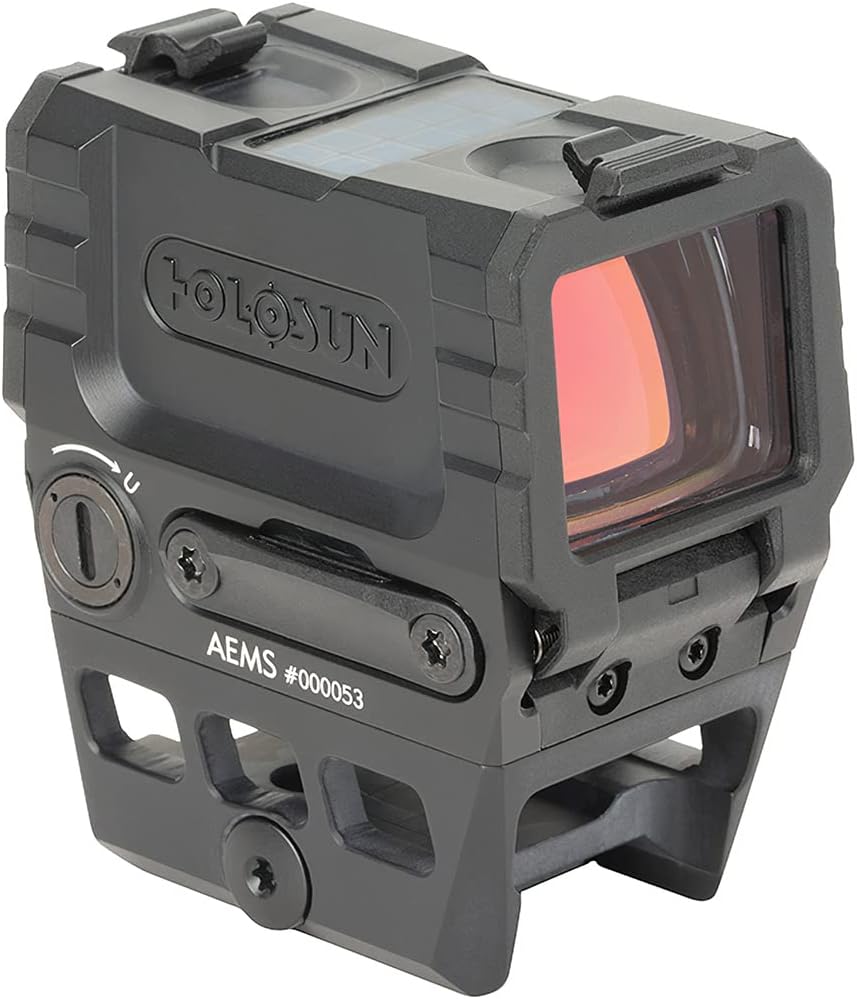
The HOLOSUN AEMS offers one of the best window-to-size ratios currently available. On an IWI Uzi, that larger viewing area significantly improves speed during close-range transitions without adding excessive bulk.
Specs
- Multi-reticle system
- Solar backup
- Enclosed emitter
- Shake Awake technology
- CR2032 battery
- Integrated Picatinny mount
Pros
- Huge sight window
- Excellent battery efficiency
- Lightweight for its size
- Good emitter protection
- Strong value proposition
Cons
- Slight blue lens tint
- Factory mount height may feel tall on some Uzi setups
The AEMS impressed me during rapid target transitions because the wide window minimizes tunnel effect. That matters on Uzis where the higher optic position can already slow presentation speed. The enclosed emitter also prevents fouling buildup from blowback gases during long shooting sessions.
Brightness controls are tactile and responsive, even while wearing gloves. I noticed minimal distortion around the edge of the glass, and the reticle remained sharp across brightness settings. The solar backup system is genuinely useful outdoors rather than gimmicky.
Parallax shift was well controlled within realistic PCC distances. I particularly appreciated how forgiving the optic felt during unconventional shooting positions. The larger window also helps compensate for the somewhat elevated cheek position common on railed Uzi builds.
Online users frequently mention the AEMS outperforming expectations for durability. Reddit and PCC forums consistently highlight how well it handles sustained recoil cycles on direct-blowback firearms.
Mounting is extremely easy since the optic ships with a Picatinny-compatible base. However, some shooters may prefer swapping to a lower mount for improved cheek weld and more natural indexing.
For shooters wanting a modern enclosed optic with fast acquisition and excellent durability, the AEMS is one of the strongest overall choices available today.
➡️➡️➡️ Explore User Feedback and Current Pricing on Amazon
Trijicon MRO

The Trijicon MRO pairs exceptionally well with full-size Uzis because its large objective lens creates an extremely open sight picture without requiring holographic-optic bulk.
Specs
- 2 MOA dot
- 7075 aluminum housing
- 5-year battery life
- Large 25mm objective
- Waterproof construction
- Ambidextrous brightness dial
Pros
- Massive field of view
- Durable construction
- Excellent brightness range
- Crisp dot performance
- Lightweight for tube optic
Cons
- Slight magnification effect
- Noticeable lens tint to some users
The MRO feels especially natural on an Uzi because the optic’s large viewing window compensates for the platform’s somewhat elevated mounting geometry. During rapid fire, I found target tracking very intuitive and forgiving.
The side brightness dial is one of the best glove-friendly control systems currently available. It provides solid tactile feedback and allows rapid brightness adjustments without breaking grip. I also appreciate how protected the turrets feel during rough handling.
Glass clarity is good overall, though the slight blue-green tint is noticeable against lighter backgrounds. Edge distortion is minor but still present compared to premium Aimpoint optics. Fortunately, practical shooting performance remains excellent.
Parallax handling was respectable throughout testing. While not completely parallax-free, the shift was minimal inside realistic PCC engagement distances. The larger objective lens also makes the optic feel faster than many compact Micro-style alternatives.
Online feedback consistently praises the MRO for ruggedness and battery life. Many shooters specifically choose it for PCC builds because it balances field of view with manageable weight.
The MRO requires its own mounting footprint, but numerous low-profile Picatinny mounts work very well on Uzi top covers and railed handguards.
➡️➡️➡️ Explore User Feedback and Current Pricing on Amazon
Sig Sauer Romeo5

The Romeo5 continues to dominate the budget red dot category because it delivers reliable performance without sacrificing core functionality. For recreational Uzi shooters, it remains one of the smartest purchases available.
Specs
- 2 MOA dot
- MOTAC motion activation
- IPX7 waterproofing
- CR2032 battery
- Micro footprint
- Included low and high mounts
Pros
- Outstanding value
- Reliable zero retention
- Compact and lightweight
- Motion-activated battery saving
- Easy mounting compatibility
Cons
- Average glass clarity
- Buttons feel softer than premium optics
The Romeo5 performs surprisingly well on blowback PCC platforms. During testing, it maintained zero consistently despite the abrupt recoil pulse produced by the Uzi system. The compact housing also preserves the firearm’s excellent maneuverability.
I found the dot reasonably crisp indoors and outdoors, though slight bloom appears at higher brightness settings. The controls are functional but less tactile than higher-end optics. With gloves, brightness changes require more deliberate pressure.
Lens tint is mild, and window distortion stays manageable during practical shooting drills. While the optic lacks the refined optical clarity of premium models, it still delivers excellent speed for close-range shooting.
Parallax performance was acceptable inside normal PCC distances. The optic does sit comfortably low when paired with the included low mount, which helps improve cheek weld and reduces excessive chin positioning common on Uzi builds.
Online discussions repeatedly recommend the Romeo5 as the best entry-level PCC optic. Many owners report thousands of rounds without reliability issues.
The Micro footprint ensures broad mount compatibility across aftermarket Uzi rail systems. Installation is simple, and the included low mount usually works very well for compact PCC setups.
➡️➡️➡️ Explore User Feedback and Current Pricing on Amazon
EOTECH XPS2

The EOTECH XPS2 delivers unmatched close-range speed on an Uzi platform thanks to its holographic reticle and exceptionally large viewing window.
Specs
- 68 MOA ring with 1 MOA center dot
- Holographic reticle system
- CR123 battery
- Integrated quick mount
- Waterproof housing
- Rear button controls
Pros
- Fastest acquisition speed
- Huge sight picture
- Excellent reticle visibility
- Minimal tunnel effect
- Strong recoil durability
Cons
- Shorter battery life
- Heavier than Micro optics
The XPS2 feels incredibly natural on full-size Uzis intended for defensive or competition use. The large holographic window allows extremely rapid target transitions while maintaining awareness of surrounding targets.
The reticle remains highly visible under varying lighting conditions, and I noticed almost no practical parallax issues during movement drills. The 1 MOA center dot enables surprisingly precise shots despite the optic’s CQB-oriented reputation.
Button responsiveness is excellent, though rear controls can become awkward if a magnifier is installed behind the optic. Battery changes are simple thanks to the transverse CR123 compartment.
One major advantage on the Uzi platform is how forgiving the optic remains during awkward cheek weld positions. Even with the elevated rail height found on some aftermarket mounts, the reticle remains easy to acquire.
Online shooters consistently praise EOTECH optics for rapid engagement speed and durability on hard-recoiling PCC platforms. Some users still criticize battery longevity compared to LED optics, which remains fair.
Mounting is simple because the XPS2 includes an integrated Picatinny interface. However, shooters should confirm rail space availability since Uzis often have compact receiver layouts.
➡️➡️➡️ Explore User Feedback and Current Pricing on Amazon
Primary Arms SLX MD-25
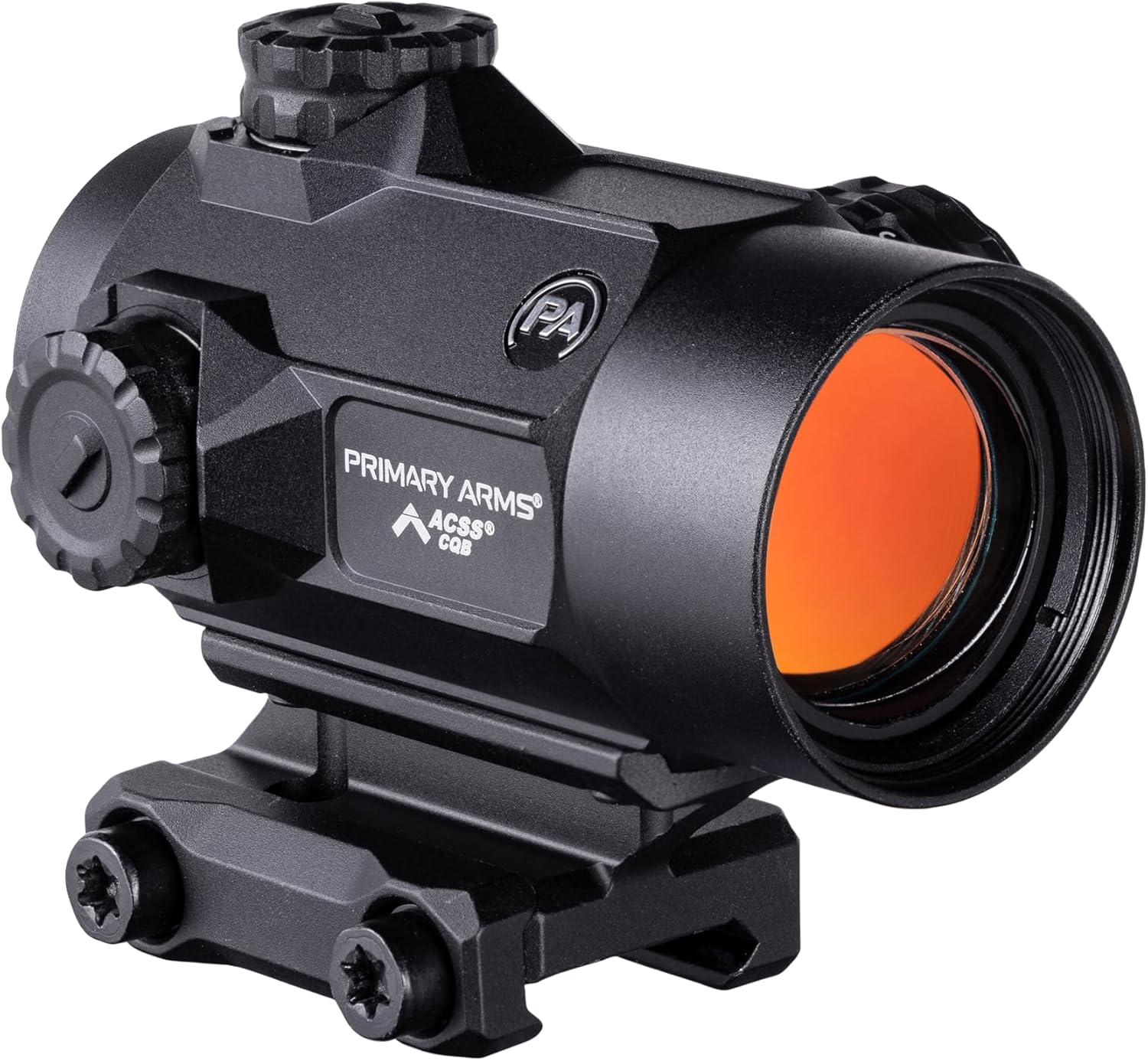
The Primary Arms SLX MD-25 combines a generous viewing window with strong durability and affordability, making it one of the best mid-range optics for Uzi-pattern firearms.
Specs
- 25mm objective lens
- 2 MOA dot
- 50,000-hour battery life
- Micro-compatible mounting
- Night vision settings
- Waterproof aluminum body
Pros
- Large sight window
- Excellent value
- Good battery life
- Durable housing
- Flexible mounting options
Cons
- Slightly bulkier than T-2 optics
- Moderate lens tint
The larger 25mm objective noticeably improves situational awareness compared to smaller Micro-pattern optics. On an Uzi, that larger sight picture helps offset the elevated optic position many shooters encounter with aftermarket top rails.
The brightness controls provide strong tactile feedback, even with gloves. I also appreciated the battery compartment design, which felt more secure than many budget competitors. The optic handled repeated recoil cycles well without flickering or zero shift.
Glass quality exceeded expectations for the price point. While some edge tint is visible, distortion remains minimal during practical shooting. The dot itself stays crisp through most brightness settings.
Parallax control was solid during close-range drills, and the optic remained forgiving when shooting from unconventional positions. Co-witness capability depends heavily on mount choice, but the included mounting ecosystem offers substantial flexibility.
Online users frequently compare the MD-25 favorably against significantly more expensive optics. Many PCC owners specifically praise its reliability on direct-blowback firearms.
The optic uses a Micro-compatible footprint, making it easy to pair with numerous aftermarket low-profile Uzi mounts and rail systems.
➡️➡️➡️ Explore User Feedback and Current Pricing on Amazon
How I Tested / Evaluation Criteria
Parallax
Parallax performance matters significantly on PCC platforms because shooters often engage targets quickly from unconventional positions. I evaluated each optic by intentionally shifting eye position during rapid fire at varying distances between 7 and 50 yards.
Some optics showed noticeable point-of-impact drift near the edges of the window, while others remained extremely forgiving. Larger windows generally reduced perceived alignment errors.
Co-Witness / Deck Height
The Uzi platform presents unique mounting challenges because many top-cover rail systems already sit relatively high above the bore axis. I evaluated how naturally each optic aligned during presentation and whether lower-third co-witness remained possible.
Excessively tall mounts created awkward chin weld issues that slowed target acquisition considerably.
Durability
Blowback-operated PCCs generate abrupt recoil impulses that can expose weaknesses in optic internals. I tested for flickering, zero shift, mounting loosening, and housing integrity after sustained firing sessions.
Enclosed emitter optics generally resisted fouling and debris better during longer shooting strings.
Battery
Battery efficiency remains important on defensive or duty-oriented firearms. I compared standby systems, auto-off features, brightness consistency, and battery compartment designs.
Optics with side-loading or tool-less compartments offered faster field servicing.
Brightness Range
Brightness settings were evaluated indoors, outdoors, and under transitional lighting conditions. Some optics bloomed excessively at maximum intensity, while others maintained crisp reticles throughout the adjustment range.
Night vision compatibility also added versatility for advanced users.
Glass Quality
Lens tint, distortion, emitter glare, and edge clarity were all carefully examined. Excessive blue tint can reduce contrast during outdoor shooting, especially under overcast conditions.
Large windows helped maintain situational awareness during fast movement drills.
Controls Ergonomics
Button placement and tactile feel become critical when manipulating optics under stress or while wearing gloves. I preferred optics with firm tactile feedback and intuitive brightness adjustments.
Rotary dials generally performed better than membrane-style buttons.
Mounting Ecosystem
The best optic for an Uzi must integrate cleanly with aftermarket rail systems. I prioritized optics with flexible footprints and broad aftermarket mount support.
Micro-compatible optics remain the easiest to configure across various Uzi builds.
How to Choose the Right Red Dot for This Gun
Choosing the right optic for an Uzi is different from selecting a red dot for an AR-15. The biggest issue is mounting geometry. Many Uzi rail systems place the optic higher above the bore, which can create poor cheek weld and slower presentation if the optic itself already uses a tall mount.
For that reason, compact optics with low-profile mounting systems usually work best. Aimpoint Micro-pattern optics dominate here because they allow extensive mount customization. If your Uzi uses a railed top cover, prioritize the lowest practical mount height possible.
Window size also matters more than many shooters expect. Smaller windows can feel cramped once mounted higher above the receiver. Larger-window optics like the AEMS or EOTECH XPS2 compensate for this by making dot acquisition more forgiving during fast transitions.
Enclosed emitters are strongly recommended for PCC use. Blowback systems produce fouling and debris that can obstruct open emitters surprisingly quickly during extended shooting sessions. Closed systems keep the emitter cleaner and maintain a more consistent dot image.
Weight balance is another critical factor. One of the Uzi’s strengths is its compact maneuverability. Heavy optics mounted high on the receiver can make the firearm feel sluggish and top-heavy. Lightweight enclosed optics usually provide the best compromise.
Battery life becomes increasingly important if the firearm serves defensive purposes. Optics with always-on capability or motion activation eliminate the need to constantly manage power settings.
Finally, pay close attention to mounting footprint compatibility. Micro-pattern optics remain the safest choice because of the enormous aftermarket support. Proprietary footprints may limit future mount upgrades or rail compatibility.
The Best Red Dot For Iwi Uzi ultimately comes down to balancing speed, durability, and mounting height without compromising the weapon’s natural handling characteristics.
FAQs
What optic footprint works best on an Uzi?
Aimpoint Micro-compatible footprints generally offer the most flexibility because many low-profile aftermarket mounts support them.
Are holographic sights good for Uzis?
Yes. Holographic optics like the EOTECH XPS2 provide excellent speed and forgiving eye positioning, though they are heavier and consume more battery power.
Do Uzis require enclosed emitter optics?
Not strictly, but enclosed emitters resist fouling much better on blowback-operated PCCs.
Can you co-witness on an Uzi?
Partial co-witness is possible depending on the rail height and optic mount used. Lower mounts work best.
What dot size is ideal for PCC shooting?
A 2 MOA dot offers the best balance between close-range speed and practical accuracy out to 100 yards.
Conclusion
The Best Red Dot For Iwi Uzi in 2026 depends largely on how you balance mounting height, optic weight, durability, and sight picture speed. For pure reliability and long-term durability, the Aimpoint Micro T-2 remains the benchmark. Shooters wanting a larger viewing window should strongly consider the HOLOSUN AEMS or EOTECH XPS2, while budget-conscious owners will still find outstanding value in the Sig Sauer Romeo5 and Primary Arms SLX MD-25.
Each of these optics performed reliably on the Uzi platform, but the best overall choice will always depend on your specific rail setup, shooting style, and intended use.
Sources referenced include manufacturer specifications from Aimpoint, HOLOSUN, EOTECH, community feedback from Reddit PCC discussions, and mounting compatibility references from Scalarworks mounting guides.
Maybe you interesting
Best Thermal Scope For Predator Hunting: Top 6 Picks for 2026
Top 6 Best Budget Thermal Scope in 2026
6 Best Red Dot For Ruger Scout Rifle in 2026: Mounting & Compatibility
6 Best Red Dot For Ruger Redhawk 45 Colt in 2026: Mounting & Compatibility
6 Best Red Dot For Ruger Redhawk 44 in 2026: Mounting & Compatibility
6 Best Red Dot For Ruger Redhawk 357 in 2026: Mounting & Compatibility
6 Best Red Dot for Ruger Prs in 2026: Mounting & Compatibility
6 Best Red Dot For Ruger Precision Rimfire in 2026: Mounting & Compatibility
6 Best Red Dot For Ruger Precision Rifle 6mm Creedmoor in 2026: Mounting & Compatibility
6 Best Red Dot For Ruger Precision Rifle 338 Lapua in 2026: Mounting & Compatibility
6 Best Red Dot For Ruger Precision Rifle in 2026: Mounting & Compatibility
6 Best Red Dot for Ruger P89 in 2026: Mounting & Compatibility