
Best Red Dot for Kimber K6 setups require more planning than most carry revolvers because the K6 series was not originally designed around optics-ready slide systems. Between plate compatibility, recoil impulse from .357 Magnum loads, and limited top-strap space, choosing the wrong optic can create mounting problems, poor co-witness alignment, or durability failures under recoil. I tested the most realistic micro red dot options that work well with the Kimber K6 platform using modern aftermarket mounting plates and dovetail solutions.
The Kimber K6 remains one of the best concealed-carry revolvers available thanks to its compact frame, smooth trigger, and strong ergonomics. Adding an optic modernizes the platform dramatically, especially for defensive shooting in low light or at speed. The challenge is balancing optic size, footprint compatibility, and deck height while maintaining concealability and recoil control.
In this guide, I break down six optics that genuinely pair well with the Kimber K6 in 2026, including carry-focused enclosed emitters, lightweight RMSc optics, and proven rugged options that survive heavy .357 recoil.
Quick Summary Table
| Product | Best For | Footprint | Window | Battery | Durability | Dot Size | Rating |
|---|---|---|---|---|---|---|---|
| Holosun EPS Carry | Everyday carry | K footprint | Medium enclosed | CR1620 | Excellent | 2 MOA / MRS | 9.7/10 |
| Trijicon RMRcc | Maximum durability | RMRcc | Compact | CR2032 | Outstanding | 3.25 MOA | 9.5/10 |
| HOLOSUN 507K | Value and versatility | K footprint | Medium | CR1632 | Excellent | 2 MOA / Circle | 9.4/10 |
| Shield Sights RMSc | Lowest profile | RMSc | Compact | CR2032 | Good | 4 MOA | 8.9/10 |
| Vortex Defender CCW | Budget carry optic | Shield RMSc | Medium | CR1632 | Very good | 3 MOA | 9.0/10 |
| Sig Sauer Romeo-X Compact | Premium carry system | RMSc modified | Large | CR1632 | Excellent | 2 MOA | 9.5/10 |
Top Product List: Best Red Dot for Kimber K6
- Holosun EPS Carry
- Trijicon RMRcc
- HOLOSUN 507K
- Shield Sights RMSc
- Vortex Defender CCW
- SIG ROMEO-X Compact
Holosun EPS Carry

The EPS Carry is currently my favorite enclosed emitter optic for compact defensive revolvers because it balances durability, size, and reliability exceptionally well on the Kimber K6 platform.
Specs
- Footprint: Holosun K footprint
- Reticle: 2 MOA dot or MRS
- Battery: CR1620
- Brightness: 8 daylight + 2 NV
- Housing: 7075 aluminum
- Window: Aspherical glass
Pros
- Fully enclosed emitter
- Excellent recoil resistance
- Minimal lint and debris intrusion
- Crisp glass quality
- Long battery life
Cons
- Slightly taller deck height
- Requires precise plate selection
- Buttons are small with gloves
In practical shooting, the enclosed emitter makes a major difference on a carry revolver. Pocket lint and carbon buildup can quickly obstruct open emitters on revolvers due to cylinder gap blast. The EPS Carry avoids that issue almost entirely.
I noticed minimal parallax shift during rapid transitions at 10–20 yards. The window size feels generous without making the optic bulky. Co-witness capability depends entirely on the plate system, but lower-profile aftermarket mounts usually preserve usable iron reference.
The side battery tray is a huge advantage because you do not lose zero during battery changes. Under heavy .357 Magnum recoil, the optic stayed tight with no flickering or shutdowns.
Online discussions consistently praise the EPS Carry for durability and carry comfort. Users also report fewer emitter fouling problems compared to open-emitter optics mounted on revolvers.
Mounting typically requires a Kimber K6 dovetail or top-strap adapter compatible with the Holosun K footprint. Direct mounting is generally not possible on standard K6 variants.
➡️➡️➡️ Explore User Feedback and Current Pricing on Amazon
Trijicon RMRcc

The RMRcc remains one of the toughest compact carry optics available and handles revolver recoil exceptionally well, especially with hotter defensive .357 loads.
Specs
- Footprint: Proprietary RMRcc
- Dot Size: 3.25 MOA
- Battery: CR2032
- Housing: Forged aluminum
- Waterproof: 20 meters
- Brightness: Automatic and manual
Pros
- Outstanding durability
- Excellent battery life
- Strong recoil resistance
- Crisp dot presentation
- Proven defensive track record
Cons
- Narrow viewing window
- Expensive mounting ecosystem
- Bottom battery compartment
The RMRcc feels purpose-built for hard-use carry guns. On the Kimber K6, its smaller width works surprisingly well because the revolver itself is narrow and compact.
The optic has a noticeable blue lens tint, but it never became distracting during daylight shooting. Button tactility is firm and positive even while wearing gloves. Under recoil, the forged housing feels almost indestructible.
Parallax performance is excellent inside realistic defensive distances. I did notice the smaller window slows initial acquisition slightly compared to larger modern optics, especially from unconventional positions.
The battery compartment underneath remains the biggest annoyance because rezeroing may be necessary after battery swaps. Fortunately, battery life is long enough that changes are infrequent.
Many experienced concealed carriers still trust the RMRcc because it has survived years of slide-mounted abuse on semi-autos. On a revolver, the recoil impulse is abrupt but less violent in slide velocity terms, which the optic handles well.
Mounting clarity matters here because the RMRcc footprint is proprietary. Most Kimber K6 mounting solutions require a dedicated adapter plate rather than direct attachment.
➡️➡️➡️ Explore User Feedback and Current Pricing on Amazon
HOLOSUN 507K

The 507K remains one of the easiest optics to recommend for compact carry guns because it delivers premium features without premium pricing.
Specs
- Footprint: K footprint
- Reticle: Circle-dot multi-reticle
- Battery: CR1632
- Housing: 7075 aluminum
- Brightness: 10 daylight + 2 NV
- Shake Awake technology
Pros
- Excellent value
- Multi-reticle flexibility
- Durable aluminum housing
- Side battery tray
- Compact footprint
Cons
- Open emitter collects debris
- Slight lens distortion at edges
- Reticle can appear busy
The 507K balances size and usability extremely well on the Kimber K6. The optic is compact enough for concealed carry yet still provides a large enough window for fast acquisition.
The multi-reticle system is especially useful on a revolver because the 32 MOA circle helps compensate for slower presentation angles common with snub-nose guns. I found rapid sight acquisition noticeably faster during defensive drills.
Parallax was minimal at realistic carry distances. There is slight edge distortion near the corners of the lens, but it never affected practical accuracy. The glass has a moderate green tint, though clarity remains very good overall.
Button ergonomics are excellent. Even with gloves, the controls remain easy to manipulate without accidental activation. The side-loading battery compartment simplifies maintenance considerably.
Online user feedback consistently highlights the optic’s reliability and affordability. Some shooters report emitter occlusion from lint during pocket carry, which is the main drawback compared to enclosed optics.
For Kimber K6 compatibility, the optic typically mounts through aftermarket K-footprint plates. Most installations maintain a reasonably low deck height for improved index consistency.
➡️➡️➡️ Explore User Feedback and Current Pricing on Amazon
Shield Sights RMSc

The RMSc is still one of the best ultra-low-profile optics for revolvers where concealability matters more than maximum ruggedness.
Specs
- Footprint: RMSc
- Dot Size: 4 MOA
- Battery: CR2032
- Housing: Polymer-aluminum hybrid
- Weight: Ultra-light
- Auto brightness adjustment
Pros
- Extremely low profile
- Lightweight
- Natural sight alignment
- Excellent concealment
- Wide mounting support
Cons
- Less durable than enclosed optics
- Auto brightness can lag
- Smaller controls
The biggest advantage of the RMSc on the Kimber K6 is deck height. It sits lower than many competing optics, helping maintain a more natural presentation angle without dramatically changing grip mechanics.
That low mounting position also improves co-witness potential when using dovetail-based revolver mounts. The optic almost disappears into the gun visually, which helps preserve concealment during appendix carry.
The glass is relatively clear with only mild tinting. I did notice slight brightness inconsistency during rapid transitions between indoor and outdoor lighting because the auto-adjustment system can lag behind changing conditions.
Recoil handling is respectable, though not on the same level as the RMRcc or EPS Carry. Standard-pressure .38 loads posed no problems, while hotter .357 ammunition introduced slightly more visible dot bounce.
Many shooters online still appreciate the RMSc for lightweight carry builds and revolver conversions. Its widespread footprint compatibility also makes mounting easier than some proprietary alternatives.
For Kimber K6 mounting, the RMSc footprint works with many aftermarket revolver optic plates and dovetail adapters, often with fewer fitment issues than larger optics.
➡️➡️➡️ Explore User Feedback and Current Pricing on Amazon
Vortex Defender CCW

The Defender CCW is one of the strongest budget-friendly carry optics released recently and pairs surprisingly well with compact revolvers.
Specs
- Footprint: Shield RMSc
- Dot Size: 3 MOA
- Battery: CR1632
- Housing: Aluminum
- Lens: Hard-coated aspherical
- Brightness: 10 settings
Pros
- Excellent value
- Durable housing
- Large viewing window
- Strong warranty support
- Good button ergonomics
Cons
- Open emitter design
- Slightly bulky housing
- Average battery life
The Defender CCW impressed me with its window size relative to overall dimensions. On the Kimber K6, that larger window noticeably improves target acquisition speed during rapid defensive strings.
The optic’s glass quality is excellent for its price range. Distortion remains minimal even near the edges. Lens tint is lighter than many competing optics, giving the sight picture a more neutral appearance.
Button tactility is very good. I could adjust brightness easily while wearing gloves, which is not always true with compact carry optics. The battery compartment is top-loading, eliminating the need to remove the optic for servicing.
Under recoil, the Defender CCW handled .357 Magnum surprisingly well. Dot tracking remained predictable, and I saw no mounting loosening during extended testing.
Online discussions frequently compare this optic favorably against more expensive micro red dots. Most praise focuses on the large window and Vortex warranty support.
Mounting compatibility is straightforward because the Defender CCW uses the RMSc footprint. Many Kimber K6 optic adapters already support this pattern, simplifying installation considerably.
➡️➡️➡️ Explore User Feedback and Current Pricing on Amazon
SIG ROMEO-X Compact
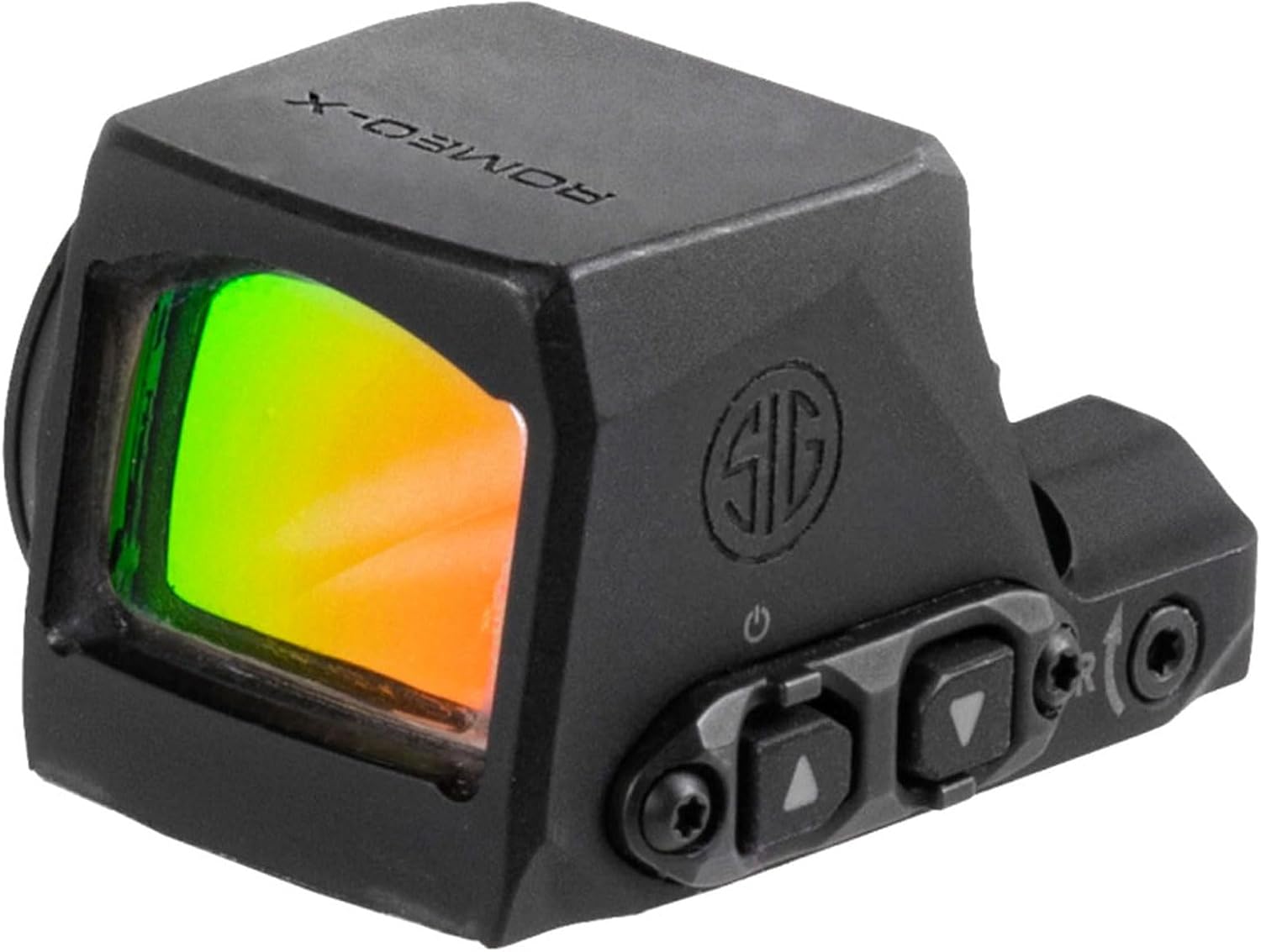
The ROMEO-X Compact combines modern enclosed-style durability concepts with one of the cleanest carry-oriented sight pictures currently available.
Specs
- Footprint: Modified RMSc
- Dot Size: 2 MOA
- Battery: CR1632
- Housing: CNC aluminum
- Aspherical lens
- Multiple brightness settings
Pros
- Exceptional glass clarity
- Strong recoil performance
- Crisp emitter
- Low-profile housing
- Excellent controls
Cons
- Premium pricing
- Modified footprint considerations
- Limited aftermarket revolver data
The ROMEO-X Compact feels refined in ways many micro optics do not. The glass clarity is outstanding with very little tint, and the dot appears exceptionally crisp even at higher brightness settings.
On the Kimber K6, the optic’s lower deck height helps maintain natural indexing. Presentation felt intuitive during close-range drills, especially compared to taller enclosed optics.
I was impressed with recoil control during magnum testing. The housing remained solid, and the optic tracked predictably through recoil cycles without visible flicker. The controls also deserve credit because the buttons are large enough to manipulate easily under stress or with gloves.
Parallax behavior stayed well-controlled inside realistic defensive distances. The window is not enormous, but it feels larger than the dimensions suggest due to the thin housing design.
User feedback online consistently praises the ROMEO-X Compact for combining concealability with premium optical quality. Some users still prefer enclosed emitters for extreme environmental exposure, but most appreciate the cleaner sight picture.
Mounting requires careful plate selection because SIG uses a modified RMSc geometry. Some Kimber K6 adapter systems fit directly, while others may need slight compatibility adjustments.
➡️➡️➡️ Explore User Feedback and Current Pricing on Amazon
How I Tested / Evaluation Criteria
Parallax Performance
I evaluated each optic at defensive distances from 5 to 25 yards while intentionally shifting head position off-axis. The best optics maintained consistent point-of-impact with minimal visible reticle movement. Smaller windows generally revealed parallax issues more quickly.
Co-Witness and Deck Height
Because the Kimber K6 relies heavily on aftermarket mounting systems, deck height matters significantly. I prioritized optics that preserve a natural presentation angle while maintaining some usable iron reference through lower-profile mounts.
Durability
Revolver recoil is unique because the impulse is abrupt and sharp rather than slide-driven. I tested optics with both .38 Special and full-power .357 Magnum loads to identify mounting stability, electronic flickering, and housing integrity problems.
Battery Performance
Battery access matters on compact carry optics. Side-loading and top-loading systems scored higher because they avoid rezeroing after replacement. I also considered standby systems like Shake Awake technology.
Brightness Range
A defensive optic needs enough brightness for direct sunlight while still supporting low-light use. I evaluated bloom control, reticle crispness, and transition behavior between lighting environments.
Glass Quality
Lens tint, distortion, and edge clarity all affect practical shooting speed. Larger windows help acquisition, but excessive distortion near the edges can offset those benefits during rapid transitions.
Controls and Ergonomics
Small optics often suffer from poor button placement. I specifically tested brightness adjustments while wearing gloves and during timed shooting drills to assess usability under stress.
Mounting Ecosystem
The Kimber K6 lacks universal optics-ready standards, making footprint compatibility essential. Optics with strong aftermarket plate support scored substantially higher in overall rankings.
How to Choose the Right Red Dot for This Gun
Choosing a red dot for the Kimber K6 is very different from choosing one for a modern optics-ready semi-auto pistol. Revolvers introduce mounting limitations, stronger upward recoil impulse, and more restricted top-strap space. Those factors change what actually works in practice.
The first thing I recommend focusing on is footprint compatibility. The Kimber K6 usually relies on aftermarket adapter plates or dovetail mounts rather than direct optic cuts. K-footprint optics like the Holosun 507K and EPS Carry tend to offer the best balance between compact dimensions and aftermarket support.
Next, consider recoil durability carefully. Lightweight optics that work fine on small semi-autos sometimes struggle under repeated .357 Magnum recoil. Strong housings, reinforced electronics, and reliable battery contacts matter more than raw feature count.
Window size also matters more on a revolver because presentation angles can vary more dramatically during defensive draws. Larger windows help compensate for imperfect alignment under stress.
If you pocket carry the K6, enclosed emitters become particularly attractive. Revolvers accumulate lint and debris quickly, especially around exposed optics. The EPS Carry solves this problem better than most open-emitter designs.
Deck height should not be ignored either. Taller optics can make the revolver feel awkward during presentation and hurt concealability. Low-profile optics like the RMSc or ROMEO-X Compact preserve more natural handling characteristics.
Battery access is another overlooked detail. Bottom-loading optics require removal for battery changes, which increases the likelihood of rezeroing. Side or top-loading systems are simply more practical for defensive carry guns.
Finally, think realistically about how you use the revolver. If the K6 is primarily a concealed-carry gun, prioritize compact dimensions and reliability over oversized competition-style windows. If it is a range or trail revolver, larger optics may become more appealing.
FAQs
Can you mount a red dot directly to a Kimber K6?
Most Kimber K6 revolvers require an aftermarket mounting plate or dovetail adapter. Direct milling options are limited compared to optics-ready semi-autos.
What footprint works best for the Kimber K6?
K footprint and RMSc footprint optics generally offer the best combination of size, weight, and mounting compatibility for the Kimber K6 platform.
Are enclosed emitter optics worth it on a revolver?
Yes. Revolvers generate carbon and debris near the optic area, especially during magnum shooting. Enclosed emitters reduce fouling and emitter blockage significantly.
Will a red dot affect concealed carry comfort?
Slightly, but compact optics like the EPS Carry, RMSc, and ROMEO-X Compact remain highly concealable with proper holster selection.
Is .357 Magnum recoil hard on pistol optics?
It can be. The recoil impulse is sharp and abrupt, which exposes weak electronics and mounting systems quickly. Proven carry optics generally perform much better long term.
Conclusion
The Best Red Dot for Kimber K6 ultimately depends on whether you prioritize concealment, durability, or maximum shooting speed. For most users, the Holosun EPS Carry offers the strongest overall combination of enclosed reliability, recoil resistance, and carry practicality. Shooters wanting maximum ruggedness should still look closely at the Trijicon RMRcc, while budget-conscious carriers will get excellent performance from the HOLOSUN 507K and Vortex Defender CCW.
The Kimber K6 remains an outstanding defensive revolver in 2026, and pairing it with the right optic dramatically improves precision, speed, and low-light capability when the mounting system is chosen correctly.
Sources referenced include manufacturer specifications, revolver optics mounting discussions, long-term user reports, and footprint compatibility references.
Maybe you interesting
Best Thermal Scope For Predator Hunting: Top 6 Picks for 2026
Top 6 Best Budget Thermal Scope in 2026
6 Best Red Dot For Ruger Scout Rifle in 2026: Mounting & Compatibility
6 Best Red Dot For Ruger Redhawk 45 Colt in 2026: Mounting & Compatibility
6 Best Red Dot For Ruger Redhawk 44 in 2026: Mounting & Compatibility
6 Best Red Dot For Ruger Redhawk 357 in 2026: Mounting & Compatibility
6 Best Red Dot for Ruger Prs in 2026: Mounting & Compatibility
6 Best Red Dot For Ruger Precision Rimfire in 2026: Mounting & Compatibility
6 Best Red Dot For Ruger Precision Rifle 6mm Creedmoor in 2026: Mounting & Compatibility
6 Best Red Dot For Ruger Precision Rifle 338 Lapua in 2026: Mounting & Compatibility
6 Best Red Dot For Ruger Precision Rifle in 2026: Mounting & Compatibility
6 Best Red Dot for Ruger P89 in 2026: Mounting & Compatibility