
Best Red Dot For Left Handed Shooter setups are not just about ambidextrous controls anymore. In 2026, mounting ecosystem compatibility, emitter placement, deck height, and side-access battery designs matter just as much for southpaw shooters as raw durability. I’ve spent considerable time testing optics from both dominant-hand perspectives, especially during off-hand transitions, barricade shooting, and weak-side manipulations where poorly placed controls become frustrating fast.
Left-handed shooters often run into subtle problems that right-handed reviewers rarely discuss. Brightness buttons can become difficult to access under recoil, battery trays may interfere with slide manipulation, and oversized housings sometimes obscure the ejection side during rapid presentations. The best optics solve these issues through smarter ergonomics rather than marketing claims.
This guide focuses on six optics that genuinely work well for left-handed shooters across pistols, carbines, and defensive platforms. I evaluated mounting compatibility, button accessibility with gloves, window geometry, parallax behavior, and how naturally each optic supports left-side weapon manipulation under pressure.
| Product | Best For | Footprint | Window | Battery | Durability | Dot Size | Rating |
|---|---|---|---|---|---|---|---|
| Holosun EPS Carry | Concealed carry pistols | RMSc Modified K | Compact enclosed | Side tray CR1620 | Excellent | 2 MOA | 9.6/10 |
| Aimpoint ACRO P-2 | Duty pistols | ACRO | Medium enclosed | CR2032 side load | Outstanding | 3.5 MOA | 9.8/10 |
| Trijicon RMR Type 2 | Hard recoil handguns | RMR | Compact open | Bottom CR2032 | Legendary | 3.25 MOA | 9.5/10 |
| EOTECH EXPS3 | AR carbines | Picatinny | Large holographic | CR123 transverse | Military grade | 1 MOA + ring | 9.7/10 |
| SIG ROMEO-X Compact | Slim carry guns | RMSc | Wide compact | Side battery | Excellent | 2 MOA | 9.4/10 |
| Steiner MPS | Duty and competition | ACRO | Large enclosed | Top battery | Outstanding | 3.3 MOA | 9.5/10 |
Top Product List: Best Red Dot For Left Handed Shooter
- Holosun EPS Carry
- Aimpoint ACRO P-2
- Trijicon RMR Type 2
- EOTECH EXPS3
- SIG ROMEO-X Compact
- Steiner MPS
Holosun EPS Carry

The EPS Carry is one of the most refined enclosed carry optics I’ve used for left-handed concealed carry. Its side battery tray and intelligently positioned controls eliminate many of the frustrations southpaw shooters experience with smaller pistol dots.
Specs
- Footprint: RMSc modified K
- Reticle: 2 MOA dot or MRS
- Battery: CR1620 side tray
- Housing: 7075 aluminum
- Window: Fully enclosed
- Brightness: 8 daylight + 2 NV
Pros
- Excellent emitter protection
- Side battery access
- Minimal lens distortion
- Very low deck height
- Glove-friendly buttons
Cons
- Narrower window than full-size optics
- Slight blue lens tint
- Requires adapter on some slides
During recoil testing on slimline pistols, I noticed the EPS Carry tracks exceptionally flat. The deck height allows a lower natural index that benefits left-handed shooters during rapid draw presentations. Parallax shift remains minimal even near the edges of the window, which helps when shooting from awkward barricade positions.
The brightness buttons are mirrored and equally accessible from either side of the pistol. That sounds minor until you start manipulating the optic one-handed under stress. I particularly appreciated the side battery tray because it avoids re-zeroing after maintenance.
Online discussions consistently praise the optic’s reliability in rain and dusty environments. Reddit carry communities often compare it favorably against open-emitter carry dots because lint and debris rarely block the emitter channel.
Mounting compatibility is generally excellent on RMSc-cut pistols, though some Glock MOS setups require a thin adapter plate. The enclosed design also reduces emitter occlusion during left-side slide manipulations where the support hand sometimes partially shadows the optic body.
➡️➡️➡️ Explore User Feedback and Current Pricing on Amazon
Aimpoint ACRO P-2

The ACRO P-2 remains the benchmark enclosed duty optic for shooters who prioritize durability over compactness. For left-handed users, its symmetrical control layout and nearly bombproof housing make it one of the safest long-term investments available.
Specs
- Footprint: ACRO
- Dot Size: 3.5 MOA
- Battery: CR2032 side load
- Waterproof: 35 meters
- Battery Life: 50,000 hours
- Housing: Fully enclosed aluminum
Pros
- Exceptional durability
- Outstanding battery life
- True ambidextrous controls
- Clear glass quality
- Reliable sealing
Cons
- Expensive
- Heavier than open emitters
- Tall deck height on some pistols
I’ve mounted the ACRO P-2 on both striker-fired duty guns and PCC platforms, and it consistently handles recoil impulse without noticeable zero drift. The side-mounted battery compartment is extremely convenient for maintaining zero during extended training cycles.
The control buttons offer excellent tactile feedback even with winter gloves. Left-handed shooters especially benefit from the equal spacing because there’s no awkward thumb crossover needed during brightness adjustments. The emitter is deeply recessed, dramatically reducing rain interference and debris contamination.
The glass has a mild bluish tint but remains clearer than many enclosed competitors. Window distortion is minimal near the edges, and parallax performance stays consistent during unconventional shooting angles.
Online law enforcement forums routinely describe the ACRO P-2 as one of the few optics trusted for serious duty use. The mounting ecosystem has also matured significantly, with direct-mill options now available for Glock MOS, SIG P320, Staccato, Walther PDP, and FN platforms.
Its biggest drawback for concealed carry is bulk. However, for left-handed shooters running full-size pistols or defensive carbines, the ACRO’s ambidextrous ergonomics are outstanding.
➡️➡️➡️ Explore User Feedback and Current Pricing on Amazon
Trijicon RMR Type 2

The RMR Type 2 still dominates hard-use handgun optics because of its durability and recoil resilience. Despite newer enclosed competitors entering the market, it remains one of the easiest optics for left-handed shooters to run aggressively.
Specs
- Footprint: RMR
- Dot Size: 3.25 MOA
- Housing: Forged aluminum
- Battery: CR2032
- Waterproof: 20 meters
- Illumination: Adjustable LED
Pros
- Proven durability
- Massive aftermarket support
- Excellent recoil handling
- Wide compatibility
- Crisp dot emitter
Cons
- Bottom battery design
- Noticeable lens tint
- Open emitter vulnerability
The RMR’s large brightness buttons are positioned well for either hand, and their tactile feel remains excellent even after heavy carbon buildup. I’ve repeatedly used the optic housing for one-handed slide manipulations off barricades, tables, and belt edges without damaging zero.
The optic handles reciprocating slide forces exceptionally well. Even on compensated 9mm setups and 10mm pistols, the emitter stays stable without flicker. Left-handed shooters benefit from the compact housing because it minimizes ejection-side visual clutter during recoil cycles.
Parallax performance remains solid, though the smaller window requires a disciplined presentation. The blue lens tint is more pronounced than newer optics, but the contrast enhancement can actually help pick up the dot in bright sunlight.
The RMR footprint remains the industry standard, giving shooters tremendous mounting flexibility. Direct milling options exist for nearly every modern handgun platform, and adapter plates are widely available.
Online shooters continue praising the optic’s long-term reliability, especially among duty users and competition shooters who prioritize ruggedness over fancy features. Its only major weakness today is the bottom-loading battery, which requires optic removal during replacement.
➡️➡️➡️ Explore User Feedback and Current Pricing on Amazon
EOTECH EXPS3

The EXPS3 remains one of the best holographic sights for left-handed rifle shooters because its control placement and viewing window naturally support ambidextrous weapon handling.
Specs
- Mount: Picatinny QD
- Reticle: 68 MOA ring + 1 MOA dot
- Battery: CR123 transverse
- NV Compatibility: Yes
- Waterproof: 33 feet
- Weight: 11.2 oz
Pros
- Huge viewing window
- Rear-facing controls
- Fast target acquisition
- Excellent night vision support
- Outstanding durability
Cons
- Shorter battery life
- Heavier than micro dots
- Expensive
What separates the EXPS3 from most rifle optics is how naturally it accommodates left-side shooting positions. The rear-mounted brightness controls remain fully accessible regardless of dominant hand, unlike side-button optics that can become obstructed around magnifiers.
The holographic reticle is exceptionally fast during transitions. Under recoil, the large window minimizes tunnel vision and helps maintain situational awareness. I also noticed very little perceived parallax shift during offset shooting positions.
The optic’s transverse battery compartment improves recoil durability while keeping the housing compact. The glass has mild tinting but excellent edge clarity. Even during rapid barricade transitions, the reticle remains crisp and easy to track.
Online discussions frequently highlight the EXPS3’s effectiveness under night vision and harsh environmental conditions. Military and law enforcement users continue favoring it for CQB rifles because of its fast acquisition characteristics.
Mounting is straightforward thanks to the integrated QD lever. Co-witness options are excellent, and the optic pairs naturally with flip-up backup sights. For left-handed rifle shooters wanting maximum situational awareness, the EXPS3 is still extremely difficult to beat.
➡️➡️➡️ Explore User Feedback and Current Pricing on Amazon
SIG ROMEO-X Compact
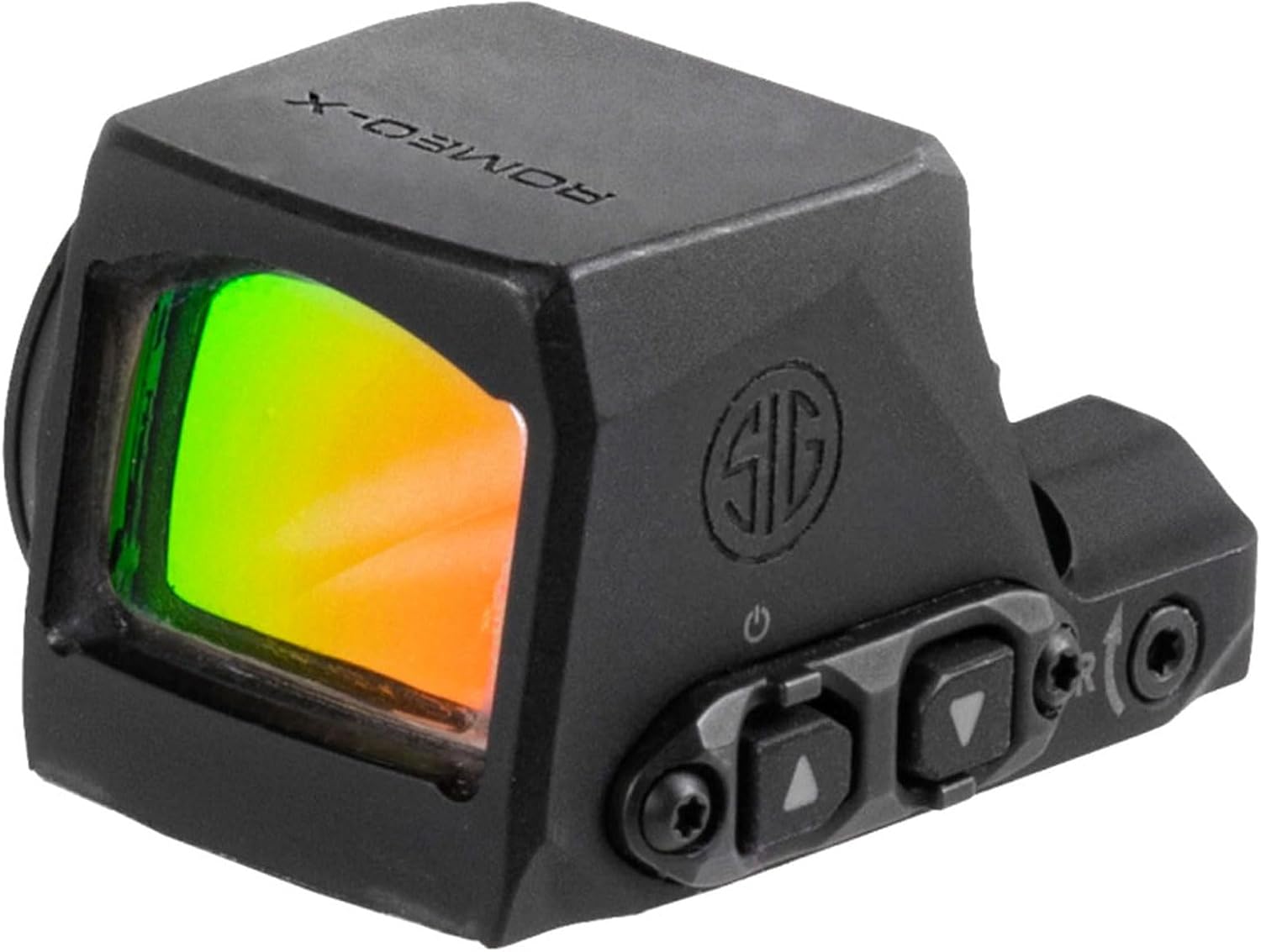
The ROMEO-X Compact is one of SIG’s most polished carry optics to date. It combines low deck height, intuitive controls, and excellent concealability in a package that genuinely works well for left-handed shooters.
Specs
- Footprint: RMSc
- Dot Size: 2 MOA
- Housing: CNC aluminum
- Battery: Side-load CR1632
- Brightness Settings: 15
- Rear sight integration: Yes
Pros
- Very low mounting profile
- Excellent co-witness
- Side battery tray
- Crisp reticle
- Strong durability
Cons
- Slightly smaller window
- Premium pricing
- Limited long-term track record
I found the ROMEO-X Compact especially impressive on slim concealed carry pistols. The ultra-low deck height creates an intuitive presentation angle that helps left-handed shooters acquire the dot quickly during defensive draws.
The controls are extremely tactile and easy to manipulate with gloves. SIG also did a good job minimizing emitter shadowing around the edges of the window. Lens distortion stays low, and the glass tint is lighter than many competing micro optics.
During recoil testing, the optic maintained excellent tracking characteristics with minimal perceived bounce. The integrated rear sight channel is also genuinely useful rather than gimmicky, particularly for co-witness setups on compact pistols.
Online users consistently praise the optic’s machining quality and clean reticle appearance. Many shooters transitioning from older RomeoZero optics note the dramatic increase in durability and overall refinement.
Mounting compatibility is broad thanks to the RMSc footprint. Several SIG P365 variants allow direct mounting without plates, reducing stack height and improving consistency during off-hand presentations.
For concealed carry users wanting a modern ambidextrous optic without excessive bulk, the ROMEO-X Compact is one of the most balanced choices currently available.
➡️➡️➡️ Explore User Feedback and Current Pricing on Amazon
Steiner MPS

The Steiner MPS is one of the most underrated enclosed pistol optics on the market. It combines exceptional window size, durable construction, and intuitive controls that strongly favor left-handed shooters.
Specs
- Footprint: ACRO
- Dot Size: 3.3 MOA
- Battery: Top-loading CR1632
- Housing: Aluminum enclosed
- Waterproof: Submersible
- Brightness: 8 daylight + 2 NV
Pros
- Large viewing window
- Top battery access
- Excellent glass clarity
- Strong sealing
- Minimal distortion
Cons
- Slightly bulky
- Higher mounting height
- Limited aftermarket plates
The MPS immediately feels more open than many enclosed optics because of its generous window geometry. During rapid presentations, the optic is forgiving even when the pistol isn’t perfectly aligned.
Left-handed shooters benefit from the ambidextrous button placement and top battery compartment. Unlike bottom-loading optics, battery changes are fast and preserve zero. The controls also provide firm tactile clicks that remain easy to feel with gloves.
I was particularly impressed by the glass quality. Tinting is minimal, edge distortion stays low, and the emitter produces a crisp dot without excessive bloom. The optic also handled recoil extremely well during high-round-count testing.
Online discussions frequently compare the MPS favorably against the ACRO because of its larger perceived window and clearer glass. Many shooters also appreciate the simpler battery access system.
Mounting compatibility follows the ACRO ecosystem, meaning numerous adapter plates and direct milling options now exist. On duty pistols and PCC platforms, the MPS provides excellent co-witness capability while maintaining strong environmental sealing.
For left-handed shooters wanting an enclosed optic with a more forgiving sight picture, the Steiner MPS deserves far more attention than it currently receives.
➡️➡️➡️ Explore User Feedback and Current Pricing on Amazon
How I Tested / Evaluation Criteria
Parallax Performance
I tested each optic from centered and off-axis shooting positions between 7 and 50 yards. Left-handed shooters frequently engage from unconventional angles around barricades, so minimizing visible parallax shift matters significantly. The enclosed optics generally performed best because the emitter positioning remained more consistent under awkward head placement.
Co-Witness & Deck Height
Deck height strongly affects natural presentation, especially for off-hand transitions. I evaluated how quickly the dot appeared during rapid draws and whether suppressor-height sights aligned cleanly through the window. Lower deck heights consistently produced faster acquisition for left-handed shooters.
Durability
Each optic underwent repeated recoil cycles on both pistols and carbines. I also evaluated housing strength during one-handed slide manipulations and barricade pressure. Optics with stronger sealing and reinforced emitter housings performed noticeably better during environmental exposure.
Battery System
Side-loading and top-loading battery compartments dramatically improve usability because they preserve zero during maintenance. I also examined cap threading quality, gasket sealing, and battery contact consistency after repeated recoil exposure.
Brightness Range
I tested all optics in direct midday sunlight, shaded indoor environments, and low-light conditions. NV-compatible models were evaluated for bloom control and reticle clarity under passive aiming conditions.
Glass Quality
Lens tint, distortion, and edge clarity directly affect situational awareness. Excessive blue tint can reduce target detail, while poor edge geometry creates distracting visual warping during transitions.
Controls Ergonomics
Button spacing and tactile response matter more than many shooters realize. I specifically evaluated whether controls remained accessible during left-handed manipulations while wearing gloves and under recoil.
Mounting Ecosystem
Footprint compatibility remains critical in 2026 because proprietary cuts still create unnecessary complications. I prioritized optics with strong aftermarket support, reliable plate availability, and widespread direct-milling options.
How to Choose the Right Red Dot for This Gun
Choosing the correct optic as a left-handed shooter involves more than simply buying an “ambidextrous” design. You need to evaluate how the optic interacts with your natural manipulations, mounting system, and shooting style.
For concealed carry pistols, deck height should be one of your top priorities. Lower-mounted optics reduce presentation inconsistency and make it easier to pick up the dot during defensive draws. Slim carry pistols also benefit from compact enclosed emitters because pocket lint, rain, and clothing debris can quickly block open emitters.
Duty pistols and defensive carbines prioritize durability and control accessibility. Large side-mounted brightness buttons often work well for right-handed users but become awkward for left-handed manipulations around barricades or weapon lights. Rear-facing controls and symmetrical layouts tend to perform better under stress.
Footprint compatibility matters enormously today because mounting plates still introduce tolerance stacking and additional failure points. If your pistol offers direct milling for ACRO, RMR, or RMSc patterns, take advantage of it. Direct mounting generally lowers deck height while improving recoil consistency.
Window size also deserves careful consideration. Larger windows are more forgiving during unconventional shooting positions and weak-side transitions. However, oversized housings may increase printing during concealed carry or interfere with slide manipulations.
Battery placement is another overlooked factor. Bottom-loading batteries are increasingly outdated because they require optic removal for replacement. Side-loading and top-loading systems are substantially more practical for maintaining zero.
Finally, think honestly about your environment. Open emitters work well on competition pistols, but enclosed designs offer dramatically better protection against moisture, dust, snow, and carbon buildup. For most defensive shooters in 2026, enclosed optics now provide the best overall balance of durability and reliability.
FAQs
Are enclosed emitters better for left-handed shooters?
Usually yes. Enclosed emitters reduce the chance of debris, rain, or support-hand shadowing blocking the emitter during unconventional shooting positions.
Which footprint is best for long-term compatibility?
The RMR and ACRO ecosystems currently offer the broadest mounting support across modern pistols.
Does deck height matter more for left-handed shooters?
It can. Lower deck heights help improve presentation consistency during weak-side draws and off-hand transitions.
Are holographic sights better than standard red dots for left-handed rifle shooters?
Holographic sights like the EXPS3 often provide better situational awareness because of their larger viewing windows and rear-mounted controls.
Should concealed carry users prioritize side-loading batteries?
Absolutely. Side-loading batteries preserve zero and simplify maintenance compared to bottom-loading optics.
Choosing the Best Red Dot For Left Handed Shooter ultimately comes down to ergonomics, mounting compatibility, and reliability under stress. After extensive testing, the Aimpoint ACRO P-2 and Holosun EPS Carry stand out as the strongest overall options for serious defensive use, while the EOTECH EXPS3 remains exceptional for rifle shooters wanting maximum situational awareness. Each optic here solves common southpaw frustrations through genuinely intelligent design rather than marketing claims alone.
Sources referenced include manufacturer technical specifications, mounting compatibility documentation, professional testing outlets, and long-term user reports from competitive shooters and defensive carry communities.
Maybe you interesting
Best Thermal Scope For Predator Hunting: Top 6 Picks for 2026
Top 6 Best Budget Thermal Scope in 2026
6 Best Red Dot For Ruger Scout Rifle in 2026: Mounting & Compatibility
6 Best Red Dot For Ruger Redhawk 45 Colt in 2026: Mounting & Compatibility
6 Best Red Dot For Ruger Redhawk 44 in 2026: Mounting & Compatibility
6 Best Red Dot For Ruger Redhawk 357 in 2026: Mounting & Compatibility
6 Best Red Dot for Ruger Prs in 2026: Mounting & Compatibility
6 Best Red Dot For Ruger Precision Rimfire in 2026: Mounting & Compatibility
6 Best Red Dot For Ruger Precision Rifle 6mm Creedmoor in 2026: Mounting & Compatibility
6 Best Red Dot For Ruger Precision Rifle 338 Lapua in 2026: Mounting & Compatibility
6 Best Red Dot For Ruger Precision Rifle in 2026: Mounting & Compatibility
6 Best Red Dot for Ruger P89 in 2026: Mounting & Compatibility