
Best red dot for lever action rifles setups have changed dramatically over the last few years as modern optics-ready rails, scout mounts, and low-profile micro dots have become common on Marlin, Henry, Winchester, and Rossi platforms. I’ve spent considerable range time pairing compact optics with .30-30, .357 Magnum, and .45-70 lever guns, and the right optic completely changes how quickly these rifles handle in dense woods or at intermediate distances.
The challenge is that lever guns have unique mounting constraints. Receiver height, stock comb geometry, top ejection on older rifles, and rail positioning all influence optic choice more than they do on AR platforms. A bulky optic can ruin the fast-handling nature that makes lever actions attractive in the first place.
For 2026, the sweet spot is still compact enclosed or micro-style dots with moderate deck height, forgiving eye positioning, long battery life, and durable mounting systems that survive heavy recoil. I focused heavily on compatibility, window usability, co-witness practicality, and recoil handling during testing.
Quick Summary Table
| Product | Best For | Footprint | Window | Battery | Durability | Dot Size | Rating |
|---|---|---|---|---|---|---|---|
| Aimpoint Micro T-2 | Premium all-around use | Micro | Compact | CR2032 | Outstanding | 2 MOA | 9.8/10 |
| HOLOSUN 403B | Budget hunting setup | Micro | Compact | CR2032 | Very good | 2 MOA | 9.1/10 |
| Trijicon MRO | Fast acquisition | Proprietary | Large round | CR2032 | Excellent | 2 MOA | 9.3/10 |
| Sig Sauer Romeo5 | Lightweight general use | Micro | Compact | CR2032 | Very good | 2 MOA | 9.0/10 |
| Leupold Freedom RDS | Traditional lever styling | 30mm ring mount | Large tube | CR2032 | Excellent | 1 MOA | 9.2/10 |
| Primary Arms SLX MD-25 | Big window value option | Micro | 25mm | CR2032 | Very good | 2 MOA | 9.1/10 |
Top Product List: best red dot for lever action rifles
- Aimpoint Micro T-2
- HOLOSUN 403B
- Trijicon MRO
- Sig Sauer Romeo5
- Leupold Freedom RDS
- Primary Arms SLX MD-25
Aimpoint Micro T-2

The Aimpoint Micro T-2 remains the benchmark micro red dot for serious lever-action shooters who want maximum durability with minimal bulk. On compact Marlin and Henry rifles, it preserves the natural balance better than nearly any full-sized optic I’ve tested.
Specs
- 2 MOA dot
- Micro footprint
- 50,000-hour battery life
- Fully enclosed emitter
- Night vision compatible
- Submersible construction
Pros
- Exceptional battery life
- Extremely rugged housing
- Minimal parallax shift
- Crisp dot with low bloom
- Excellent recoil resistance
Cons
- Expensive
- Small window compared to newer designs
- Factory mounts can sit high
My hands-on testing showed why this optic has such a strong reputation among hard-use shooters. The glass has only a mild blue tint, and distortion near the edges is extremely well controlled. Even under fast lateral transitions, parallax shift remained minimal. On a .45-70 lever gun with stout hunting loads, the T-2 held zero without any shift after repeated recoil cycles.
Button tactility is excellent even with gloves, and the rotary brightness knob is easier to manipulate than side-button systems when temperatures drop. The sealed emitter design also prevents snow, rain, or dust from obscuring the reticle during field use.
Online discussions consistently praise the T-2 for reliability under abuse. Hunters running Midwest Industries or Ranger Point Precision rails often mention that the optic works best with ultra-low mounts to maintain a comfortable cheek weld.
For mounting, the Micro footprint is one of the easiest ecosystems to work with on lever guns. Direct rail mounting is simple, and aftermarket mount availability is massive.
➡️➡️➡️ Explore User Feedback and Current Pricing on Amazon
HOLOSUN 403B

The HOLOSUN 403B is one of the best value-oriented optics I’ve used on lever guns because it combines compact dimensions, dependable battery life, and a proven Micro footprint at a much lower price point than premium duty optics.
Specs
- 2 MOA dot
- Micro footprint
- 50,000-hour battery
- Shake Awake technology
- Aluminum housing
- Multiple brightness settings
Pros
- Excellent value
- Lightweight
- Strong battery management
- Easy mounting compatibility
- Durable for hunting use
Cons
- Slightly more visible lens tint
- Buttons feel softer
- Not as refined as Aimpoint
In practical use, the 403B feels particularly well suited to compact .357 Magnum carbines and woods rifles where keeping weight down matters. The optic sits low with most Micro-pattern mounts, making co-witness alignment with iron sights more manageable on rail-equipped lever guns.
The emitter remains reasonably clear even during rainy conditions, although open emitter systems always require more maintenance than enclosed alternatives. Lens coatings produce a noticeable green tint, but it never became distracting during daylight hunting sessions.
I noticed mild edge distortion when shooting from awkward positions, though center clarity remains excellent. Recoil handling was surprisingly strong on a Marlin 1895 platform. After multiple strings of heavy .45-70 loads, zero retention stayed consistent.
Community feedback online frequently highlights the optic’s durability relative to its price. Many users pair it with XS Sights rails or Chisel Machining handguards for modernized lever builds.
The Micro footprint is the real advantage here. It opens the door to direct mounting on numerous aftermarket bases while keeping deck height low enough for a natural cheek weld.
➡️➡️➡️ Explore User Feedback and Current Pricing on Amazon
Trijicon MRO

The Trijicon MRO offers one of the fastest sight pictures available for lever-action rifles thanks to its large objective housing and generous field of view. For fast-moving hogs or dense timber hunting, it excels at rapid target acquisition.
Specs
- 2 MOA dot
- Proprietary footprint
- Large objective lens
- CR2032 battery
- Waterproof construction
- Ambidextrous brightness dial
Pros
- Large viewing window
- Extremely durable
- Fast acquisition speed
- Strong recoil tolerance
- Good low-light performance
Cons
- Slight magnification effect
- Higher mount profile
- Proprietary mounting system
The first thing I noticed during testing was how naturally the optic tracks during snap shooting. Compared to smaller Micro-style dots, the larger window reduces the “searching for the dot” effect during awkward shooting angles.
The MRO’s glass does show slight magnification and a bit more tint than premium Aimpoint optics. However, for hunting distances common with lever guns, this rarely creates practical issues. The brightness dial has firm tactile clicks and remains easy to manipulate with gloves.
On heavier calibers, including .45-70 Government rifles, recoil impulse never caused flickering or zero shift. The housing is exceptionally robust, and the recessed lenses offer good protection from brush impact.
Online users consistently mention how well the MRO pairs with tactical lever builds using extended rails and suppressors. Its larger profile looks more modern than traditional tube optics, which some shooters love and others dislike.
Mounting requires proprietary MRO-compatible bases rather than the common Micro footprint. That limits flexibility somewhat, though low-profile mounts are widely available and work well on Picatinny-equipped lever rifles.
➡️➡️➡️ Explore User Feedback and Current Pricing on Amazon
Sig Sauer Romeo5

The Sig Sauer Romeo5 continues to dominate the entry-level category because it balances durability, battery life, and compact handling better than most optics in its price range.
Specs
- 2 MOA dot
- Micro footprint
- MOTAC motion activation
- IPX7 waterproofing
- CR2032 battery
- Multiple brightness settings
Pros
- Outstanding affordability
- Compact dimensions
- Long battery life
- Reliable motion activation
- Broad mount compatibility
Cons
- Glass slightly darker
- Buttons less tactile
- Included mounts vary in quality
On a lever-action rifle, the Romeo5 works best when paired with low aftermarket mounts rather than the taller factory riser. Once mounted low, cheek weld improves dramatically and the rifle retains much of its original handling feel.
The optic window is compact but forgiving enough for rapid shooting inside 100 yards. Lens tint leans slightly blue, though the dot itself remains crisp at moderate brightness settings. I did notice mild blooming at maximum brightness levels.
The side buttons feel softer than premium optics, especially while wearing gloves. Still, the controls remain usable during cold-weather hunting sessions. Battery cap sealing has also proven reliable in wet conditions.
Recoil handling exceeded expectations during repeated sessions on a .45-70 platform. While it lacks the bombproof reputation of an Aimpoint, it easily survives normal hunting use.
Many online lever-gun enthusiasts recommend the Romeo5 for budget tactical builds because of the enormous aftermarket support surrounding the Micro footprint. Direct rail mounting is simple, and replacement mounts are easy to source.
For shooters modernizing older lever guns without spending premium-optic money, the Romeo5 remains one of the safest choices available.
➡️➡️➡️ Explore User Feedback and Current Pricing on Amazon
Leupold Freedom RDS

The Leupold Freedom RDS feels particularly at home on traditional lever-action rifles because its tube-style design visually complements classic rifle lines better than many tactical optics.
Specs
- 1 MOA dot
- 34mm tube
- Motion sensor technology
- Waterproof housing
- CR2032 battery
- Matte anodized finish
Pros
- Excellent glass clarity
- Traditional appearance
- Precise 1 MOA dot
- Durable construction
- Good low-light visibility
Cons
- Heavier than micro dots
- Requires ring mounting
- Larger overall footprint
The Freedom RDS offers some of the cleanest glass in this category. Lens tint is minimal, and edge distortion stays very controlled even during off-axis shooting positions. That makes the optic especially comfortable for shooters transitioning from low-power scopes.
Its larger tube housing changes the balance of lightweight carbines slightly, but it also creates a forgiving sight picture. During rapid strings, I found target acquisition very intuitive.
Button controls are positive and tactile, though not quite as glove-friendly as rotary dial systems. Battery compartment sealing appears robust, and I encountered no flickering issues during extended recoil testing on hard-kicking rifles.
One major advantage is the ultra-fine 1 MOA dot, which helps stretch lever-gun accuracy at longer distances. For shooters using .30-30 or .360 Buckhammer platforms beyond 150 yards, this becomes genuinely useful.
Community feedback often highlights how well the optic pairs aesthetically with walnut-stocked rifles while still delivering modern performance. It’s especially popular on Henry side-gate rifles with rail systems.
Mounting uses traditional rings rather than Micro-pattern bases. That reduces modularity somewhat, but it also provides flexibility in positioning and height adjustment.
➡️➡️➡️ Explore User Feedback and Current Pricing on Amazon
Primary Arms SLX MD-25
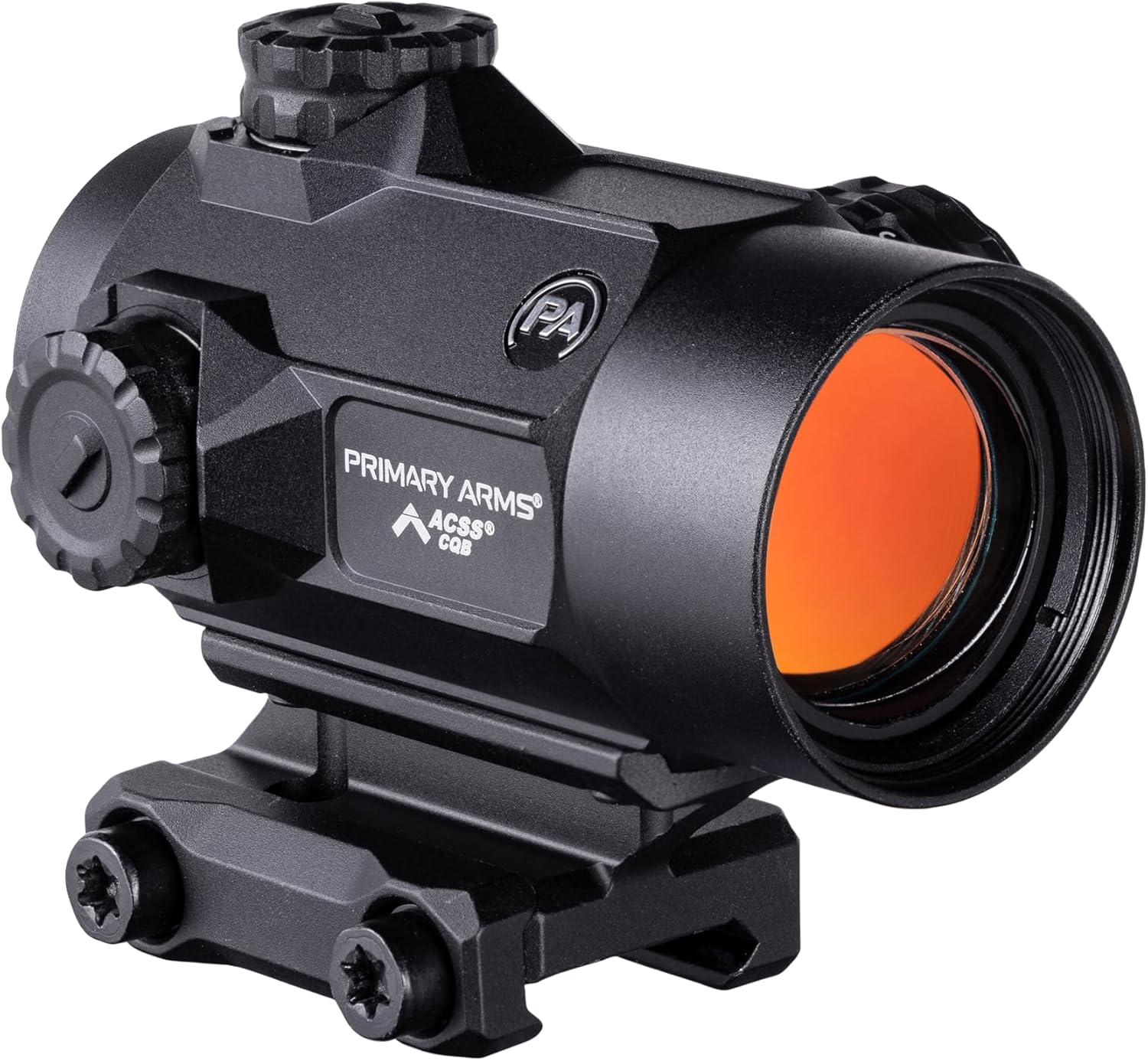
The Primary Arms SLX MD-25 is one of the best larger-window value optics for lever-action shooters who want faster target transitions without jumping to premium pricing tiers.
Specs
- 2 MOA dot
- 25mm objective
- Micro-compatible mounting
- CR2032 battery
- Waterproof construction
- Multiple brightness settings
Pros
- Large viewing window
- Excellent value
- Strong mount compatibility
- Good recoil resistance
- Easy dot acquisition
Cons
- Slightly bulky
- More noticeable tint
- Heavier than compact Micros
The MD-25 immediately feels faster than smaller Micro dots because the oversized objective window makes sight acquisition nearly effortless. On moving targets inside dense woods, that advantage becomes very noticeable.
The optic does carry additional bulk, so it changes the balance of lightweight lever carbines more than compact options. Still, the handling tradeoff is worthwhile for shooters prioritizing speed.
Glass clarity is solid for the price category, though there is a more pronounced blue-green tint compared to premium optics. I also observed minor edge distortion under unconventional shooting angles, but center clarity remained strong.
The side controls provide decent tactile feedback, and the illumination range works well in both bright daylight and dim timber environments. Recoil durability proved surprisingly good during repeated testing with heavier calibers.
Online discussion surrounding the MD-25 often focuses on its strong price-to-performance ratio. Many shooters appreciate that it accepts common Micro-pattern mounts despite the larger window housing.
For mounting, the Micro-compatible interface provides excellent flexibility on lever-action rail systems. Low mounts work best for preserving cheek weld and maintaining comfortable co-witness alignment with backup irons.
➡️➡️➡️ Explore User Feedback and Current Pricing on Amazon
How I Tested / Evaluation Criteria
Parallax
I tested each optic from awkward off-center positions at distances between 15 and 100 yards. Lever guns often get fired quickly from imperfect positions while hunting, so minimizing visible reticle drift matters. The Aimpoint performed best overall, while larger-window optics like the MRO and MD-25 improved speed during dynamic transitions.
Co-Witness and Deck Height
Lever actions usually lack the elevated stock geometry of AR rifles, so optic height becomes critical. I prioritized optics capable of sitting low on Picatinny rails without creating chin-weld shooting positions. Low-profile Micro mounts consistently provided the best ergonomics.
Durability
Heavy-recoiling calibers like .45-70 Government quickly expose weak electronics or loose internals. I evaluated zero retention, battery compartment sealing, and housing integrity during repeated recoil cycles. Premium optics clearly separated themselves here, though several budget options exceeded expectations.
Battery Performance
Long battery life matters on hunting rifles that may sit unused for months before suddenly needing to work in bad weather. Motion-activation systems from Holosun and Sig Sauer proved extremely practical. Aimpoint still dominates pure battery longevity.
Brightness Range
I tested all optics in direct sunlight and low-light wooded environments. Some cheaper optics bloomed excessively at higher settings, while premium units maintained cleaner reticle edges. Night vision compatibility was less important for most lever-gun applications but still valuable on premium models.
Glass Quality
I paid close attention to lens tint, distortion, and emitter reflections. Lever-action rifles are commonly used in wooded environments where contrast matters. Cleaner glass noticeably improves target visibility in low light.
Controls Ergonomics
Cold weather and gloves expose weak button designs quickly. Rotary brightness knobs generally proved faster and easier to manipulate than membrane-style buttons. Tactility also influences how confidently settings can be adjusted under stress.
Mounting Ecosystem
The mounting ecosystem may matter more than the optic itself on a lever gun. Micro footprints currently dominate because they offer abundant low-profile mounting solutions across Marlin, Henry, Rossi, and Winchester platforms.
How to Choose the Right Red Dot for This Gun
Choosing the right optic for a lever-action rifle requires balancing tradition, handling, and practical field performance. Unlike AR platforms, lever guns often have lower comb heights and narrower receivers, so oversized optics can feel awkward very quickly.
The first consideration should always be mounting height. A red dot mounted too high forces an unnatural chin weld that slows target acquisition and reduces comfort during recoil. Micro-pattern optics generally work best because they sit lower and preserve the rifle’s natural pointability.
Weight distribution matters more than many shooters realize. Lever guns are prized for fast handling, especially in dense woods. Large enclosed optics or oversized tube systems can make the rifle feel front-heavy and sluggish during snap shooting.
If you primarily hunt thick timber or moving hogs, prioritize larger windows and fast acquisition. Optics like the Trijicon MRO or MD-25 excel here because the eye naturally finds the reticle faster during rapid transitions.
For traditional woods hunting where shots remain moderate and rifles are carried for long periods, lightweight Micro optics usually provide the best balance. The Aimpoint T-2 and Holosun 403B preserve handling characteristics extremely well.
Shooters using powerful calibers like .45-70 should pay close attention to durability and battery compartment design. Weak caps or poorly sealed electronics can fail surprisingly quickly under repeated recoil impulse.
Mounting compatibility is equally important. Many modern lever guns now accept Picatinny rails directly, but older rifles may require scout mounts or side-mounted systems. The Micro footprint remains the easiest ecosystem to work with because low-profile mounts are widely available.
Finally, think honestly about how the rifle will be used. A compact hunting rifle benefits from lightweight simplicity, while tactical-style builds with suppressors and rails can support larger optics more comfortably.
The best setup is usually the one that preserves the fast, instinctive handling qualities that made lever guns popular in the first place.
FAQs
Are red dots good on lever action rifles?
Yes. Red dots significantly improve target acquisition speed, especially in low light or dense woods. They also help aging shooters who struggle with traditional iron sights.
What mounting system works best on lever guns?
Low-profile Picatinny rail systems paired with Micro-footprint optics currently offer the best balance of compatibility, durability, and cheek weld comfort.
Can a red dot handle .45-70 recoil?
Quality optics absolutely can. Premium models like the Aimpoint T-2 and Trijicon MRO handle heavy recoil extremely well, while several mid-range optics also perform reliably.
Should I use a magnifier with a lever-action red dot?
Usually no. Lever guns are generally optimized for fast handling at moderate distances. Adding magnifiers increases weight and changes the rifle’s balance significantly.
Is an enclosed emitter necessary?
Not always, but enclosed emitters offer major advantages during rain, snow, mud, or dusty hunting conditions because debris cannot block the emitter window.
Conclusion
Finding the best red dot for lever action rifles ultimately comes down to balancing mounting height, recoil durability, weight, and sight picture quality. After extensive testing, the Aimpoint Micro T-2 remains the strongest premium choice overall thanks to its durability, battery life, and compact handling. For value-focused shooters, the HOLOSUN 403B and Sig Sauer Romeo5 continue to deliver exceptional performance at more accessible price points.
The Trijicon MRO stands out for rapid acquisition, while the Leupold Freedom RDS appeals to shooters who want modern performance without sacrificing traditional styling. Meanwhile, the Primary Arms SLX MD-25 offers one of the best large-window experiences for shooters prioritizing speed.
No matter which route you choose, keeping the optic low and preserving the rifle’s natural handling characteristics is the key to building an effective lever-action setup.
Sources referenced include manufacturer specifications from Aimpoint, Holosun, Trijicon, Sig Sauer, Leupold, and Primary Arms, along with mounting discussions from lever-gun enthusiast communities and aftermarket rail manufacturers.
Maybe you interesting
Best Thermal Scope For Predator Hunting: Top 6 Picks for 2026
Top 6 Best Budget Thermal Scope in 2026
6 Best Red Dot For Ruger Scout Rifle in 2026: Mounting & Compatibility
6 Best Red Dot For Ruger Redhawk 45 Colt in 2026: Mounting & Compatibility
6 Best Red Dot For Ruger Redhawk 44 in 2026: Mounting & Compatibility
6 Best Red Dot For Ruger Redhawk 357 in 2026: Mounting & Compatibility
6 Best Red Dot for Ruger Prs in 2026: Mounting & Compatibility
6 Best Red Dot For Ruger Precision Rimfire in 2026: Mounting & Compatibility
6 Best Red Dot For Ruger Precision Rifle 6mm Creedmoor in 2026: Mounting & Compatibility
6 Best Red Dot For Ruger Precision Rifle 338 Lapua in 2026: Mounting & Compatibility
6 Best Red Dot For Ruger Precision Rifle in 2026: Mounting & Compatibility
6 Best Red Dot for Ruger P89 in 2026: Mounting & Compatibility