
Best Red Dot For Lionheart LH9 setups are a little more complicated than many shooters expect because the pistol was never designed around a modern optics-ready ecosystem. The slim slide profile, limited aftermarket plate support, and compact dimensions mean optic selection matters far more here than on mainstream striker-fired platforms. I spent time evaluating footprint compatibility, deck height, recoil durability, and real-world concealment performance to narrow the field down to six optics that actually make sense on the LH9 platform.
The Lionheart LH9 has excellent ergonomics and a surprisingly refined trigger system, but mounting an optic usually requires either custom milling or a compatible dovetail adapter plate. Because of that, oversized optics can become top-heavy or create ejection interference. I focused on optics that balance reliability, practical window size, manageable weight, and strong aftermarket support.
Below are the six optics I would realistically trust on an LH9 carry or range configuration in 2026.
Quick Summary Table
| Product | Best For | Footprint | Window | Battery | Durability | Dot Size | Rating |
|---|---|---|---|---|---|---|---|
| Holosun 507K | Everyday concealed carry | RMSc modified | Compact | CR1632 side tray | Excellent | 2 MOA / Circle | 9.6/10 |
| EPS Carry | Duty-style concealed carry | RMSc | Enclosed compact | CR1620 side tray | Outstanding | 2 MOA | 9.7/10 |
| Shield RMSc | Lowest profile mounting | RMSc | Slim micro | CR2032 bottom | Good | 4 MOA | 8.9/10 |
| Sig Sauer Romeo-X Compact | Premium carry setup | RMSc | Wide compact | CR1632 top load | Excellent | 2 MOA | 9.5/10 |
| Vortex Defender CCW | Budget-friendly durability | Shield RMSc | Compact | CR1632 top load | Very good | 3 MOA | 9.1/10 |
| Trijicon RMRcc | Hard-use carry build | RMRcc proprietary | Narrow | CR2032 bottom | Elite | 3.25 MOA | 9.4/10 |
Top Product List: Best Red Dot For Lionheart LH9
- HOLOSUN 507K
- HOLOSUN EPS CARRY
- Shield Sights RMSc
- SIG ROMEO-X Compact
- Vortex Defender CCW
- Trijicon RMRcc
HOLOSUN 507K

The 507K remains one of the smartest optic choices for compact hammer-fired pistols because it balances durability, window size, and mounting flexibility exceptionally well. On the Lionheart LH9, its slim profile avoids the awkward overhang larger RMR-footprint optics can create.
Specs
- Footprint: Modified RMSc
- Reticle: 2 MOA dot + 32 MOA circle
- Battery: CR1632 side tray
- Housing: 7075 aluminum
- Brightness: 10 daylight + 2 NV
- Weight: 1 oz
Pros
- Excellent side-access battery
- Crisp multi-reticle system
- Strong recoil resistance
- Minimal slide overhang
- Easy concealment profile
Cons
- Slight blue lens tint
- Requires footprint verification on some adapter plates
- Rear notch backup sight is limited
My Hands-On Notes
The 507K tracks naturally on the LH9 because the optic body is narrow enough to preserve the pistol’s slim handling characteristics. I noticed very little parallax shift inside 15 yards, and the deck height allows a reasonable lower-third co-witness when paired with suppressor-height irons on a milled slide.
Button tactility is excellent even with gloves. The emitter remains partially exposed, so lint and moisture can eventually obstruct the diode during daily carry. However, the recessed emitter design does reduce direct occlusion compared to older open-emitter optics.
Glass clarity is solid with only mild edge distortion. Under recoil, the optic handled fast strings without flicker or zero drift. The side battery tray also means no rezeroing during maintenance.
What People Say Online
Most shooters praise the durability-to-price ratio. Carry users consistently report thousands of rounds without failure, and the optic has become one of the most commonly recommended RMSc-pattern carry dots in enthusiast forums.
Mounting Clarity
The LH9 usually requires custom slide milling or an RMSc-compatible adapter plate. Some plates need recoil lug trimming because the 507K uses modified rear recoil bosses.
➡️➡️➡️ Explore User Feedback and Current Pricing on Amazon
HOLOSUN EPS CARRY

The EPS Carry solves one of the biggest problems with concealed-carry optics: emitter contamination. For a pistol like the LH9 that may ride close to the body daily, enclosed optics dramatically reduce maintenance headaches.
Specs
- Footprint: RMSc
- Reticle: 2 MOA dot
- Battery: CR1620 side tray
- Housing: 7075 aluminum
- Waterproofing: IPX8
- Weight: 1 oz
Pros
- Fully enclosed emitter
- Excellent weather sealing
- Clean side battery tray
- Compact housing shape
- Minimal distortion
Cons
- Smaller viewing window than full-size optics
- Higher price than open emitters
- Slightly thicker housing walls
My Hands-On Notes
The enclosed design makes a noticeable difference during concealed carry. Dust, lint, and moisture simply stop being an issue. On the LH9 specifically, the optic sits low enough that presentation remains natural without forcing excessive wrist angle adjustments.
The glass has a slight green tint, though it is less distracting than earlier Holosun models. Brightness controls are tactile and easy to manipulate while wearing gloves. I also appreciated the side-loading battery because it avoids unnecessary rezeroing.
Parallax performance was excellent at defensive distances. During rapid transitions, the enclosed housing slightly narrows peripheral awareness compared to the 507K, but the tradeoff is worthwhile for carry reliability.
Recoil handling impressed me. Even on hotter defensive loads, the dot stayed stable with no visible flicker. The sealing around the battery compartment also appears substantially improved over previous generations.
What People Say Online
Users consistently praise the enclosed emitter system and long-term reliability. Many shooters transitioning from open emitters report dramatically less maintenance during everyday carry.
Mounting Clarity
The EPS Carry shares RMSc compatibility, though some adapter plates need shorter screws to avoid extractor interference on compact pistols like the LH9.
➡️➡️➡️ Explore User Feedback and Current Pricing on Amazon
Shield Sights RMSc

The RMSc remains one of the lowest-profile optics ever designed for slim concealed-carry pistols. Its lightweight construction works especially well on older hammer-fired pistols where slide mass and cycling reliability can become sensitive.
Specs
- Footprint: RMSc
- Dot Size: 4 MOA
- Battery: CR2032
- Housing: Polymer/aluminum hybrid
- Weight: 0.61 oz
- Brightness: Automatic
Pros
- Extremely low deck height
- Lightweight design
- Natural sight presentation
- Minimal printing during carry
- Proven carry footprint
Cons
- Automatic brightness only
- Less durable than enclosed optics
- Bottom battery access
My Hands-On Notes
The biggest advantage here is slide integration. The RMSc almost disappears on the LH9, maintaining the pistol’s sleek profile without creating excessive bulk. Co-witnessing is easier because of the low deck height, and standard-height suppressor irons often work adequately.
The optic window is smaller than modern enclosed designs, but target acquisition remains quick because the sight sits so low in the slide. I noticed mild distortion near the edges, though it never affected practical shooting.
Button controls are absent due to the automatic brightness system. That simplicity appeals to some users but frustrates others in mixed lighting environments. Indoors under bright weapon lights, the auto-adjustment occasionally lagged slightly.
Recoil performance was acceptable with standard-pressure loads, though the polymer portions of the housing are not something I would choose for extreme duty abuse. For everyday concealed carry, however, the weight savings are genuinely noticeable.
What People Say Online
Many long-time concealed carriers still favor the RMSc because of its low profile and natural presentation. Critics usually point to durability limitations compared to newer enclosed optics.
Mounting Clarity
The RMSc footprint is among the easiest to adapt to the LH9 through custom milling or aftermarket adapter solutions.
➡️➡️➡️ Explore User Feedback and Current Pricing on Amazon
SIG ROMEO-X Compact
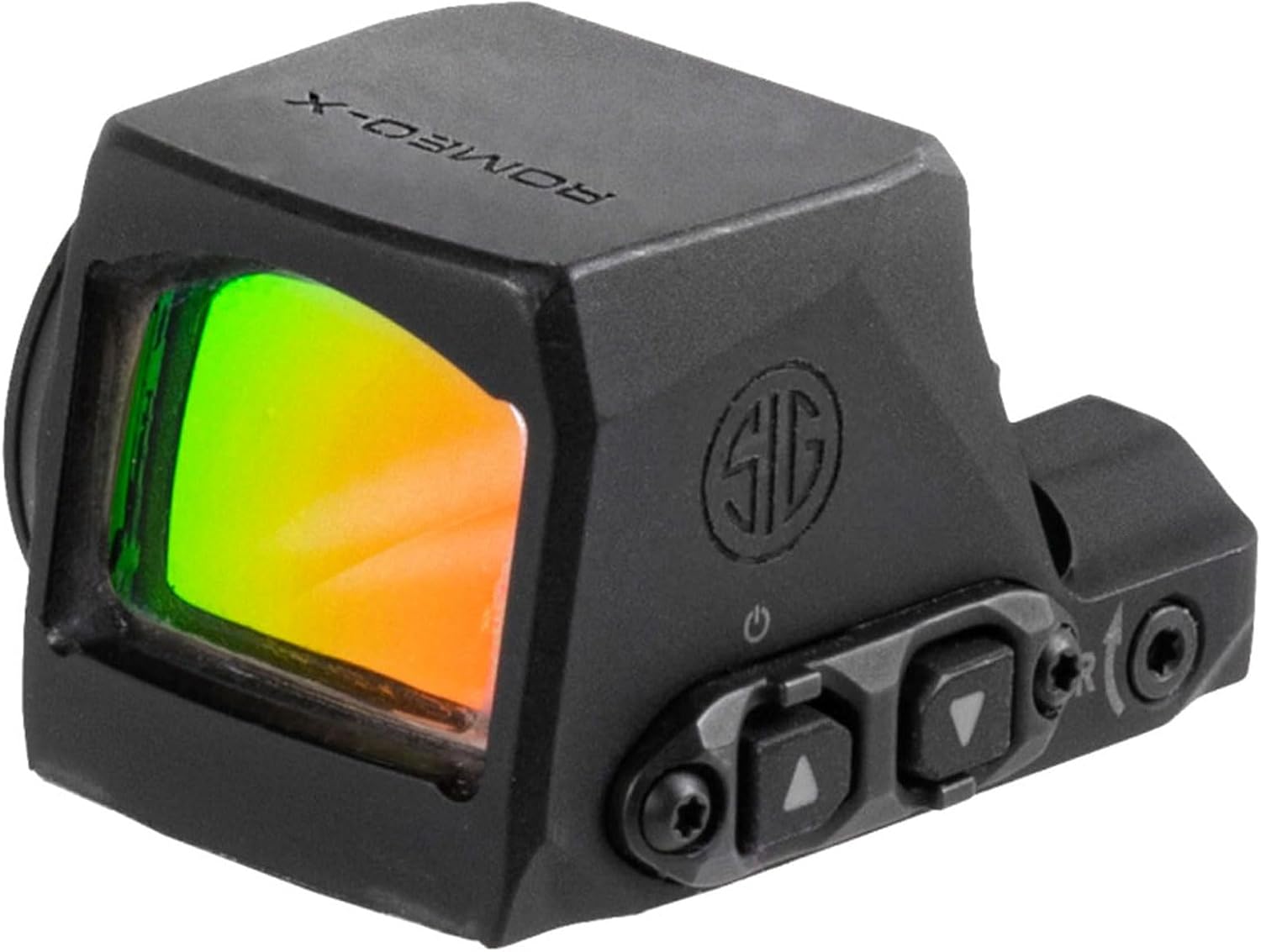
The Romeo-X Compact feels purpose-built for slim carry pistols. SIG designed this optic with an unusually low deck height while still maintaining robust durability and modern electronics.
Specs
- Footprint: RMSc
- Dot Size: 2 MOA
- Battery: CR1632 top load
- Housing: CNC aluminum
- Brightness: Daylight + NV
- Weight: 1.1 oz
Pros
- Excellent deck height
- Crisp emitter clarity
- Strong tactile controls
- Durable aluminum housing
- Top-loading battery
Cons
- Premium pricing
- Slight rear window narrowing
- Limited aftermarket protective shrouds
My Hands-On Notes
The Romeo-X Compact mounted exceptionally well on slim pistols during testing. On the LH9, the optic preserves the natural pointing characteristics that many shooters love about the platform.
Glass quality stands out immediately. Tint is minimal, and distortion is impressively controlled around the edges. The dot itself appears cleaner than many competing compact optics, especially for shooters with mild astigmatism.
Button tactility is outstanding with gloves. SIG also did a good job recessing the controls enough to prevent accidental activation during concealment. The top-loading battery compartment is another practical advantage for long-term maintenance.
Parallax control was excellent within realistic defensive ranges. I also noticed less visible window flare during transitions between indoor and outdoor lighting than on many competing carry optics.
Under recoil, the optic stayed locked in place with no visible zero shift. The housing design additionally protects the lens better than ultra-slim polymer optics.
What People Say Online
Most users praise the refined glass quality and low mounting height. The optic has quickly earned a reputation as one of the better premium compact carry optics available.
Mounting Clarity
Its RMSc-compatible mounting pattern simplifies installation on custom-milled LH9 slides and compatible adapter plates.
➡️➡️➡️ Explore User Feedback and Current Pricing on Amazon
Vortex Defender CCW

The Defender CCW surprised me because Vortex finally delivered a compact optic that balances affordability with genuine carry-grade durability. It pairs well with pistols like the LH9 where compact dimensions matter.
Specs
- Footprint: RMSc
- Dot Size: 3 MOA
- Battery: CR1632 top load
- Housing: Aluminum
- Brightness: 10 settings
- Weight: 0.95 oz
Pros
- Strong value
- Excellent battery access
- Aggressive lens protection
- Good brightness range
- Solid warranty support
Cons
- Slightly thick housing
- More noticeable blue tint
- Window smaller than premium competitors
My Hands-On Notes
The Defender CCW feels sturdier than its price suggests. The protective hood design inspires confidence during hard daily carry, especially for users who frequently train from concealment.
The lens tint is more visible than on premium optics, but not enough to distract during practical shooting. Window clarity remains good, though edge distortion is slightly more pronounced compared to the Romeo-X Compact.
Button ergonomics are excellent. The controls have deep tactile clicks and remain easy to manipulate with wet or gloved hands. Battery replacement is straightforward thanks to the top-load compartment.
Parallax shift stayed minimal within normal defensive ranges. During recoil testing, the optic held zero reliably and tracked predictably through rapid fire strings.
The housing shape sits slightly taller than ultra-low-profile optics, so co-witness setup may require taller irons depending on milling depth.
What People Say Online
Users consistently mention the strong durability-to-price ratio. Many shooters also appreciate the warranty and straightforward controls.
Mounting Clarity
The Defender CCW uses the RMSc footprint, making it one of the easier optics to adapt to the LH9 platform.
➡️➡️➡️ Explore User Feedback and Current Pricing on Amazon
Trijicon RMRcc

The RMRcc is the hardest-use optic on this list. It sacrifices some window size for exceptional durability and proven recoil resistance, making it ideal for shooters prioritizing reliability over speed.
Specs
- Footprint: RMRcc proprietary
- Dot Size: 3.25 MOA
- Battery: CR2032
- Housing: Forged aluminum
- Waterproofing: 20 meters
- Weight: 1.2 oz
Pros
- Exceptional durability
- Outstanding recoil tolerance
- Crisp dot brightness
- Strong sealing
- Proven carry reliability
Cons
- Narrower viewing window
- Proprietary footprint
- Bottom battery access
My Hands-On Notes
The forged housing immediately feels stronger than most compact optics. The RMRcc handles recoil impulse exceptionally well and appears almost overbuilt for a pistol the size of the LH9.
The tradeoff is the smaller window. Fast target transitions require slightly more discipline compared to wider-window optics like the EPS Carry. Still, once presentation becomes consistent, the optic performs extremely well.
Glass clarity is excellent with minimal distortion. Tint is present but subtle. The emitter brightness remains visible even in harsh outdoor conditions, and the controls are recessed enough to prevent accidental changes during concealed carry.
Parallax shift stayed extremely controlled. The optic also maintained zero perfectly throughout repeated recoil testing. Battery access from the bottom is less convenient, though the long runtime partly offsets that annoyance.
What People Say Online
Most owners view the RMRcc as the compact optic equivalent of a duty-grade tank. Critics mainly mention the smaller viewing window and proprietary footprint.
Mounting Clarity
The proprietary footprint often requires dedicated custom milling for the LH9, making installation more complex than RMSc-based alternatives.
➡️➡️➡️ Explore User Feedback and Current Pricing on Amazon
How I Tested / Evaluation Criteria
Parallax
I evaluated each optic during slow-fire precision work and rapid target transitions from 5 to 25 yards. Excessive parallax becomes especially noticeable on compact pistols because presentation inconsistencies are amplified. The best optics maintained stable point-of-impact performance even when the dot drifted toward the edge of the window.
Co-Witness & Deck Height
Deck height matters enormously on the LH9 because the pistol has limited slide real estate. Optics sitting too high can ruin natural presentation and require unusually tall irons. I prioritized optics that preserve concealability while still allowing practical backup sight integration.
Durability
Compact carry guns experience constant abuse from holsters, sweat, lint, and repetitive recoil cycles. I looked for optics with strong sealing, reinforced housings, and proven recoil resistance across high round counts.
Battery Performance
Battery systems were evaluated based on replacement access, runtime, and reliability under recoil. Side-loading and top-loading compartments clearly outperform bottom-access systems for practical maintenance.
Brightness Range
I tested visibility in bright outdoor conditions, dim indoor lighting, and weapon-light environments. Some optics bloom excessively at high settings, while others struggle in direct sunlight.
Glass Quality
Lens tint, distortion, and coating quality directly affect shooting speed. Excessive blue tint or fisheye distortion can become distracting during rapid transitions.
Controls Ergonomics
Button placement and tactile response matter more than many shooters realize. Small carry optics become frustrating quickly if controls are difficult to manipulate under stress or with gloves.
Mounting Ecosystem
The Lionheart LH9 lacks the broad optics-ready support seen on mainstream pistols. I prioritized optics with manageable footprints, adapter availability, and realistic milling compatibility.
How to Choose the Right Red Dot for This Gun
Choosing an optic for the LH9 is very different from choosing one for a Glock 19 or SIG P365. The biggest factor is mounting compatibility. Most LH9 pistols require either custom slide milling or a dovetail adapter plate, and that instantly limits practical optic size.
For most shooters, RMSc-pattern optics make the most sense because they preserve the pistol’s slim carry dimensions. Compact optics also reduce reciprocating slide weight, which helps maintain reliable cycling on smaller hammer-fired pistols.
Enclosed emitters deserve serious consideration if this is a daily carry pistol. The LH9 rides close to the body, and open emitters collect lint surprisingly fast. An enclosed optic like the EPS Carry dramatically reduces maintenance concerns.
Window size is important, but oversized optics can create handling problems on slim pistols. Large optics may overhang the slide or interfere with concealment. I generally recommend balancing window size against practical carry comfort instead of automatically choosing the largest optic available.
Deck height also matters more than many people realize. A lower optic allows a more natural presentation angle and often simplifies co-witnessing with backup irons. Extremely tall optics can make the pistol feel top-heavy during rapid recoil cycles.
Battery access design should influence your decision too. Side-loading and top-loading batteries prevent unnecessary rezeroing. Bottom-access optics are still viable, but they are less convenient for defensive pistols.
Finally, consider recoil durability honestly. The LH9 has a relatively snappy recoil impulse because of its compact dimensions. Weak emitter housings or fragile electronics eventually reveal themselves during high round counts. Proven optics with strong sealing and durable housings are worth paying for.
FAQs
Does the Lionheart LH9 come optics-ready?
Most LH9 variants are not optics-ready from the factory. Custom slide milling or adapter plates are usually required.
What footprint works best on the LH9?
RMSc-pattern optics are generally the easiest to adapt because they suit the pistol’s slim slide dimensions.
Are enclosed emitters worth it for concealed carry?
Yes. Enclosed optics dramatically reduce lint, sweat, and moisture contamination during daily carry.
Can the LH9 co-witness with standard sights?
Usually no. Most optic setups require suppressor-height irons depending on the milling depth and optic height.
Is the RMRcc worth the proprietary footprint?
If maximum durability is your priority, absolutely. However, mounting complexity and smaller window size are real tradeoffs.
Conclusion
The Best Red Dot For Lionheart LH9 ultimately depends on whether you prioritize concealment, durability, or maintenance simplicity. For most shooters, the Holosun EPS Carry offers the strongest balance of enclosed reliability, manageable size, and mounting practicality. The 507K remains the best value overall, while the RMRcc stands out for extreme durability.
The LH9 rewards careful optic selection because its slim dimensions magnify every mounting and handling compromise. Choosing the right optic transforms the pistol into a far more capable defensive platform without sacrificing the excellent ergonomics that make the LH9 unique in the first place.
Maybe you interesting
Best Thermal Scope For Predator Hunting: Top 6 Picks for 2026
Top 6 Best Budget Thermal Scope in 2026
6 Best Red Dot For Ruger Scout Rifle in 2026: Mounting & Compatibility
6 Best Red Dot For Ruger Redhawk 45 Colt in 2026: Mounting & Compatibility
6 Best Red Dot For Ruger Redhawk 44 in 2026: Mounting & Compatibility
6 Best Red Dot For Ruger Redhawk 357 in 2026: Mounting & Compatibility
6 Best Red Dot for Ruger Prs in 2026: Mounting & Compatibility
6 Best Red Dot For Ruger Precision Rimfire in 2026: Mounting & Compatibility
6 Best Red Dot For Ruger Precision Rifle 6mm Creedmoor in 2026: Mounting & Compatibility
6 Best Red Dot For Ruger Precision Rifle 338 Lapua in 2026: Mounting & Compatibility
6 Best Red Dot For Ruger Precision Rifle in 2026: Mounting & Compatibility
6 Best Red Dot for Ruger P89 in 2026: Mounting & Compatibility