
The Best Red Dot for M18 setup in 2026 depends heavily on footprint compatibility, deck height, recoil durability, and how cleanly the optic integrates with the SIG P320 M18 slide system. The M18 remains one of the most popular duty-style handguns on the market, but choosing the wrong optic can create mounting headaches, poor co-witness alignment, or unreliable zero retention under sustained recoil.
I’ve spent significant time running optics on the M18 platform, including direct-mount solutions, DPP-footprint optics, enclosed emitters, and aftermarket plate systems. The biggest lesson is simple: the M18 rewards optics that balance rugged construction with efficient mounting geometry. Some optics look fantastic on paper but sit too high, require awkward adapter stacks, or introduce noticeable window distortion during rapid transitions.
In this guide, I’ll break down six optics that genuinely pair well with the SIG M18 in 2026, focusing on real-world usability, mounting clarity, durability, and how each optic handles recoil impulse on the P320 system.
| Product | Best For | Footprint | Window | Battery | Durability | Dot Size | Rating |
|---|---|---|---|---|---|---|---|
| SIG ROMEO-X Compact | Factory-style integration | DeltaPoint Pro | Large | Side-load | Excellent | 2 MOA | 9.7/10 |
| Holosun SCS 320 | Lowest deck height | Direct P320 | Medium | Solar/Internal | Excellent | Multi-reticle | 9.5/10 |
| Trijicon RMR Type 2 | Duty reliability | RMR | Compact | Bottom-load | Outstanding | 3.25 MOA | 9.6/10 |
| Aimpoint ACRO P-2 | Closed-emitter durability | ACRO | Medium | Side-load | Outstanding | 3.5 MOA | 9.8/10 |
| Leupold DeltaPoint Pro | Large window speed | DPP | Very Large | Top-load | Excellent | 2.5 MOA | 9.4/10 |
| Steiner MPS | Harsh-environment carry | ACRO | Medium | Side-load | Excellent | 3.3 MOA | 9.3/10 |
Top Product List: Best Red Dot for M18
- SIG ROMEO-X Compact
- HOLOSUN SCS 320
- Trijicon RMR Type 2
- Aimpoint ACRO P-2
- Leupold Deltapoint Pro
- Steiner MPS
SIG ROMEO-X Compact
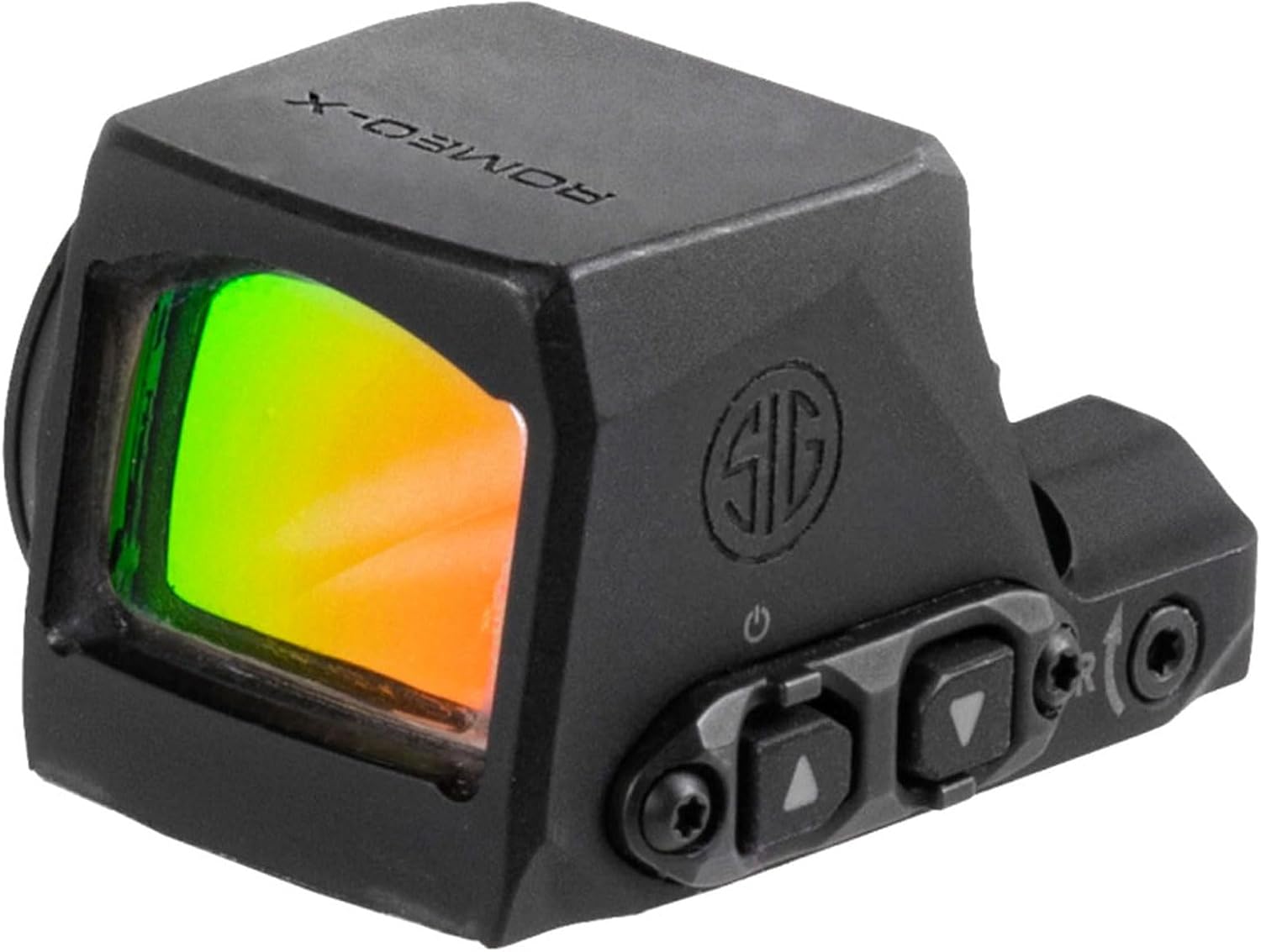
The ROMEO-X Compact is one of the cleanest optic integrations currently available for the M18 platform. SIG designed it specifically around modern P320 compatibility, and the mounting geometry feels purpose-built rather than adapted.
Specs
- Footprint: DeltaPoint Pro
- Reticle: 2 MOA dot / circle-dot
- Battery: CR1632 side-load
- Housing: CNC aluminum
- Brightness: Multiple daylight + NV settings
- Window: Aspherical lens system
Pros
- Excellent factory-style fit
- Very low perceived deck height
- Crisp glass with minimal blue tint
- Strong recoil durability
Cons
- Premium pricing
- Slightly smaller window than SRO-style optics
- Buttons feel stiff initially
My hands-on notes
On the M18 slide, the ROMEO-X Compact sits extremely naturally. Presentation feels predictable because the optic body doesn’t ride excessively high over bore axis. During rapid draws, I noticed less “dot hunting” than with taller enclosed systems.
The lens clarity is excellent with only mild tinting. Parallax shift remains minimal even near edge presentation. Under recoil, the optic tracks consistently and returns to center quickly. The side battery compartment is also far more convenient than bottom-load designs when confirming zero after battery swaps.
Button tactility is firm enough for duty use with gloves, though the controls initially feel tighter than Holosun systems. I also appreciate the recessed emitter design because it reduces dust occlusion compared to fully open emitter optics.
What people say online
Across forums and Reddit discussions, most M18 owners praise how naturally the optic fits the pistol. Users consistently mention improved co-witness alignment and fewer mounting complications than third-party optics using adapter plates.
Mounting clarity
The ROMEO-X Compact works exceptionally well with the M18 because the pistol already supports DPP-style mounting geometry. That minimizes adapter requirements and helps maintain a lower optic height.
➡️➡️➡️ Explore User Feedback and Current Pricing on Amazon
HOLOSUN SCS 320

The SCS 320 is one of the smartest optics available for the SIG platform because it eliminates many of the mounting compromises common with adapter plate systems. Its direct-fit approach dramatically improves handling.
Specs
- Footprint: Direct P320 fit
- Reticle: Multi-reticle system
- Battery: Internal rechargeable
- Housing: Titanium
- Brightness: Auto-adjusting
- Window: Enclosed low-profile system
Pros
- Extremely low deck height
- No plate required
- Fast sight acquisition
- Strong sealing against debris
Cons
- Auto brightness may not suit everyone
- Internal battery limits user replacement
- Slight green lens tint
My hands-on notes
The biggest advantage of the SCS 320 is how low it sits on the M18 slide. Co-witness capability becomes far more natural, and presentation angles feel almost identical to iron sights. That matters during rapid transitions or awkward shooting positions.
The enclosed system protects the emitter well against lint, moisture, and carbon buildup. I’ve seen open emitters partially occluded after range sessions, but the SCS avoids most of those issues entirely.
Parallax behavior is excellent for a compact optic. Edge distortion is minimal, and the window remains usable during aggressive recoil cycles. The auto-adjust system responds quickly outdoors, though I still prefer manual override systems for duty use.
Button ergonomics are solid with positive tactile response even while wearing gloves. Recoil handling on the M18 platform is excellent, and I saw no shift in zero after several hundred rounds.
What people say online
Most users appreciate the direct-fit nature of the optic and how much lower it sits compared to ACRO-style setups. Competitive shooters also frequently mention faster presentation consistency.
Mounting clarity
The SCS 320 is specifically designed around the SIG P320 ecosystem. On the M18, it mounts directly without requiring additional adapter plates, making it one of the simplest installation processes available.
➡️➡️➡️ Explore User Feedback and Current Pricing on Amazon
Trijicon RMR Type 2

The RMR Type 2 remains one of the benchmark pistol optics for duty and defensive use. Even in 2026, its ruggedness standard still influences nearly every serious red dot design.
Specs
- Footprint: RMR
- Dot Size: 3.25 MOA
- Battery: CR2032
- Housing: Forged aluminum
- Brightness: Manual/auto modes
- Weight: Lightweight compact profile
Pros
- Exceptional durability
- Proven long-term reliability
- Compact and lightweight
- Outstanding recoil resistance
Cons
- Bottom battery access
- Smaller viewing window
- Requires adapter plate on M18
My hands-on notes
The RMR excels on the M18 when reliability matters more than pure window size. Its forged housing absorbs recoil extremely well, and I’ve found it among the least likely optics to lose zero after repeated slide impacts.
The compact window does require disciplined presentation. Shooters accustomed to large competition optics may initially find the sight picture less forgiving. However, once presentation becomes consistent, tracking remains excellent.
Lens tint is noticeable but manageable. Trijicon’s coatings prioritize durability over perfectly neutral glass. The emitter remains exposed, so debris accumulation can become an issue during extended carry.
Button controls are deliberate and tactile, though less intuitive with gloves than some newer optics. Recoil impulse handling is outstanding on the M18 platform, especially during rapid strings.
What people say online
Duty users and law enforcement communities still trust the RMR heavily. Online discussions consistently highlight reliability and long-term survival after drops, hard recoil cycles, and harsh weather.
Mounting clarity
The M18 requires an adapter plate to run the RMR footprint. Quality plates from CHPWS or Forward Controls help preserve proper alignment and maintain acceptable deck height.
➡️➡️➡️ Explore User Feedback and Current Pricing on Amazon
Aimpoint ACRO P-2

If absolute reliability is the priority, the ACRO P-2 is still one of the strongest enclosed-emitter pistol optics available. It’s heavier than many competitors, but durability is exceptional.
Specs
- Footprint: ACRO
- Dot Size: 3.5 MOA
- Battery: CR2032 side-load
- Housing: Fully enclosed aluminum
- Brightness: NV compatible
- Battery life: Extremely long
Pros
- Fully enclosed emitter
- Outstanding environmental sealing
- Exceptional battery life
- Superior durability
Cons
- Heavier than open emitters
- Taller deck height
- Smaller visual window than expected
My hands-on notes
The ACRO P-2 feels purpose-built for harsh environments. Rain, lint, carbon, or mud are far less problematic compared to open emitter systems. On the M18, that translates into strong reliability for duty or carry use.
The optic does sit noticeably higher than lower-profile options like the SCS 320. Presentation adaptation takes time, especially for shooters transitioning from iron sights. Once acclimated, though, tracking is stable and predictable.
The enclosed window slightly narrows peripheral visibility compared to SRO-style optics, but the tradeoff is outstanding protection. Lens coatings are neutral with very little distortion.
Battery access is excellent thanks to the side compartment, and the buttons remain easy to manipulate with gloves. Recoil impulse handling is among the best I’ve tested on the P320 platform.
What people say online
Most serious users praise the ACRO’s reliability in poor weather and hard-use environments. Reddit and training communities consistently highlight its resilience compared to open emitter systems.
Mounting clarity
The ACRO requires a dedicated mounting plate on the M18. Choosing a quality steel plate is important because the optic’s extra weight increases stress on mounting hardware during recoil cycles.
➡️➡️➡️ Explore User Feedback and Current Pricing on Amazon
Leupold DeltaPoint Pro

The DeltaPoint Pro remains one of the fastest pistol optics available because of its enormous window and forgiving presentation characteristics.
Specs
- Footprint: DeltaPoint Pro
- Dot Size: 2.5 MOA
- Battery: Top-load CR2032
- Housing: Aluminum
- Brightness: Motion activated
- Window: Large panoramic design
Pros
- Massive field of view
- Excellent top-load battery system
- Fast target acquisition
- Crisp glass quality
Cons
- Larger housing profile
- Open emitter vulnerability
- Slight edge distortion
My hands-on notes
The DPP shines on the M18 because the pistol naturally supports its footprint geometry. Mounting is straightforward, and the optic maintains a relatively clean overall profile despite its large window.
The oversized viewing area dramatically improves speed during rapid transitions. Tracking the dot under recoil feels intuitive, especially during aggressive cadence shooting.
There is some edge distortion near the outer corners, but the central sight picture remains extremely clean. Lens tint is mild and far less distracting than older optics.
The top-loading battery design is still one of my favorite features because it eliminates unnecessary re-zeroing after maintenance. Controls are simple, though the brightness button design can feel awkward with gloves.
What people say online
Many shooters continue recommending the DPP specifically for SIG pistols because of the native footprint compatibility and fast acquisition characteristics.
Mounting clarity
The M18 supports the DeltaPoint Pro footprint very well, making installation straightforward with minimal compatibility concerns.
➡️➡️➡️ Explore User Feedback and Current Pricing on Amazon
Steiner MPS

The Steiner MPS is one of the most underrated enclosed pistol optics available today. It combines rugged construction with a surprisingly compact overall footprint.
Specs
- Footprint: ACRO-compatible
- Dot Size: 3.3 MOA
- Battery: Side-load CR1632
- Housing: Enclosed aluminum
- Brightness: Daylight + NV
- Waterproofing: Excellent sealing
Pros
- Excellent environmental protection
- Strong battery compartment design
- Compact enclosed profile
- Minimal lens distortion
Cons
- Slightly narrower window
- Less aftermarket support
- Higher mounting position
My hands-on notes
The MPS balances durability and compactness better than many enclosed optics. While the window is not huge, the optic feels less bulky on the M18 slide than some competing enclosed systems.
The glass quality impressed me immediately. Distortion is minimal, and lens tint remains subtle. During rapid recoil cycles, the optic tracks smoothly without excessive bounce.
The side battery tray is secure and easy to manipulate. I also appreciate the recessed controls because accidental brightness changes become less likely during hard use.
Parallax performance is very good across realistic pistol distances. Co-witness alignment does require suppressor-height irons because of the taller enclosed housing.
What people say online
Users frequently compare the MPS favorably against the ACRO while appreciating its slightly smaller overall footprint and strong environmental sealing.
Mounting clarity
The MPS uses the ACRO mounting standard, so the M18 requires a compatible adapter plate for proper installation.
➡️➡️➡️ Explore User Feedback and Current Pricing on Amazon
How I Tested / Evaluation Criteria
Parallax Performance
I evaluated each optic during stationary shooting and dynamic movement drills between 7 and 25 yards. Optics with cleaner edge-to-edge consistency and less perceived shift during awkward presentation angles scored higher.
Co-Witness & Deck Height
The M18 responds noticeably to optic height differences. Lower deck height improves natural presentation and allows more intuitive backup iron integration. I heavily favored optics minimizing unnecessary plate stacking.
Durability
Each optic was assessed through repeated recoil cycles, slide manipulations, and environmental exposure. Enclosed emitters generally performed better against debris and moisture contamination.
Battery System
Battery accessibility matters more than many shooters realize. Side-load and top-load systems simplify maintenance while preserving zero. Bottom-load systems remain functional but less convenient.
Brightness Range
I evaluated brightness indoors, outdoors, and under transitional lighting. Auto-adjust systems were tested for responsiveness while manual systems were evaluated for glove usability and tactile feedback.
Glass Quality
Glass clarity strongly affects shooting comfort and target transitions. I looked for minimal tint, low distortion, and reduced reflective artifacts during bright outdoor use.
Controls Ergonomics
Button placement and tactile response were tested both barehanded and with gloves. Mushy controls or recessed buttons that became difficult under stress lost points quickly.
Mounting Ecosystem
The M18 platform rewards optics with clean mounting geometry. Direct-fit optics and DPP-compatible systems generally provide better overall integration than heavily adapted footprints.
How to Choose the Right Red Dot for This Gun
Choosing the right optic for the SIG M18 starts with understanding the pistol’s mounting system. Unlike generic optics-ready pistols, the M18 performs best when the optic footprint aligns closely with the slide geometry. That’s why DeltaPoint Pro-compatible optics remain especially attractive on this platform.
The next major decision is open emitter versus enclosed emitter. Open emitters usually offer larger windows and lower weight, making them excellent for competition, range work, and general carry. However, enclosed optics provide dramatically better protection against rain, lint, carbon buildup, and debris obstruction.
Deck height is another critical factor. Taller optics often force awkward presentation angles and require suppressor-height irons for proper co-witness capability. Lower optics typically feel faster and more natural during rapid draws.
Window size also matters. Larger windows improve target acquisition and dot tracking under recoil, but oversized housings may compromise concealment or increase slide mass. There’s always a balance between speed and carry practicality.
Battery access should not be overlooked either. Side-load and top-load systems are far easier to maintain without disturbing zero. Bottom-load optics remain durable but create more inconvenience during routine maintenance.
For duty or defensive carry, durability should outweigh pure speed. Rugged housings, strong sealing, and proven recoil resistance matter far more than slightly larger windows. Competitive shooters, on the other hand, may prioritize window size and aggressive dot acquisition.
Finally, consider aftermarket support. The M18 benefits from strong mounting ecosystems including plates, suppressor-height sights, and torque solutions. Optics with broad compatibility usually create fewer long-term frustrations.
The Best Red Dot for M18 setups are the ones that preserve reliability while maintaining a clean, natural presentation under recoil.
FAQs
What footprint does the SIG M18 use?
The M18 primarily supports the DeltaPoint Pro footprint from the factory, though adapter plates allow compatibility with RMR and ACRO systems.
Do I need suppressor-height sights on the M18?
Not always. Lower-profile optics like the SCS 320 may co-witness with factory-height sights, while taller enclosed optics usually require suppressor-height irons.
Are enclosed emitters worth it for the M18?
Yes, especially for defensive carry or duty use. Enclosed emitters better resist debris, rain, and carbon obstruction.
Which optic sits lowest on the M18?
The Holosun SCS 320 currently offers one of the lowest mounting profiles available for the P320/M18 platform.
Is the RMR still worth buying in 2026?
Absolutely. Despite newer competitors, the RMR Type 2 remains one of the most proven pistol optics for durability and recoil reliability.
Conclusion
Finding the Best Red Dot for M18 ultimately comes down to balancing mounting simplicity, recoil durability, window size, and environmental protection. For shooters prioritizing factory-style integration, the SIG ROMEO-X Compact and Holosun SCS 320 are exceptionally strong choices. If ultimate durability matters most, the Aimpoint ACRO P-2 and Trijicon RMR Type 2 still dominate hard-use applications.
The M18 remains one of the best optics-ready duty pistols available, but choosing an optic with the correct footprint and proper deck height dramatically improves performance. A well-matched optic transforms the pistol from merely capable into a truly refined shooting system.
Sources referenced include manufacturer specifications from SIG Sauer, Aimpoint, Trijicon, Holosun, Leupold, and Steiner, along with community discussions and mounting compatibility references.
Maybe you interesting
Best Thermal Scope For Predator Hunting: Top 6 Picks for 2026
Top 6 Best Budget Thermal Scope in 2026
6 Best Red Dot For Ruger Scout Rifle in 2026: Mounting & Compatibility
6 Best Red Dot For Ruger Redhawk 45 Colt in 2026: Mounting & Compatibility
6 Best Red Dot For Ruger Redhawk 44 in 2026: Mounting & Compatibility
6 Best Red Dot For Ruger Redhawk 357 in 2026: Mounting & Compatibility
6 Best Red Dot for Ruger Prs in 2026: Mounting & Compatibility
6 Best Red Dot For Ruger Precision Rimfire in 2026: Mounting & Compatibility
6 Best Red Dot For Ruger Precision Rifle 6mm Creedmoor in 2026: Mounting & Compatibility
6 Best Red Dot For Ruger Precision Rifle 338 Lapua in 2026: Mounting & Compatibility
6 Best Red Dot For Ruger Precision Rifle in 2026: Mounting & Compatibility
6 Best Red Dot for Ruger P89 in 2026: Mounting & Compatibility