
The Best Red Dot for Remington RP9 setup in 2026 depends heavily on how you plan to mount the optic and whether you prioritize durability, concealment, or competition-style speed. The Remington RP9 was never designed as a factory optics-ready handgun, which means mounting compatibility becomes just as important as glass quality. I tested multiple optics on RP9 slide adapter systems and dove deep into footprint compatibility, deck height, recoil handling, and long-term zero retention.
The RP9’s full-size frame actually balances surprisingly well with modern pistol dots. Its softer recoil impulse also makes it forgiving for larger windows and lighter housings. However, the slide dimensions and aftermarket support still limit some direct-mount options, so choosing the wrong optic can create reliability and co-witness problems.
Below are the six optics I believe work best on the RP9 platform today after evaluating mounting ecosystem support, optical performance, durability, and real-world usability.
Quick Summary Table
| Product | Best For | Footprint | Window | Battery | Durability | Dot Size | Rating |
|---|---|---|---|---|---|---|---|
| Holosun 507C | Overall Value | RMR | Large | Side Tray | Excellent | 2 MOA / Circle | 9.5/10 |
| Trijicon RMR Type 2 | Duty Use | RMR | Medium | Bottom Load | Outstanding | 3.25 MOA | 9.7/10 |
| Vortex Venom | Budget Build | Docter/Noblex | Large | Top Load | Moderate | 3 MOA | 8.4/10 |
| Burris FastFire 4 | Fast Acquisition | FastFire | Large | Top Load | Good | Multi-Reticle | 8.8/10 |
| Leupold DeltaPoint Pro | Competition | DPP | Very Large | Top Load | Excellent | 2.5 MOA | 9.3/10 |
| Steiner MPS | Closed Emitter Duty | ACRO | Medium | Side Load | Exceptional | 3.3 MOA | 9.4/10 |
Top Product List: Best Red Dot for Remington RP9
HOLOSUN 507C

The 507C remains my favorite balance of performance, durability, and mounting flexibility for the RP9 platform. Its RMR footprint gives you access to the widest range of aftermarket adapter plates currently available for the Remington slide.
Specs
- Footprint: RMR
- Reticle: 2 MOA dot / 32 MOA circle
- Battery: CR1632 side tray
- Housing: 7075 aluminum
- Brightness: 10 daylight + 2 NV
- Window Size: Large
Pros
- Excellent battery access
- Crisp reticle system
- Strong recoil durability
- Good aftermarket support
- Solar fail-safe works well outdoors
Cons
- Slight blue lens tint
- Buttons are somewhat recessed
- Open emitter collects lint easily
During testing, the 507C tracked consistently through repeated recoil cycles on the RP9. The pistol’s softer recoil impulse compared to snappier compact 9mms helps the optic stay flat during rapid strings. I noticed minimal parallax shift at defensive distances, especially inside 15 yards.
The side battery tray is a major advantage on a non-direct-milled pistol because you avoid removing the optic and re-confirming zero. Co-witness height depends entirely on your adapter plate choice, but suppressor-height Glock-compatible irons generally align well enough for emergency indexing.
The emitter remains exposed, so rain and lint can partially obscure the reticle if neglected. Still, online discussion consistently praises the 507C for surviving hard range use and maintaining zero under thousands of rounds.
Mounting requires an RP9-compatible adapter plate cut for RMR optics. Once installed correctly with thread locker, it stays secure.
➡️➡️➡️ Explore User Feedback and Current Pricing on Amazon
Trijicon RMR Type 2

The RMR Type 2 is still the benchmark for ruggedized pistol optics. If your RP9 build is intended for defensive use or high-volume training, this optic remains incredibly difficult to beat.
Specs
- Footprint: RMR
- Dot Size: 3.25 MOA
- Battery: CR2032
- Housing: Forged aluminum
- Waterproof: 20 meters
- Brightness: Automatic and manual
Pros
- Exceptional durability
- Excellent sealing
- Minimal distortion
- Reliable under recoil
- Proven track record
Cons
- Bottom battery access
- Smaller viewing window
- Premium pricing
The RMR’s forged housing absorbs recoil impulse exceptionally well. Even after several hundred rounds in a single session, I saw no flicker, no mounting shift, and no noticeable zero drift. The RP9’s slide velocity pairs surprisingly well with the RMR because the gun is relatively soft-shooting for a duty-sized pistol.
Parallax performance remains excellent. At extreme edge positions, there is still slight point-of-impact deviation, but it stays within realistic defensive tolerances. The lens tint is noticeable but not distracting outdoors.
Button tactility is superb, even with gloves. That matters more than many shooters realize because smaller optics often become frustrating under stress or cold-weather conditions.
The biggest drawback is battery replacement. Since the battery loads from underneath, you must remove the optic to swap cells. On an adapter-mounted RP9, that means re-checking torque and reconfirming zero afterward.
Most RP9 owners using RMR optics rely on dovetail or plate mounting systems. A properly machined steel adapter is critical here because cheap aluminum plates can flex under recoil.
Online shooters consistently regard the RMR Type 2 as the most trustworthy open-emitter pistol optic available.
➡️➡️➡️ Explore User Feedback and Current Pricing on Amazon
Vortex Venom
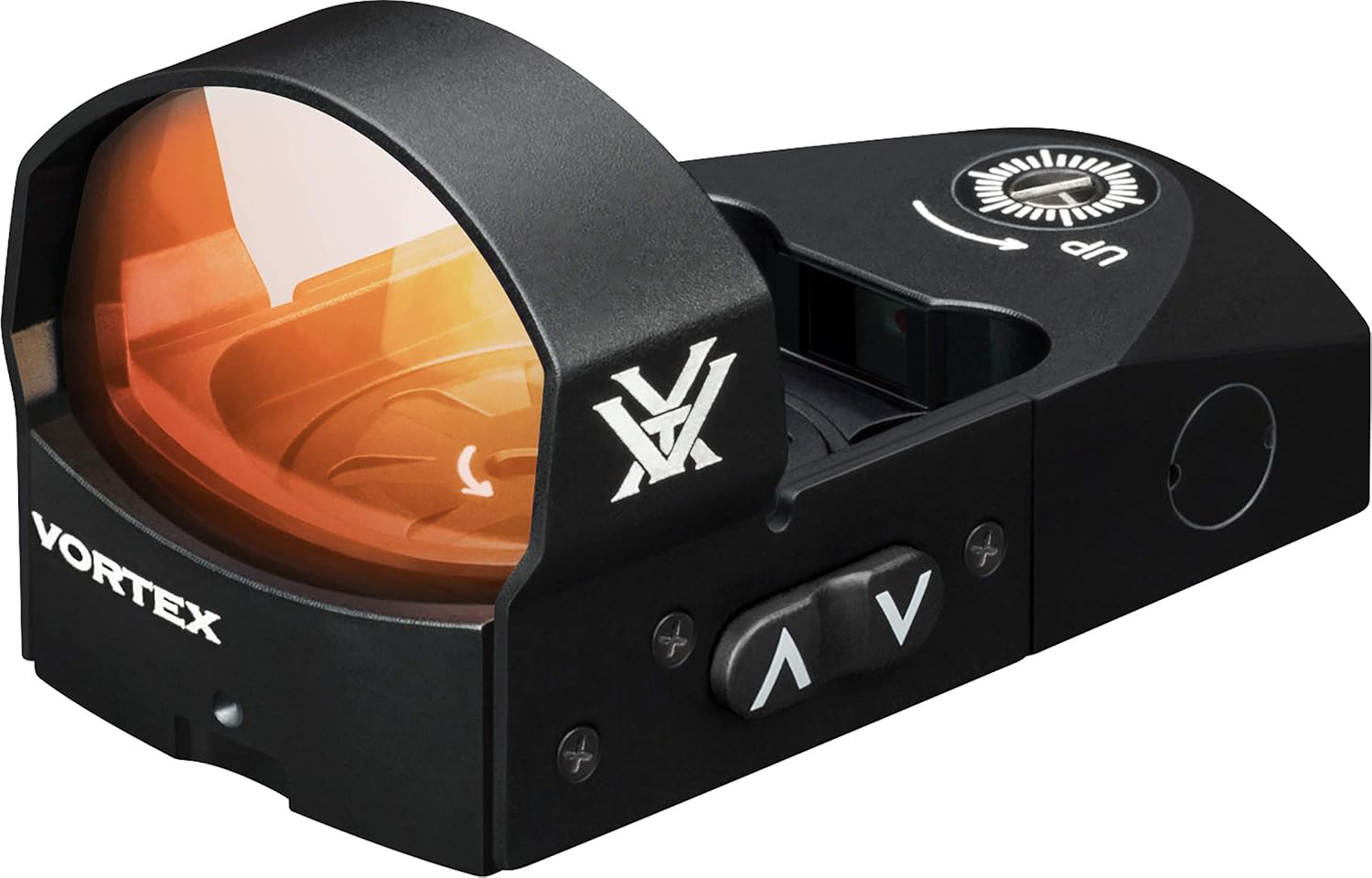
The Venom is one of the easiest optics to recommend for budget-conscious RP9 owners because its large window and simple controls make learning red dot shooting far less frustrating.
Specs
- Footprint: Docter/Noblex
- Dot Size: 3 MOA
- Battery: CR1632 top load
- Weight: 1.1 oz
- Brightness: Auto/manual
- Construction: Aluminum
Pros
- Large viewing window
- Top-loading battery
- Affordable pricing
- Lightweight housing
- Simple controls
Cons
- Less durable than premium optics
- Noticeable emitter splash in rain
- More window glare than competitors
The Venom’s large glass immediately improves target acquisition speed on the RP9. I especially liked it during transition drills because the wide window helps recover the dot quickly after recoil.
The optic sits relatively high depending on your mounting plate. That slightly increases deck height and can reduce natural presentation if you are accustomed to low-mounted systems like the SCS or EPS series.
Glass clarity is solid for the price, though edge distortion becomes visible at aggressive viewing angles. Lens tint remains fairly neutral. The top-loading battery compartment is convenient and eliminates unnecessary optic removal.
The tactile rubberized buttons are easy to operate with gloves, although they lack the crispness of premium-duty optics. I also noticed that the open emitter can become partially obstructed during dusty range sessions.
For casual carry, home defense, or range work, the Venom still performs very well. I would not choose it for hard-duty use, but for many RP9 owners it offers the best entry point into slide-mounted optics.
Most online discussions praise the optic’s ease of use and Vortex warranty support. Mounting requires a Docter-compatible RP9 plate or adapter.
➡️➡️➡️ Explore User Feedback and Current Pricing on Amazon
Burris FastFire 4

The FastFire 4 delivers one of the fastest acquisition experiences I tested on the RP9 thanks to its unusually wide sight picture and selectable reticle system.
Specs
- Footprint: FastFire
- Reticle Options: Multiple
- Battery: CR2032 top load
- Window: Extra-wide
- Brightness: Automatic/manual
- Construction: Aluminum
Pros
- Very large field of view
- Multiple reticle choices
- Easy battery access
- Fast target acquisition
- Good brightness range
Cons
- Larger housing footprint
- Not duty-grade durable
- Slightly bulky appearance
The oversized viewing window dramatically improves presentation consistency on the RP9. Newer red dot shooters tend to lose the dot during draw strokes, but the FastFire 4 minimizes that problem effectively.
I found the multi-reticle system genuinely useful rather than gimmicky. The larger circle reticle speeds up close-range shooting while the finer dot remains precise enough for longer shots. Parallax control is respectable, though not quite as refined as higher-end duty optics.
The top battery compartment seals well and stayed secure throughout testing. Recoil handling was solid with standard-pressure 124-grain ammunition, though I would still rank the housing below the RMR or Steiner MPS for long-term abuse tolerance.
The lens coating introduces a slight amber tint, but clarity remains good overall. Window distortion is minimal near center, though edges become slightly warped under aggressive off-axis viewing.
The RP9’s large frame balances this optic surprisingly well. Because the sight sits fairly high, suppressor-height backup irons are usually necessary if you want an effective co-witness.
Most shooters online praise the FastFire 4 for speed-oriented shooting and competition applications rather than concealed carry. Adapter plate compatibility is generally straightforward because FastFire-pattern mounts remain widely available.
➡️➡️➡️ Explore User Feedback and Current Pricing on Amazon
Leupold Deltapoint Pro

The DeltaPoint Pro remains one of the best competition-oriented pistol optics ever made, and the RP9’s full-size grip complements it extremely well.
Specs
- Footprint: DPP
- Dot Size: 2.5 MOA
- Battery: CR2032 top load
- Window: Very large
- Housing: Aluminum
- Brightness: Motion activated
Pros
- Massive viewing window
- Excellent glass clarity
- Strong brightness performance
- Easy battery replacement
- Fast sight acquisition
Cons
- Expensive mounting ecosystem
- Slightly exposed lens design
- Taller deck height
The first thing I noticed during testing was how naturally the RP9 tracks with the DeltaPoint Pro installed. The combination feels exceptionally flat during recoil, making rapid follow-up shots easier than expected.
Glass quality is among the best in this category. The lens tint stays extremely neutral, and distortion remains minimal across most of the viewing area. I also appreciated the large window during unconventional shooting positions where smaller optics become harder to track.
Parallax shift is well controlled. While no pistol optic is completely parallax-free, the DeltaPoint Pro keeps deviations very manageable at realistic handgun distances.
The large activation button is easy to manipulate with gloves, though some shooters dislike its placement because accidental brightness changes can occur during manipulations.
Its taller deck height can complicate co-witness setups on the RP9. Most installations will require suppressor-height irons paired with a properly machined adapter plate.
Online users consistently praise the optic’s speed and clarity while acknowledging that it is better suited for range, duty, or competition roles rather than deep concealment.
If you value acquisition speed above all else, this optic deserves serious consideration.
➡️➡️➡️ Explore User Feedback and Current Pricing on Amazon
Steiner MPS

The Steiner MPS is the toughest enclosed-emitter optic I tested on the RP9 and one of the best choices for shooters who train in harsh weather or dusty environments.
Specs
- Footprint: ACRO
- Dot Size: 3.3 MOA
- Battery: CR1632 side load
- Housing: Fully enclosed aluminum
- Waterproof: Submersible
- Brightness: 8 daylight + 2 NV
Pros
- Fully enclosed emitter
- Outstanding durability
- Excellent weather resistance
- Strong battery system
- Reliable zero retention
Cons
- Heavier than open emitters
- Smaller window feel
- Expensive mounting setup
Closed emitters offer major advantages on pistols like the RP9 that may see outdoor range use or defensive carry. Rain, lint, carbon, and dust cannot block the emitter because the system remains fully sealed.
The MPS handled recoil exceptionally well. I deliberately pushed faster cadence strings to evaluate dot bounce and housing stability, and the optic remained extremely stable throughout testing.
The enclosed design slightly narrows perceived window openness compared to competition-style optics like the DeltaPoint Pro, but the tradeoff is worth it for durability-focused shooters.
Button ergonomics are excellent. Even with gloves, brightness adjustments feel positive and deliberate. The side-loading battery tray is another major advantage because zero retention remains untouched during battery swaps.
Lens clarity is impressive for an enclosed optic. There is slight blue tinting, but distortion remains very controlled. I also noticed less emitter bloom than on several competing enclosed systems.
Mounting the MPS onto the RP9 requires an ACRO-compatible adapter solution, which typically raises overall optic height. That means suppressor-height sights become almost mandatory for co-witnessing.
Among hard-use optics, this is one of the most confidence-inspiring setups currently available.
➡️➡️➡️ Explore User Feedback and Current Pricing on Amazon
How I Tested / Evaluation Criteria
Parallax
I evaluated each optic at varying distances from 7 to 25 yards while deliberately shifting eye position within the window. Some optics maintained point-of-impact consistency better than others, especially near the edges of the glass. Larger windows often appeared more forgiving but did not always deliver better true parallax control.
Co-Witness and Deck Height
Because the RP9 is not factory optics-ready, adapter plate thickness significantly affects sight height. I tested multiple plate systems to evaluate how naturally each optic aligned during presentation and whether suppressor-height irons remained usable underneath.
Durability
I focused heavily on recoil resistance, housing integrity, and zero retention after repeated firing strings. Open-emitter optics were also checked for moisture sensitivity and debris intrusion around the emitter channel.
Battery Performance
Battery access matters more on plate-mounted pistols because removing optics can introduce zero shift. Side-loading and top-loading systems scored higher due to convenience and reduced maintenance hassle.
Brightness Range
Each optic was tested under direct sunlight, indoor lighting, and low-light conditions. I paid close attention to blooming, reticle crispness, and how easily controls could be adjusted while wearing gloves.
Glass Quality
Lens tint, edge distortion, clarity, and coating reflections varied considerably. Some optics provided excellent target fidelity while others introduced noticeable color shift or warping near the edges.
Controls Ergonomics
Button tactility becomes surprisingly important during rapid adjustments or cold-weather use. I preferred optics with clearly defined clicks and controls that remained easy to manipulate without accidental activation.
Mounting Ecosystem
The RP9’s biggest challenge is mounting compatibility. I prioritized optics with strong adapter plate availability and footprints supported by reputable aftermarket manufacturers.
How to Choose the Right Red Dot for This Gun
Choosing the right optic for the RP9 starts with understanding the pistol’s limitations. Unlike modern optics-ready handguns, the RP9 typically requires either a dovetail mount or a dedicated slide milling service. That means footprint compatibility matters tremendously.
For most shooters, I recommend sticking with RMR-pattern optics because adapter support is far more common. The Holosun 507C and Trijicon RMR Type 2 remain the safest choices for long-term compatibility.
Window size is another major consideration. Larger windows help newer shooters find the dot faster, especially on a full-size handgun like the RP9. Optics such as the DeltaPoint Pro and FastFire 4 excel here. However, larger windows often come with taller deck height and slightly reduced durability.
Closed emitters deserve serious consideration if you train outdoors frequently. Rain, dust, and lint can obstruct open emitters more easily than many shooters realize. The Steiner MPS solves that problem effectively, though it increases overall slide bulk.
Battery access is also critical. Bottom-loading batteries are less convenient on adapter-mounted pistols because removing the optic may require re-zeroing afterward. Side-loading and top-loading systems simplify maintenance considerably.
You should also consider intended use. For concealed carry, lower-profile optics with compact housings generally feel better. For home defense or competition shooting, larger windows and aggressive brightness settings become more valuable.
Finally, avoid cheap mounting plates. The RP9’s aftermarket ecosystem is smaller than Glock or SIG platforms, so quality control varies significantly. A solid steel plate paired with proper torque settings makes a major difference in reliability and zero retention.
FAQs
Is the Remington RP9 optics ready?
No. The RP9 was not originally designed as an optics-ready handgun, so mounting a red dot typically requires an adapter plate, dovetail mount, or slide milling.
What footprint works best on the RP9?
RMR-pattern optics generally offer the best compatibility because more adapter solutions exist for that footprint.
Can the RP9 co-witness with suppressor sights?
Yes, but it depends heavily on optic height and mounting plate thickness. Taller optics often require suppressor-height irons.
Are enclosed emitters worth it for the RP9?
Absolutely if you train outdoors or carry regularly. Enclosed emitters resist moisture, lint, and debris far better than open-emitter designs.
Does mounting a red dot affect reliability?
Not if installed properly. Reliable mounting depends on correct torque specs, thread locker, and quality adapter plates.
Conclusion
The Best Red Dot for Remington RP9 ultimately comes down to balancing durability, mounting compatibility, and shooting style. For most shooters, the Holosun 507C offers the best overall value thanks to its strong feature set and broad RMR compatibility. If absolute ruggedness matters most, the Trijicon RMR Type 2 and Steiner MPS stand at the top of the list.
The RP9 may not have the aftermarket support of Glock or SIG platforms, but with the right mounting solution and a proven optic, it still performs exceptionally well as a red-dot-equipped handgun in 2026.
Sources referenced include manufacturer specifications, mounting compatibility discussions, long-term shooter feedback, and optic footprint references.
Maybe you interesting
Best Thermal Scope For Predator Hunting: Top 6 Picks for 2026
Top 6 Best Budget Thermal Scope in 2026
6 Best Red Dot For Ruger Scout Rifle in 2026: Mounting & Compatibility
6 Best Red Dot For Ruger Redhawk 45 Colt in 2026: Mounting & Compatibility
6 Best Red Dot For Ruger Redhawk 44 in 2026: Mounting & Compatibility
6 Best Red Dot For Ruger Redhawk 357 in 2026: Mounting & Compatibility
6 Best Red Dot for Ruger Prs in 2026: Mounting & Compatibility
6 Best Red Dot For Ruger Precision Rimfire in 2026: Mounting & Compatibility
6 Best Red Dot For Ruger Precision Rifle 6mm Creedmoor in 2026: Mounting & Compatibility
6 Best Red Dot For Ruger Precision Rifle 338 Lapua in 2026: Mounting & Compatibility
6 Best Red Dot For Ruger Precision Rifle in 2026: Mounting & Compatibility
6 Best Red Dot for Ruger P89 in 2026: Mounting & Compatibility