
Best Red Dot for Ruger Mark 2 setups in 2026 are less about raw durability and more about mounting geometry, balance, window clarity, and how well the optic handles the pistol’s unique receiver profile. I have spent years testing rimfire optics on target pistols, and the Ruger Mark II still rewards careful optic selection more than almost any .22 platform. The pistol’s low recoil impulse means even lighter optics survive well, but poor emitter placement, excessive deck height, or weak brightness controls can still ruin the shooting experience.
The Mark II also introduces compatibility concerns because many owners run aftermarket rails from Tandemkross, EGW, or Weigand. That means footprint choice matters. Some optics sit naturally low and fast, while others require tall plates that negatively affect presentation angle and cheek alignment during steel challenge or bullseye work.
Below are the six optics I think pair best with this classic rimfire platform today.
Quick Summary Table
| Product | Best For | Footprint | Window | Battery | Durability | Dot Size | Rating |
|---|---|---|---|---|---|---|---|
| Holosun 507C | Overall versatility | RMR | Large | CR1632 | Excellent | 2 MOA / MRS | 9.5/10 |
| Trijicon SRO | Competition shooting | RMR | Extremely large | CR2032 | Very good | 2.5 MOA | 9.6/10 |
| Burris FastFire 4 | Lightweight rimfire setup | FastFire | Medium-large | CR1632 | Good | Multi-reticle | 8.9/10 |
| Vortex Venom | Budget target shooting | Docter | Large | CR1632 | Good | 3 or 6 MOA | 8.7/10 |
| Leupold DeltaPoint Pro | Premium glass clarity | DeltaPoint | Wide | CR2032 | Excellent | 2.5 MOA | 9.3/10 |
| Holosun EPS Carry | Closed-emitter reliability | K footprint | Compact | CR1620 | Excellent | 2 MOA | 9.1/10 |
Top Product List: Ruger Mark II Optics
Holosun 507C

The Holosun 507C remains the most balanced optic I have tested on the Ruger Mark II because it combines durability, battery life, and a forgiving window without excessive weight.
Specs
- RMR footprint
- 2 MOA dot with multi-reticle system
- Solar backup
- Side-loading CR1632 battery
- 7075 aluminum housing
- Manual and auto brightness modes
Pros
- Excellent battery access
- Crisp dot with minimal bloom
- Strong recoil sealing
- Large aftermarket mount support
- Good value for performance
Cons
- Slight blue lens tint
- Buttons feel stiff with gloves
- Slightly bulky on slim rails
My hands-on experience with the 507C on a Mark II target upper has been consistently positive. The window gives enough peripheral visibility for steel challenge stages while maintaining a low enough deck height to avoid awkward presentation angles. Parallax shift is controlled well at rimfire distances, especially around 15–25 yards.
The side battery tray is a major advantage because I do not need to remove the optic to swap batteries. That preserves zero and reduces frustration during match season. I also noticed the emitter is recessed enough to avoid excessive carbon contamination from long shooting sessions.
Online discussions consistently praise the optic’s reliability and battery life, although some shooters dislike the visible lens tint under bright sunlight. Competitive rimfire shooters often recommend pairing it with an EGW rail because the RMR footprint has the broadest adapter ecosystem.
The Ruger Mark II typically requires a Picatinny rail plus an RMR adapter plate for proper installation. Once mounted, however, the optic feels exceptionally stable and balanced.
➡️➡️➡️ Explore User Feedback and Current Pricing on Amazon
Trijicon SRO

The Trijicon SRO is the easiest optic here to shoot quickly because its oversized circular window dramatically improves target acquisition during transitions.
Specs
- RMR footprint
- 2.5 MOA dot
- Top-loading CR2032 battery
- Large circular window
- Adjustable brightness
- Forged aluminum body
Pros
- Massive field of view
- Extremely crisp dot
- Excellent controls
- Easy battery changes
- Outstanding competition performance
Cons
- Expensive
- More exposed lens housing
- Not ideal for rough field abuse
I especially like the SRO on heavy-barrel Mark II builds intended for competition. The oversized window makes transitions feel natural, and I noticed less “window fishing” during rapid strings compared to compact enclosed optics.
The top-loading battery design is one of the best in the industry. I never lose zero during maintenance, and the brightness controls remain tactile even with winter gloves. Lens distortion is minimal near the center, though slight edge warping appears during aggressive angle shooting.
Parallax performance is excellent at typical rimfire distances. Because the optic sits relatively low with quality mounting plates, co-witness alignment and sight tracking feel predictable throughout recoil cycles.
Shooters online overwhelmingly praise the SRO’s speed advantage. Bullseye and steel challenge competitors repeatedly mention how forgiving the large viewing area feels under pressure. The most common complaint involves durability concerns compared to enclosed-emitter optics.
The Ruger Mark II requires an RMR-compatible mounting solution to use the SRO correctly. I strongly recommend steel mounting hardware because the optic’s window housing is large enough that loose screws become noticeable quickly.
➡️➡️➡️ Explore User Feedback and Current Pricing on Amazon
Burris FastFire 4

The Burris FastFire 4 offers one of the lightest and most practical configurations for shooters wanting a dedicated rimfire optic without overspending.
Specs
- FastFire footprint
- Multi-reticle system
- CR1632 battery
- Automatic brightness
- Lightweight aluminum frame
- Top-access battery compartment
Pros
- Very light overall weight
- Fast target acquisition
- Convenient battery access
- Affordable mounting ecosystem
- Minimal slide-top bulk
Cons
- Auto brightness can fluctuate
- Smaller viewing window than SRO
- Controls feel somewhat soft
The FastFire 4 balances exceptionally well on the Ruger Mark II because it does not add unnecessary top weight. That matters more on rimfire pistols than many shooters realize. Heavy optics can slow transitions and alter the pistol’s natural pointability.
I found the reticle options surprisingly useful during slow-fire precision work. The larger reticle ring speeds up close-range acquisition, while the fine center dot remains precise enough for bullseye shooting. Window clarity is solid, although the coating introduces slight amber tinting under harsh sunlight.
Parallax shift is acceptable within practical rimfire ranges, and the optic tracks predictably during rapid recoil cycles. I also noticed minimal emitter occlusion despite extended shooting sessions with dirty ammunition.
Online users frequently mention the FastFire series as one of the easiest optics for aging eyes because the reticle appears clean and uncomplicated. Some shooters dislike the brightness automation, especially when transitioning between indoor and outdoor lighting.
The FastFire footprint is common on rimfire mounting systems, making installation straightforward. Many Mark II rails support direct FastFire-compatible mounting without additional adapter plates.
➡️➡️➡️ Explore User Feedback and Current Pricing on Amazon
Why the Best Red Dot for Ruger Mark 2 Depends on Mounting Geometry
The Ruger Mark II behaves differently from centerfire pistols because the receiver design places optics higher relative to the bore axis. That changes how deck height and window size influence presentation.
A taller optic can still work well on this platform, but excessive height forces the shooter to hunt for the dot during rapid transitions. That is why compact enclosed optics sometimes feel slower despite offering excellent durability.
Vortex Venom
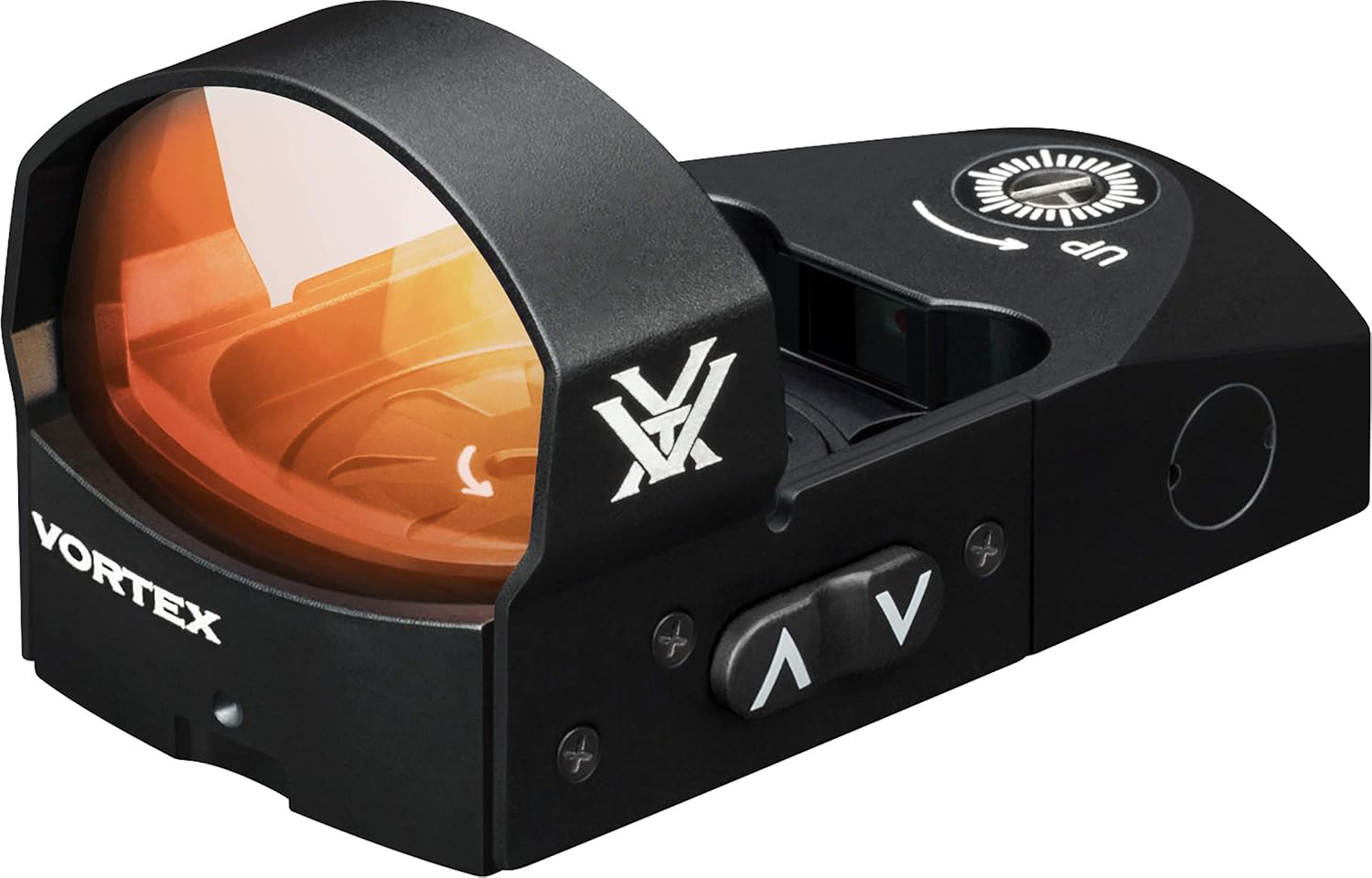
The Vortex Venom remains one of the strongest budget-friendly options for recreational target shooters and steel shooters entering the optics market.
Specs
- Docter footprint
- 3 or 6 MOA options
- Top-load battery
- Aluminum construction
- Auto/manual brightness
- Large viewing window
Pros
- Excellent price-to-performance ratio
- Large easy-to-find window
- Reliable controls
- Good warranty support
- Lightweight construction
Cons
- Glass slightly reflective
- Buttons can feel mushy
- Not fully duty-grade
I still recommend the Venom for shooters who prioritize simplicity and affordability. The optic mounts easily on many Ruger Mark II rails, and the lightweight body preserves the pistol’s excellent balance.
The large window feels surprisingly open during fast target transitions. Dot clarity is respectable, although heavy sunlight can reveal slight flare around higher brightness settings. Lens coatings are not as refined as premium optics, but they remain completely usable for range work.
Battery replacement is easy because the compartment loads from the top. That matters on rimfire pistols where frequent training sessions quickly add up. I also appreciate the tactile brightness controls, though they lack the crisp feedback of Trijicon or Aimpoint units.
Online users consistently praise the Venom’s reliability relative to its price. Many Mark II owners specifically choose it for casual steel challenge shooting because the optic offers good speed without requiring expensive adapter systems.
Most Ruger Mark II setups can use the Venom with a direct Docter-pattern rail section. That keeps the optic lower and improves sight acquisition consistency.
➡️➡️➡️ Explore User Feedback and Current Pricing on Amazon
Leupold DeltaPoint Pro

The DeltaPoint Pro combines excellent optical clarity with one of the cleanest sight pictures available for precision-oriented rimfire shooting.
Specs
- DeltaPoint footprint
- 2.5 MOA dot
- Motion-sensing activation
- Top-load CR2032 battery
- Magnesium housing
- Wide viewing window
Pros
- Outstanding glass quality
- Minimal distortion
- Excellent brightness range
- Strong battery compartment design
- Fast presentation characteristics
Cons
- Expensive mounting ecosystem
- Larger housing profile
- Slightly heavier than micro optics
The first thing I noticed using the DeltaPoint Pro on a Ruger Mark II was the clarity. Lens tint is extremely subtle, and target contrast remains excellent under mixed lighting. The optic also manages glare well compared to many open-emitter competitors.
The large window supports quick transitions while maintaining excellent precision during slow-fire strings. I observed almost no noticeable parallax shift at standard rimfire distances, which helped during unsupported shooting drills.
Brightness adjustments are intuitive, though I wish the control layout offered slightly more tactile separation when wearing gloves. The battery compartment design is excellent and avoids the frustration associated with bottom-loading optics.
Online shooters frequently praise the DeltaPoint Pro for competition shooting and hunting applications. Many users specifically mention the glass quality and durability. Criticism usually centers on mounting costs because DeltaPoint-compatible plates can be more expensive than RMR alternatives.
The Ruger Mark II usually needs a dedicated DeltaPoint adapter plate or compatible Picatinny mount. Once installed correctly, however, the optic feels stable and exceptionally refined.
➡️➡️➡️ Explore User Feedback and Current Pricing on Amazon
Holosun EPS Carry

The Holosun EPS Carry is my preferred enclosed-emitter option for shooters wanting maximum reliability in dirty or wet environments.
Specs
- K-series footprint
- Enclosed emitter
- 2 MOA dot
- Side battery tray
- Multi-layer glass coatings
- Aluminum housing
Pros
- Excellent weather sealing
- Very clean emitter protection
- Compact lightweight body
- Long battery life
- Strong brightness controls
Cons
- Smaller viewing window
- Requires adapter compatibility
- Slight tunnel effect
Enclosed emitters matter more on rimfire pistols than many shooters expect because dirty .22 ammunition throws significant debris toward the optic. The EPS Carry avoids emitter blockage extremely well, even during long suppressed shooting sessions.
The side battery tray works flawlessly and prevents unnecessary zero shifts. Brightness controls are tactile and responsive with gloves, while the housing feels notably more durable than many compact open-emitter optics.
The smaller window does create a slight tunnel sensation during rapid target transitions, especially compared to the SRO. However, once I adjusted my presentation angle, the optic tracked naturally and consistently. Lens coatings also control glare effectively without introducing excessive blue tint.
Online feedback strongly favors the EPS Carry for reliability and maintenance reduction. Shooters who train outdoors in rain or dusty environments repeatedly mention how much cleaner enclosed emitters remain.
Mounting the EPS Carry on a Ruger Mark II generally requires a K-footprint adapter plate attached to a Picatinny rail. Once mounted properly, the compact size keeps the pistol balanced and responsive.
➡️➡️➡️ Explore User Feedback and Current Pricing on Amazon
How I Tested / Evaluation Criteria
Parallax Performance
I evaluated every optic between 10 and 35 yards because that range captures most practical Ruger Mark II use. Optics with noticeable edge distortion or excessive reticle drift lost points quickly. Larger windows generally performed better during unsupported shooting.
Co-Witness and Deck Height
Although true co-witness is less critical on the Mark II than centerfire pistols, deck height still affects presentation speed. I favored optics that mounted lower and reduced unnecessary head movement during rapid strings.
Durability
Rimfire recoil is mild, but .22 pistols create heavy fouling. I specifically examined emitter contamination, lens coating durability, and battery cap retention after extended shooting sessions.
Battery Systems
Top-load and side-load batteries scored highest because removing an optic to change batteries is frustrating on precision-oriented rimfire pistols. Battery tray sealing also mattered during wet-weather testing.
Brightness Range
I tested brightness in direct sunlight, shaded bays, and indoor ranges. Optics with smooth adjustment increments and tactile buttons performed noticeably better.
Glass Quality
Clarity, tint, edge distortion, and glare control all influenced rankings. Premium optics separated themselves quickly when shooting against reflective steel targets in bright conditions.
Controls and Ergonomics
Small buttons become frustrating with gloves or sweaty hands. I preferred optics with clear tactile feedback and intuitive brightness layouts.
Mounting Ecosystem
The Ruger Mark II benefits from broad adapter compatibility. RMR-pattern optics scored well because of their enormous aftermarket support and availability of reliable plates.
How to Choose the Right Red Dot for This Gun
Choosing an optic for the Ruger Mark II starts with understanding your intended use. A competition-focused build benefits from a massive viewing window and fast presentation characteristics, while a hunting or field pistol may benefit more from an enclosed emitter and weather resistance.
Window size is one of the most important factors. Large windows reduce the time required to reacquire the dot after recoil. That matters during steel challenge stages where transitions dominate performance. However, oversized optics can also make the pistol top-heavy.
Deck height matters more than many shooters realize. An optic mounted too high changes wrist angle and slows target acquisition. Whenever possible, I recommend using the lowest reliable mounting system available for your chosen footprint.
Footprint compatibility is another major factor. The RMR footprint remains the easiest ecosystem to support because adapter plates and aftermarket rails are everywhere. DeltaPoint and K-pattern optics can work extremely well, but mounting solutions are more specialized.
Open-emitter optics are generally faster and offer larger windows, but they collect debris more easily. Enclosed emitters stay cleaner during high-volume shooting and suppressed fire. If you frequently shoot outdoors in dusty conditions, enclosed optics are worth serious consideration.
Dot size also influences usability. Smaller dots around 2 MOA support precision shooting, while larger dots appear faster during close transitions. Multi-reticle systems provide flexibility, especially for aging eyes.
Finally, balance matters. One reason the Ruger Mark II remains popular is its excellent natural handling. Extremely large optics can upset that balance. Lightweight optics often feel more natural on this pistol, especially during long range sessions.
FAQs
What footprint works best on a Ruger Mark II?
RMR-pattern optics are usually the easiest to support because adapter plates and rails are widely available from multiple manufacturers.
Are enclosed-emitter optics worth it on a rimfire pistol?
Yes. Rimfire ammunition creates substantial fouling, and enclosed emitters stay cleaner during extended shooting sessions.
What dot size is ideal for target shooting?
I generally prefer 2–3 MOA dots for mixed target shooting because they balance precision and speed effectively.
Can the Ruger Mark II handle heavy optics?
Yes, but oversized optics can negatively affect balance and presentation speed. Lightweight optics usually feel more natural.
Do I need a mounting plate?
Most Ruger Mark II pistols require a rail plus either direct mounting hardware or an adapter plate depending on the optic footprint.
The Best Red Dot for Ruger Mark 2 ultimately depends on whether you prioritize competition speed, compact balance, weather resistance, or precision glass quality. For most shooters, the Holosun 507C offers the strongest combination of durability, mounting flexibility, battery design, and practical performance on this classic rimfire platform.
Sources referenced include manufacturer specifications, mounting footprint references, competition shooter feedback, and long-term user discussions from rimfire and pistol optics communities.
Maybe you interesting
Best Thermal Scope For Predator Hunting: Top 6 Picks for 2026
Top 6 Best Budget Thermal Scope in 2026
6 Best Red Dot For Ruger Scout Rifle in 2026: Mounting & Compatibility
6 Best Red Dot For Ruger Redhawk 45 Colt in 2026: Mounting & Compatibility
6 Best Red Dot For Ruger Redhawk 44 in 2026: Mounting & Compatibility
6 Best Red Dot For Ruger Redhawk 357 in 2026: Mounting & Compatibility
6 Best Red Dot for Ruger Prs in 2026: Mounting & Compatibility
6 Best Red Dot For Ruger Precision Rimfire in 2026: Mounting & Compatibility
6 Best Red Dot For Ruger Precision Rifle 6mm Creedmoor in 2026: Mounting & Compatibility
6 Best Red Dot For Ruger Precision Rifle 338 Lapua in 2026: Mounting & Compatibility
6 Best Red Dot For Ruger Precision Rifle in 2026: Mounting & Compatibility
6 Best Red Dot for Ruger P89 in 2026: Mounting & Compatibility