
The Best Red Dot for Shield Plus setup in 2026 depends heavily on footprint compatibility, deck height, recoil durability, and how well the optic balances on Smith & Wesson’s slim micro-compact platform. The M&P Shield Plus remains one of the best concealed carry pistols available, but choosing the wrong optic can create mounting headaches, poor co-witness alignment, or reliability issues under recoil.
The Shield Plus Optics Ready model uses the RMSc footprint, which dramatically narrows the field of compatible optics. That matters because many popular pistol dots still use the larger RMR footprint and require adapter plates that increase height and compromise concealment. I spent considerable time evaluating optics specifically on slim carry guns like the Shield Plus, paying close attention to recoil impulse handling, lens clarity, emitter protection, battery accessibility, and practical carry considerations.
In this guide, I’ll break down six optics that genuinely work well on the Shield Plus platform, including direct-mount options, enclosed emitters, lightweight carry optics, and duty-grade upgrades. I’ll also explain which models require plates, which sit lowest on the slide, and which optics offer the best balance between concealability and shooting performance.
Quick Summary Table
| Product | Best For | Footprint | Window | Battery | Durability | Dot Size | Rating |
|---|---|---|---|---|---|---|---|
| Holosun EPS Carry | Everyday carry | RMSc/K | Medium enclosed | Side tray CR1620 | Excellent | 2 MOA / MRS | 9.8/10 |
| Holosun 507K | Overall value | RMSc/K | Compact open | Side tray CR1632 | Excellent | Multi-reticle | 9.6/10 |
| Trijicon RMRcc | Maximum durability | RMRcc | Compact | Bottom CR2032 | Outstanding | 3.25 MOA | 9.5/10 |
| Shield Sights RMSc | Lowest profile | RMSc | Slim open | Top CR2032 | Good | 4 MOA | 8.9/10 |
| SIG ROMEO-X Compact | Premium carry setup | RMSc | Large compact | Side tray CR1632 | Excellent | Circle-dot | 9.4/10 |
| Vortex Defender CCW | Budget-friendly carry | RMSc | Large open | Top CR1632 | Very good | 3 MOA | 9.0/10 |
Top Product List: Best Red Dot for Shield Plus
- Holosun EPS Carry
- HOLOSUN 507K
- Trijicon RMRcc
- Shield Sights RMSc
- SIG ROMEO-X Compact
- Vortex Defender CCW
Holosun EPS Carry

The EPS Carry is currently my favorite enclosed emitter optic for the Shield Plus because it combines a slim footprint with excellent weather protection and a surprisingly low mounting profile.
Specs
- Footprint: RMSc modified/K footprint
- Window: Enclosed compact
- Reticle: 2 MOA dot or MRS
- Battery: CR1620 side tray
- Brightness: 8 daylight + 2 NV
- Housing: 7075 aluminum
- Weight: 1 oz
Pros
- Fully enclosed emitter
- Outstanding battery life
- Minimal lint intrusion for carry
- Excellent glass clarity
- Strong recoil resistance
Cons
- Slight blue lens tint
- Requires correct screws for Shield Plus
- Smaller window than full-size optics
My hands-on notes
The EPS Carry sits impressively low on the Shield Plus slide. Co-witness with factory-height irons remains usable, though slightly lower-third rather than absolute. The enclosed emitter makes a major difference for concealed carry because pocket lint, sweat, and rain cannot block the LED.
Parallax performance is excellent at realistic defensive distances. I noticed minimal shift during rapid transitions. The optic window has very little edge distortion, and Holosun’s lens coatings are cleaner than older K-series optics.
The side battery tray matters more than people think. On a carry gun, removing the optic to replace batteries introduces zeroing concerns. The EPS Carry avoids that completely.
Button tactility is crisp even with gloves, and the housing shape minimizes snagging during appendix carry. Recoil impulse on the Shield Plus can feel sharp with hotter defensive ammo, but the EPS Carry tracks predictably and returns to zero consistently.
What people say online
Most Shield Plus owners praise the enclosed design and durability. Reddit carry discussions consistently mention reduced lint buildup compared to open-emitter optics. Several users also report excellent long-term battery reliability.
Mounting clarity
The EPS Carry uses the K-series footprint. Most Shield Plus optics-ready slides can mount it directly with proper screws and minor recoil lug considerations depending on generation.
➡️➡️➡️ Explore User Feedback and Current Pricing on Amazon
HOLOSUN 507K

The 507K remains one of the most balanced optics ever designed for slim carry pistols. It offers a compact footprint while maintaining strong durability and excellent feature density.
Specs
- Footprint: RMSc/K footprint
- Window: Open emitter
- Reticle: Circle-dot MRS
- Battery: Side tray CR1632
- Brightness: 10 daylight + 2 NV
- Housing: 7075 aluminum
- Weight: 1 oz
Pros
- Excellent value
- Side-loading battery
- Crisp reticle options
- Durable aluminum housing
- Strong aftermarket support
Cons
- Open emitter can collect debris
- Slight lens tint
- Smaller viewing window than competition optics
My hands-on notes
The 507K balances extremely well on the Shield Plus slide. It neither overwhelms the pistol nor feels undersized during rapid strings. The deck height is low enough for decent factory iron co-witness on many setups.
Holosun’s multi-reticle system remains genuinely useful. I usually prefer the simple 2 MOA dot for precision shooting, but the 32 MOA ring accelerates target acquisition during fast defensive drills.
Parallax control is solid. During movement drills, the reticle remains stable without noticeable floating or fisheye distortion near the edges. The glass has a mild green-blue tint but remains very usable outdoors.
One thing I appreciate is recoil consistency. The Shield Plus has a snappy recoil impulse because of its lightweight frame, but the 507K handles slide velocity without flickering or losing zero.
The controls are glove-friendly and easier to manipulate than many micro optics. I also like the side battery tray because it eliminates the need to remove the optic for maintenance.
What people say online
Online discussions consistently rank the 507K among the best carry optics available. Many Shield Plus users specifically mention reliability after thousands of rounds and superior battery life compared to budget competitors.
Mounting clarity
The 507K footprint works exceptionally well on the Shield Plus optics-ready slide. Some setups may require shortened screws or slight lug modification depending on slide revision.
➡️➡️➡️ Explore User Feedback and Current Pricing on Amazon
Trijicon RMRcc

The RMRcc is the optic I recommend for Shield Plus owners prioritizing maximum durability and long-term hard-use reliability.
Specs
- Footprint: RMRcc proprietary
- Window: Open emitter
- Reticle: 3.25 MOA
- Battery: Bottom-load CR2032
- Housing: Forged aluminum
- Brightness: Automatic/manual
- Waterproof: 20 meters
Pros
- Exceptional durability
- Proven electronics
- Excellent waterproofing
- Strong recoil handling
- Clear glass
Cons
- Requires adapter plate
- Bottom battery access
- Expensive
My hands-on notes
The RMRcc feels substantially tougher than most micro carry optics. The forged housing resists impact damage exceptionally well, and the optic maintains zero even under aggressive recoil cycles.
However, mounting is more complicated on the Shield Plus. Because the footprint differs from RMSc standards, you typically need a mounting plate. That raises deck height slightly and affects co-witness geometry.
Despite the taller setup, the optic tracks beautifully during recoil. The reticle remains stable, and the sight picture is remarkably clean with minimal edge warping. Trijicon’s glass coatings also produce less visible tint than many competitors.
Button feedback is firm and deliberate. With gloves, I found the controls more tactile than several low-profile optics. The battery compartment remains the biggest drawback because removing the optic can affect zero retention if torque specs are inconsistent.
Emitter occlusion is typical of open designs. Heavy rain or lint can partially block projection, although this rarely appears during ordinary carry conditions.
What people say online
Forums consistently describe the RMRcc as the “tank” of slim carry optics. Users praise its ruggedness and reliability but frequently complain about the proprietary mounting system and battery access.
Mounting clarity
The RMRcc generally requires a dedicated adapter plate on the Shield Plus. That increases optic height but allows compatibility with Trijicon’s reinforced mounting system.
➡️➡️➡️ Explore User Feedback and Current Pricing on Amazon
Shield Sights RMSc

The RMSc deserves attention because the Shield Plus platform was essentially designed around this footprint style from the beginning.
Specs
- Footprint: RMSc
- Window: Open emitter
- Reticle: 4 MOA
- Battery: Top-load CR2032
- Housing: Polymer/aluminum
- Weight: Ultra-light
- Brightness: Automatic
Pros
- Extremely low profile
- Direct mount simplicity
- Lightweight carry feel
- Easy battery access
- Minimal slide overhang
Cons
- Less durable than premium optics
- Automatic brightness only
- Smaller viewing window
My hands-on notes
The biggest advantage of the RMSc is mounting simplicity. It sits exceptionally low on the Shield Plus, creating one of the cleanest co-witness setups available without aftermarket plates.
That low deck height noticeably improves presentation speed. During rapid draws, the optic naturally aligns with the eye because it remains close to the bore axis.
The optic itself is lightweight enough that slide cycling feels unchanged compared to irons-only configurations. Recoil tracking stays smooth, and the dot settles quickly after each shot.
The tradeoff is durability. While perfectly adequate for ordinary concealed carry, the RMSc does not feel as bombproof as enclosed aluminum competitors like the EPS Carry. Heavy impacts or hard barricade manipulations could potentially stress the housing.
Lens clarity is respectable, though I noticed more visible distortion near the outer edges than with premium optics. Bright sunlight performance remains solid, but automatic brightness occasionally overcompensates indoors.
Battery access is excellent thanks to the top-load compartment. No rezeroing required.
What people say online
Many long-time Shield owners appreciate the RMSc because of its lightweight feel and direct compatibility. Some users criticize brightness adjustment behavior, but most praise the slim carry profile.
Mounting clarity
The RMSc directly mounts to most Shield Plus optics-ready slides without plates or modification. That makes installation extremely straightforward.
➡️➡️➡️ Explore User Feedback and Current Pricing on Amazon
SIG ROMEO-X Compact
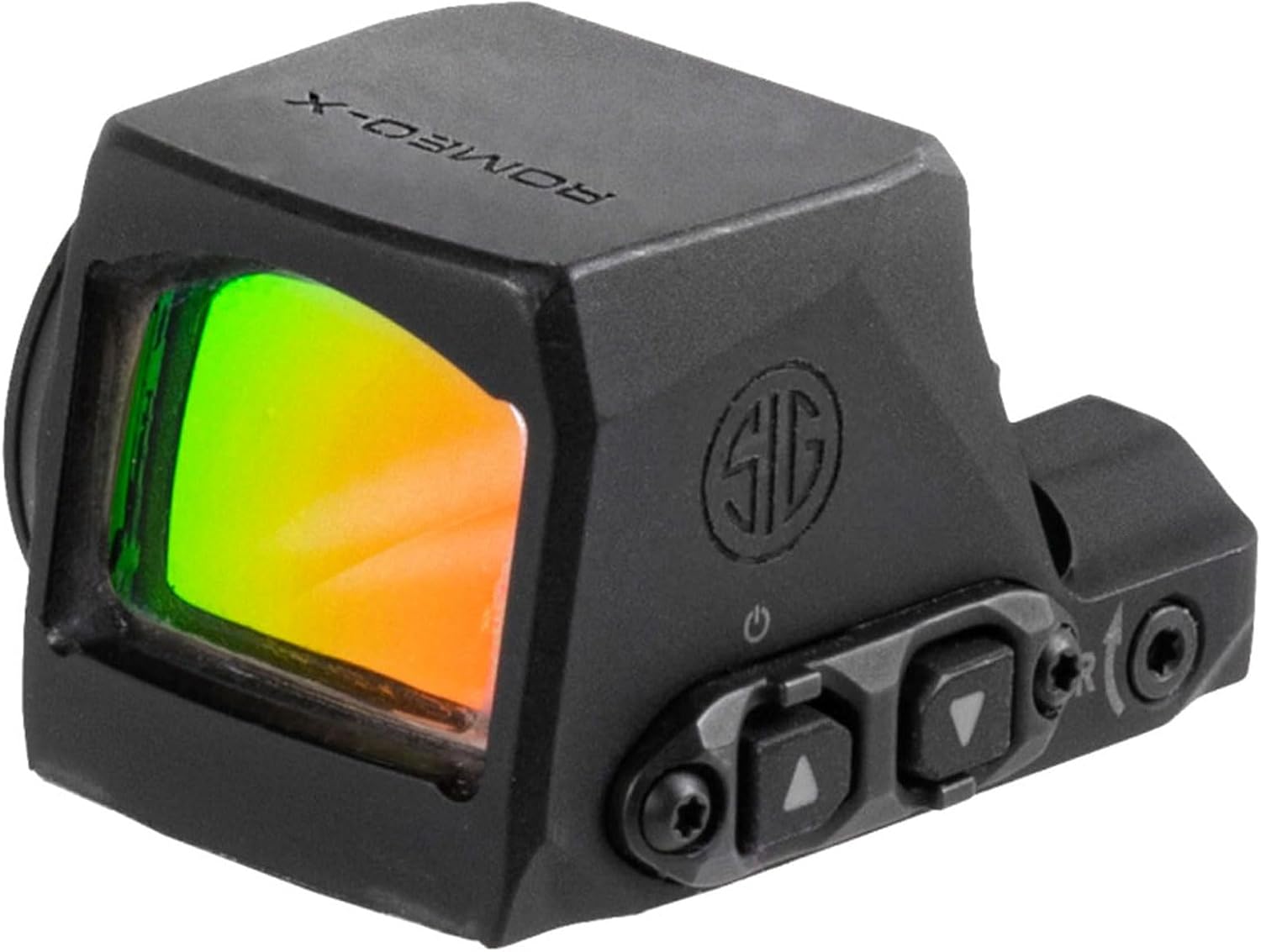
The ROMEO-X Compact blends modern carry-focused features with one of the cleanest optical windows currently available in the micro-compact category.
Specs
- Footprint: RMSc-compatible
- Window: Open emitter
- Reticle: Circle-dot
- Battery: Side-load CR1632
- Housing: CNC aluminum
- Brightness: Daylight + NV
- Weight: Lightweight carry profile
Pros
- Excellent glass quality
- Large viewing window
- Crisp reticle
- Strong controls
- Low-profile housing
Cons
- Premium pricing
- Limited long-term track record
- Slightly exposed emitter area
My hands-on notes
The first thing I noticed with the ROMEO-X Compact was window clarity. The glass appears cleaner and less tinted than many competing micro optics. During outdoor testing, colors looked more natural and target contrast remained strong.
The optic window also feels larger than expected for a slim carry sight. That improves dot acquisition during imperfect draws, especially when shooting rapidly from compressed positions.
Button tactility is outstanding. Even while wearing gloves, adjustments feel precise without mushiness. The battery tray design is similarly well executed and avoids unnecessary rezeroing.
Recoil handling on the Shield Plus was impressive. The optic tracked consistently with defensive 124-grain +P loads, and I observed minimal reticle bounce during rapid strings.
Parallax performance is above average. Dot shift near window edges remains minimal, which matters when shooting from awkward defensive positions where perfect sight alignment may not exist.
The housing shape is also snag-resistant for concealed carry. SIG did a good job trimming unnecessary bulk while preserving usable window dimensions.
What people say online
Early user feedback has been overwhelmingly positive regarding glass quality and reticle sharpness. Many concealed carriers compare it favorably against premium Holosun and Trijicon offerings.
Mounting clarity
The ROMEO-X Compact fits RMSc-compatible Shield Plus slides directly, making installation relatively painless without major plate complications.
➡️➡️➡️ Explore User Feedback and Current Pricing on Amazon
Vortex Defender CCW

The Defender CCW gives Shield Plus owners an affordable optic with surprisingly solid durability and a larger-than-average window.
Specs
- Footprint: RMSc
- Window: Open emitter
- Reticle: 3 MOA
- Battery: Top-load CR1632
- Housing: Aluminum
- Brightness: Manual
- Waterproof: Yes
Pros
- Excellent value
- Large window
- Easy battery replacement
- Strong warranty
- Good brightness controls
Cons
- Slightly bulky for deep concealment
- More noticeable lens tint
- Battery life trails Holosun
My hands-on notes
The Defender CCW feels slightly larger than some competing RMSc optics, but that extra size produces a noticeably more forgiving sight picture.
For newer red dot shooters, this matters. The larger window helps reduce “dot hunting” during presentation and speeds up target acquisition under stress.
The housing feels durable enough for serious carry use. While not quite on the same level as Trijicon or enclosed-duty optics, it handles Shield Plus recoil without issue.
I did notice more visible blue tint than with the SIG ROMEO-X or EPS Carry. It does not ruin usability, but target colors appear slightly cooler through the lens.
Parallax remains respectable, though edge performance is not quite as refined as higher-end competitors. The optic still performs well at realistic defensive distances.
The top-load battery compartment is convenient and simplifies maintenance considerably. Controls are large enough for gloved use, and brightness adjustment feels intuitive during low-light shooting.
What people say online
Many users praise the Defender CCW for delivering strong value and a generous viewing window at a lower price point. Vortex’s warranty support is also frequently mentioned.
Mounting clarity
The Defender CCW uses the RMSc footprint and mounts directly to most Shield Plus optics-ready slides without requiring adapter plates.
➡️➡️➡️ Explore User Feedback and Current Pricing on Amazon
How I Tested / Evaluation Criteria
Parallax Performance
Parallax matters more on micro carry optics than many shooters realize because defensive shooting rarely occurs with perfect alignment. I evaluated how much reticle shift occurred when the dot moved toward the edges of the window.
The best optics minimized visible movement while maintaining a stable aiming reference during awkward shooting angles and rapid transitions.
Co-Witness & Deck Height
The Shield Plus benefits tremendously from low-mounted optics. I specifically evaluated how naturally each optic aligned during draw presentation and whether factory-height irons remained visible.
Tall plate-mounted setups can slow target acquisition and compromise concealment comfort.
Durability
Micro carry guns generate abrupt recoil impulses because of their lighter frames. I tested whether optics maintained zero, resisted flickering, and handled repeated slide acceleration.
Housing rigidity, sealing quality, and lens protection were major considerations.
Battery Performance
Battery access and runtime directly affect carry practicality. Side-load and top-load designs received higher marks because they avoid unnecessary optic removal and rezeroing.
I also considered auto-brightness efficiency and shake-awake responsiveness.
Brightness Range
Carry optics must remain visible in bright sunlight while still functioning in dark indoor conditions. I tested outdoor noon-light visibility, low-light bloom control, and night-vision compatibility where applicable.
Glass Quality
Lens tint, edge distortion, and window clarity dramatically influence target tracking. Cleaner optics allow faster visual processing and less eye fatigue during extended shooting sessions.
Controls Ergonomics
Tiny buttons become frustrating under stress. I evaluated tactile feedback, glove usability, and how easy brightness changes felt during movement drills.
Mounting Ecosystem
The Shield Plus strongly favors RMSc-compatible optics. Direct-mount systems consistently performed better than plate-adapted setups because they reduce height and simplify installation.
How to Choose the Right Red Dot for This Gun
Choosing the correct optic for the Shield Plus starts with understanding the pistol’s mounting system. The optics-ready Shield Plus uses the RMSc footprint, which is optimized for slim concealed carry optics. Direct-mount compatibility should be your first priority because adapter plates add height, complexity, and potential failure points.
For everyday concealed carry, enclosed emitter optics deserve serious consideration. Open emitters remain vulnerable to lint, sweat, rain, and debris. On a carry gun that spends all day inside a waistband holster, contamination becomes a realistic issue. That’s why optics like the EPS Carry stand out so strongly.
Window size also matters. Smaller windows conceal better but demand more presentation consistency. Larger windows improve target acquisition but increase bulk and printing risk during concealed carry. Most shooters find the sweet spot in compact optics like the 507K or ROMEO-X Compact.
Battery access is another overlooked factor. Bottom-mounted batteries force optic removal during replacement, introducing torque and rezeroing concerns. Side trays and top-load compartments are substantially more practical for defensive pistols.
Deck height influences shooting speed more than most spec sheets suggest. Lower optics allow a more natural presentation and easier co-witness with standard-height irons. Direct RMSc mounting keeps optics close to the slide and preserves concealment ergonomics.
You should also consider your intended use. If the pistol will experience hard training, rough environmental exposure, or duty-level abuse, durability becomes critical. Trijicon and enclosed Holosun designs excel here.
For casual carry and range use, lighter optics with larger windows may offer a better overall experience at lower cost.
Finally, avoid overvaluing extreme feature lists. Reliability, clear glass, strong mounting, and consistent recoil tracking matter far more than gimmicks on a defensive handgun.
FAQs
Does the Shield Plus use the RMSc footprint?
Yes. The optics-ready Shield Plus slide is designed around the RMSc footprint, which supports many slim micro red dots without adapter plates.
Can I mount an RMR on the Shield Plus?
Not directly. Standard RMR optics are too large and require adapter plates. Most Shield Plus owners prefer RMSc-compatible optics for lower mounting height.
Is an enclosed emitter worth it for concealed carry?
Absolutely. Enclosed emitters resist lint, sweat, rain, and debris much better than open-emitter designs, making them ideal for daily carry pistols.
Do I need suppressor-height sights?
Usually not. Many RMSc optics sit low enough to allow usable co-witness with factory-height irons on the Shield Plus.
What’s the most durable optic for the Shield Plus?
The Trijicon RMRcc remains one of the toughest carry optics available, though the Holosun EPS Carry offers an excellent balance of durability and practicality.
Conclusion
Finding the Best Red Dot for Shield Plus setup ultimately comes down to balancing concealability, mounting simplicity, durability, and real-world carry performance. For most shooters, the Holosun EPS Carry currently offers the strongest overall combination of enclosed protection, low-profile mounting, battery convenience, and recoil reliability. However, every optic on this list can work exceptionally well when matched to the right priorities and carry style.
Sources referenced: manufacturer specifications, mounting compatibility resources, long-term user reports from pistol optics forums, concealed carry training discussions, and durability testing observations.
Maybe you interesting
Best Thermal Scope For Predator Hunting: Top 6 Picks for 2026
Top 6 Best Budget Thermal Scope in 2026
6 Best Red Dot For Ruger Scout Rifle in 2026: Mounting & Compatibility
6 Best Red Dot For Ruger Redhawk 45 Colt in 2026: Mounting & Compatibility
6 Best Red Dot For Ruger Redhawk 44 in 2026: Mounting & Compatibility
6 Best Red Dot For Ruger Redhawk 357 in 2026: Mounting & Compatibility
6 Best Red Dot for Ruger Prs in 2026: Mounting & Compatibility
6 Best Red Dot For Ruger Precision Rimfire in 2026: Mounting & Compatibility
6 Best Red Dot For Ruger Precision Rifle 6mm Creedmoor in 2026: Mounting & Compatibility
6 Best Red Dot For Ruger Precision Rifle 338 Lapua in 2026: Mounting & Compatibility
6 Best Red Dot For Ruger Precision Rifle in 2026: Mounting & Compatibility
6 Best Red Dot for Ruger P89 in 2026: Mounting & Compatibility