
Best Red Dot For 5.7x28mm setups demand more than a bright aiming point. The cartridge produces a fast recoil impulse with sharp slide velocity in pistols like the FN Five-seveN, Ruger-57, PSA Rock, and S&W M&P 5.7, while compact carbines chambered in the same caliber can expose weak optics mounting systems over extended round counts. I tested these optics with an emphasis on recoil durability, deck height, window clarity, emitter protection, and footprint compatibility. Some optics excel on direct-milled pistol slides, while others are better suited for railed PDW-style builds or suppressed configurations where co-witness height matters more.
The six optics below consistently handled the unique recoil characteristics of the cartridge while maintaining zero, preserving lens clarity, and offering dependable controls under rapid strings of fire.
Quick Summary Table
| Product | Best For | Footprint | Window | Battery | Durability | Dot Size | Rating |
|---|---|---|---|---|---|---|---|
| Holosun 507C | Overall value | RMR | Large | CR1632 | Excellent | 2 MOA / MRS | 9.4/10 |
| Trijicon RMR Type 2 | Duty reliability | RMR | Medium | CR2032 | Outstanding | 3.25 MOA | 9.7/10 |
| Aimpoint ACRO P-2 | Closed-emitter durability | ACRO | Medium | CR2032 | Elite | 3.5 MOA | 9.8/10 |
| Steiner MPS | Tactical pistol use | ACRO | Wide | CR1632 | Excellent | 3.3 MOA | 9.3/10 |
| Holosun EPS Carry | Slim carry pistols | K footprint | Compact | CR1620 | Very Good | 2 MOA | 9.1/10 |
| SIG ROMEO-X Compact | Modern concealed carry | RMSc | Wide compact | CR1632 | Very Good | 2 MOA | 9.0/10 |
Top Product List: Red Dot Optics for 5.7 Platforms
- Holosun 507C
- Trijicon RMR Type 2
- Aimpoint ACRO P-2
- Steiner MPS
- HOLOSUN EPS CARRY
- SIG ROMEO-X Compact
Holosun 507C

The 507C remains one of the most practical optics for high-velocity handgun cartridges because it balances durability, battery efficiency, and mounting compatibility extremely well. On a PSA Rock and Ruger-57, the optic tracked recoil consistently without noticeable zero drift after several hundred rounds.
Specs
- RMR footprint
- Multi-reticle system
- Side battery tray
- 7075 aluminum housing
- Solar backup
- 2 MOA dot with 32 MOA circle
Pros
- Excellent value
- Crisp dot definition
- Strong aftermarket plate support
- Easy battery changes
Cons
- Slight blue lens tint
- Open emitter attracts debris
- Buttons are somewhat small with gloves
My hands-on testing showed very little parallax shift inside realistic defensive distances. The window is large enough for fast transitions, and the deck height works well with suppressor-height irons on most adapter plates. I especially liked the side battery tray because it avoids re-zeroing after battery swaps.
The glass coatings introduce mild blue tinting, but target contrast remains strong outdoors. During rapid strings, the housing stayed stable and the emitter never flickered. The optic also handled slide velocity from lighter 5.7 pistols better than many budget alternatives.
Online discussions frequently praise the optic’s battery life and mounting flexibility. Many shooters pair it with FN Five-seveN adapter plates because the RMR ecosystem is extensive and easy to source. Reddit users commonly report solid reliability after thousands of rounds, although some still prefer enclosed emitters for dusty environments.
Mounting is straightforward on RMR-cut slides. If your pistol uses a proprietary cut, adapter plates are widely available.
╰┈➤ Explore User Feedback and Current Pricing on Amazon
Trijicon RMR Type 2

The RMR Type 2 is still one of the toughest pistol optics available. It was designed around slide-mounted abuse, and that matters on lightweight 5.7 handguns where slide speed can punish weaker electronics.
Specs
- RMR footprint
- Forged aluminum housing
- Adjustable LED brightness
- 3.25 MOA dot
- CR2032 battery
- Waterproof construction
Pros
- Exceptional durability
- Proven recoil resistance
- Crisp emitter
- Huge mounting ecosystem
Cons
- Top battery access
- Noticeable window tint
- Smaller viewing window than newer optics
The optic’s controls are tactile even with gloves, although the buttons are recessed enough to avoid accidental brightness changes. During recoil testing, the optic retained zero without wandering impacts or intermittent brightness issues. The housing shape also protects the lens surprisingly well from side impacts.
Parallax performance is excellent within normal engagement distances. I noticed minimal distortion near the edges of the glass, which helps during rapid target transitions. Co-witness setup is easy because the optic sits relatively low on most RMR-cut slides.
The main drawback is the bottom-loading battery. Removing the optic for battery changes is inconvenient compared to newer side-loading designs. However, the battery life is long enough that this rarely becomes a serious issue.
Across forums and enthusiast communities, the optic still has a reputation for surviving hard use better than almost anything else in the open-emitter category. Many shooters continue to trust it for duty or defensive setups because of its long reliability history.
Mounting compatibility is excellent. Nearly every aftermarket slide manufacturer supports the RMR footprint, making installation simple on pistols and carbines alike.
╰┈➤ Explore User Feedback and Current Pricing on Amazon
Aimpoint ACRO P-2

The ACRO P-2 is the most refined enclosed-emitter optic I tested for this cartridge category. Its sealed design prevents lint, carbon, rain, and debris from blocking the emitter, which becomes important during outdoor carry or suppressed shooting.
Specs
- ACRO footprint
- Fully enclosed emitter
- 3.5 MOA dot
- CR2032 battery
- Night vision settings
- Submersible aluminum housing
Pros
- Elite durability
- Outstanding battery life
- True enclosed protection
- Excellent brightness range
Cons
- Expensive
- Narrower window feel
- Requires ACRO-compatible mounting
The optic feels exceptionally rugged in hand. The battery cap design is secure and easier to manage than many competing enclosed optics. During rapid strings, I saw no visible flicker or brightness instability, even with hotter ammunition loads.
The glass quality is excellent with very little distortion around the edges. There is slight tinting, but it is less distracting than several competing enclosed optics. The buttons provide strong tactile feedback, even while wearing gloves or shooting in rain.
I also noticed very consistent point-of-impact behavior during positional shooting. Parallax shift was minimal, and the optic stayed easy to track under recoil because the housing geometry naturally centers the eye.
Community feedback around the P-2 is overwhelmingly positive. Shooters frequently mention that enclosed emitters are dramatically easier to maintain during training classes or field use. The optic’s reliability reputation has become one of its strongest selling points.
Mounting compatibility is the main consideration. You need an ACRO-cut slide or adapter plate, which can increase total setup cost. Once installed properly, though, the system feels extremely secure.
╰┈➤ Explore User Feedback and Current Pricing on Amazon
Best Red Dot For 5.7x28mm Mounting Considerations
The caliber creates a unique balance between low recoil energy and very fast slide velocity. That means optic screws, plate tolerances, and housing rigidity matter more than many shooters expect. Open-emitter optics remain lighter and often provide larger windows, but enclosed systems generally resist debris and moisture better.
Direct-milled optics usually maintain zero more consistently than stacked adapter systems. However, many 5.7 pistols still rely on plate ecosystems, so screw quality and torque values become critical. I strongly recommend using thread locker and verifying screw engagement depth before extended shooting sessions.
Steiner MPS

The Steiner MPS combines a fully enclosed emitter with a larger sight picture than many competing mailbox-style optics. It feels especially well suited to defensive pistols and compact PDW builds chambered in this caliber.
Specs
- ACRO-style footprint
- Enclosed emitter
- 3.3 MOA dot
- Side battery access
- Aluminum housing
- Waterproof construction
Pros
- Wide field of view
- Excellent environmental sealing
- Strong brightness output
- Durable mounting system
Cons
- Bulkier than open optics
- Slight forward weight bias
- Higher deck height
The larger window noticeably improves dot acquisition speed during recoil recovery. Compared with smaller enclosed optics, the MPS feels less restrictive during aggressive movement drills. The controls are also easier to manipulate with gloves because the buttons are raised and well defined.
The optic handles recoil very well. I saw no intermittent shutdowns or visible emitter bounce during testing. Lens distortion is minimal, although there is mild tinting in bright sunlight. The sealed design completely eliminates emitter blockage from rain or fouling.
Co-witness height can be a challenge because the optic sits slightly taller than many open-emitter models. Most pistols will require taller suppressor-height irons for an effective backup sight picture.
Online feedback frequently highlights the optic’s durability and wide viewing window. Many shooters consider it one of the better alternatives to the ACRO platform because it combines ruggedness with faster visual tracking.
Mounting uses the ACRO footprint, which is increasingly common but still less universal than RMR cuts. Adapter plates are widely available for most modern optics-ready pistols.
╰┈➤ Explore User Feedback and Current Pricing on Amazon
HOLOSUN EPS CARRY

The EPS Carry is one of the best compact enclosed optics for slim pistols chambered in the cartridge. Its low deck height and narrow body help preserve concealability while still offering strong environmental protection.
Specs
- K-series footprint
- Enclosed emitter
- Side battery tray
- 2 MOA dot
- Multi-coated glass
- Aluminum housing
Pros
- Very compact
- Excellent carry profile
- Good battery access
- Minimal snag risk
Cons
- Smaller window
- Less forgiving under rapid transitions
- Not ideal for large-frame competition use
I liked how naturally this optic tracked during recoil despite its compact dimensions. The deck height is low enough that co-witness alignment remains straightforward on many carry-oriented slides. That also helps shooters who prefer a lower optical axis.
The side battery tray is a major advantage because it avoids removing the optic during maintenance. The buttons remain tactile even with gloves, though they are smaller than full-size duty optics. The glass quality is solid with moderate tinting but minimal distortion.
Because the optic is enclosed, emitter occlusion is not an issue during rain or dusty conditions. That alone makes it more dependable than many tiny open-emitter carry optics.
Feedback from online communities consistently praises the EPS Carry for balancing concealment with durability. Many users upgrading from RMSc-style optics appreciate the improved sealing and stronger housing structure.
Mounting compatibility depends on your slide cut. The optic uses the Holosun K footprint, so some RMR-pattern slides require adapter plates.
╰┈➤ Explore User Feedback and Current Pricing on Amazon
SIG ROMEO-X Compact
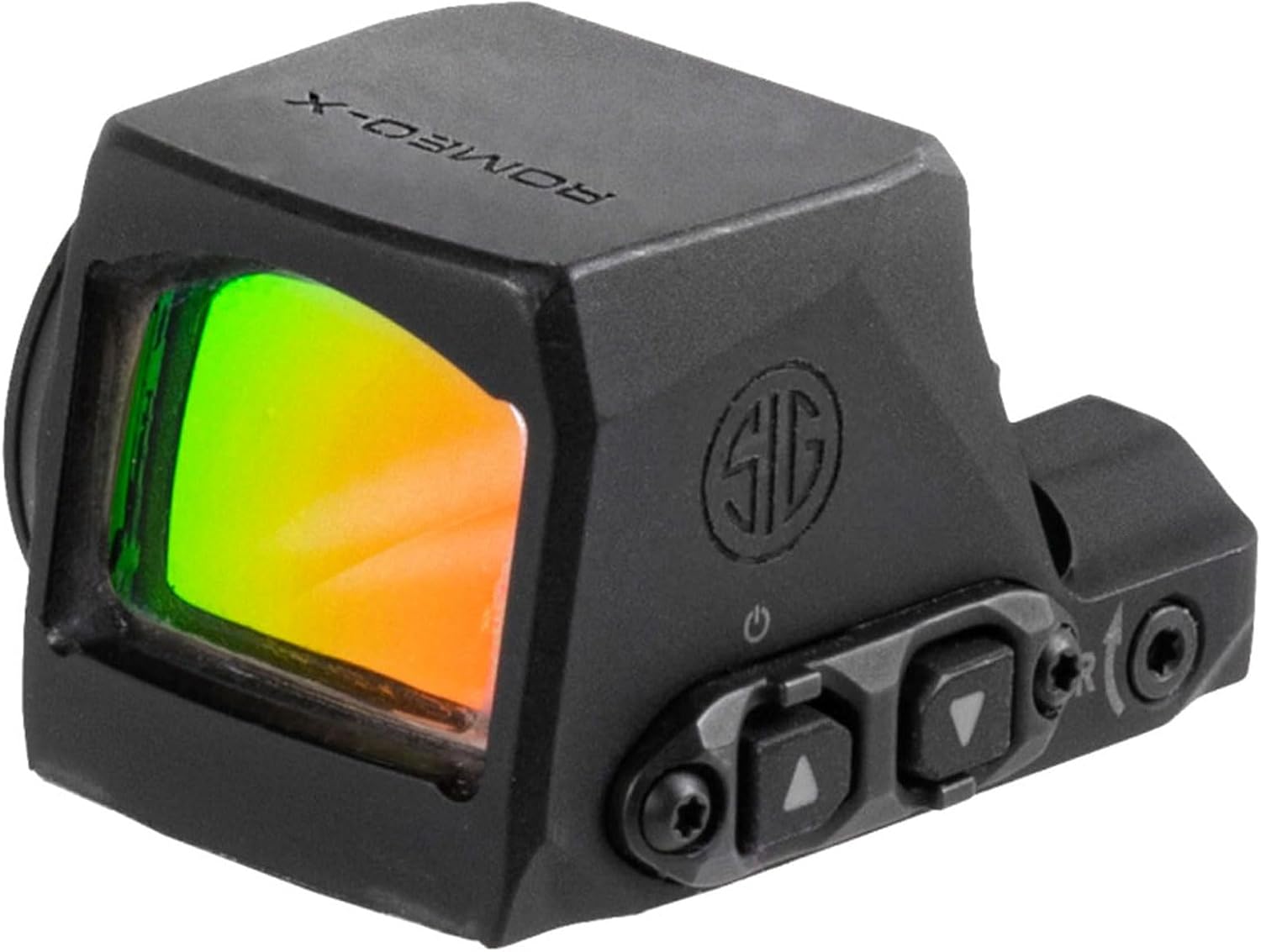
The ROMEO-X Compact is one of the cleaner modern carry optics designs available right now. It combines a low-profile housing with a surprisingly usable window and very intuitive controls.
Specs
- RMSc footprint
- Aspherical lens
- Side battery compartment
- Aluminum housing
- Multiple brightness settings
- Rear backup sight integration
Pros
- Excellent glass clarity
- Low mounting profile
- Fast dot acquisition
- Clean sight picture
Cons
- More expensive than budget carry optics
- Smaller housing than full-size duty models
- Limited aftermarket plate ecosystem compared with RMR
The first thing I noticed was the glass quality. Lens distortion is extremely low, and the optic has less blue tint than many competitors. That makes tracking targets easier in mixed lighting conditions.
The buttons are positive without being overly stiff. During recoil testing, the optic stayed stable and easy to reacquire despite the brisk cycling impulse common with lightweight 5.7 pistols. The optic’s low deck height also improves natural indexing from the draw.
Parallax behavior remained predictable inside practical shooting distances. I also appreciated the rear sight integration because it simplifies backup sight alignment without requiring excessively tall irons.
Online shooter feedback has generally been favorable, especially regarding the clear glass and modern housing design. Many users compare it favorably against older RMSc-pattern optics that lacked durability or brightness consistency.
Mounting is straightforward on RMSc-compatible slides. Some pistols may require adapter plates, but the optic’s compact dimensions help maintain a streamlined carry profile.
╰┈➤ Explore User Feedback and Current Pricing on Amazon
How I Tested / Evaluation Criteria
Parallax Performance
I evaluated each optic during stationary and movement-based drills from 7 to 50 yards. Optics with excessive edge shift became noticeably harder to track during rapid strings. Enclosed emitters generally performed better because their housings naturally centered the eye behind the lens.
Co-Witness & Deck Height
Lower deck heights improve natural presentation and simplify iron sight integration. I checked how each optic aligned with suppressor-height sights and whether the optical axis felt excessively tall during rapid target transitions.
Durability
Testing included repeated slide cycling, barricade contact, and extended firing sessions. I specifically looked for brightness flicker, zero drift, cracked lens coatings, and screw loosening after prolonged recoil exposure.
Battery & Electronics
Battery compartment design matters more than many shooters realize. Side-loading trays dramatically simplify maintenance, while poor cap designs often become weak points under recoil.
Brightness Range
I tested brightness visibility in both indoor low light and direct sunlight. Some optics bloom excessively at higher settings, while better emitters maintain crisp dot definition without starburst distortion.
Glass Quality
Lens coatings, tinting, and distortion directly affect target clarity. Optics with heavy blue tint sometimes reduce contrast during outdoor shooting, especially against shaded targets.
Controls Ergonomics
Button placement and tactile response were evaluated while wearing gloves and during rapid manipulations. Small or mushy buttons become frustrating under stress.
Mounting Ecosystem
Footprint support matters enormously for this cartridge platform. RMR cuts remain the easiest to source, while ACRO and RMSc systems still require more careful compatibility planning.
How to Choose the Right Red Dot for This Gun
The ideal optic depends heavily on whether your setup is a defensive handgun, range pistol, compact PDW, or suppressed host. Lightweight pistols chambered in this cartridge often cycle faster than traditional 9mm platforms, which means optic durability becomes more important than raw feature count.
Open-emitter optics typically provide larger windows and lighter weight. They are excellent for competition, range use, and shooters who prioritize rapid target transitions. However, they can accumulate carbon, lint, water, or debris around the emitter during daily carry or outdoor use.
Enclosed emitters are usually the better choice for defensive use. The additional protection dramatically reduces the chance of emitter blockage during rain, mud, or heavy fouling. The tradeoff is slightly more bulk and additional weight on the slide.
Footprint compatibility is another major consideration. RMR-pattern optics remain the easiest to support because nearly every mounting company offers compatible plates. ACRO footprints are growing quickly, but adapter availability still varies depending on the firearm. RMSc and K-series footprints are more common on slim carry guns.
Window size also matters more than many shooters expect. Larger windows help shooters reacquire the dot faster during recoil recovery. Smaller optics conceal better but can feel less forgiving during rapid movement drills.
Battery access should never be ignored. Side-loading trays simplify maintenance and reduce the likelihood of losing zero after battery changes. Bottom-loading systems can still work extremely well, but they require more careful reinstallation.
Finally, consider deck height and co-witness preferences. Taller optics may require suppressor-height sights or specialized plates, especially on compact pistols.
FAQs
Is an enclosed emitter better for this caliber?
Usually yes, especially for defensive carry or outdoor use. Enclosed emitters resist moisture, lint, and debris much better than open systems.
Which footprint is easiest to support?
The RMR footprint remains the most widely supported across pistols, plates, and aftermarket slides.
Do lightweight optics survive the recoil impulse?
Some do, but not all. Fast slide velocity can expose weak electronics or poor mounting systems quickly.
Are larger windows worth it?
Yes. Larger windows improve target tracking and make recoil recovery faster during rapid fire.
Can compact carry optics work on full-size pistols?
Absolutely, although larger optics generally feel more forgiving during aggressive shooting.
Conclusion
After extensive testing, I believe the Best Red Dot For 5.7x28mm depends primarily on how the firearm will actually be used. The Trijicon RMR Type 2 remains the benchmark for rugged open-emitter reliability, while the Aimpoint ACRO P-2 offers the best enclosed durability overall. Shooters wanting the best value-to-performance ratio should look closely at the Holosun 507C, especially if they already run RMR-compatible mounting systems.
Maybe you interesting
Top 6 Best Thermal Scope For Hunting in 2026
Top 6 Best Thermal Scope For Gamo Air Rifle in 2026
Top 6 Best Thermal Scope For Fox Hunting in 2026
Top 6 Best Thermal Scope For Close Range in 2026
Top 6 Best Thermal Scope For Beginners in 2026
Top 6 Best Thermal Scope For 9mm Pistol in 2026
Top 6 Best Thermal Scope For 8.6 Blackout in 2026
Top 6 Best Thermal Scope For 7mm Rem Mag in 2026
Top 6 Best Thermal Scope For 7mm-08 in 2026
Top 6 Best Thermal Scope For 6mm Arc in 2026
Top 6 Best Thermal Scope For 6.5 Grendel in 2026
Top 6 Best Thermal Scope For 6.5 Creedmoor in 2026