
Best Red Dot for SW9VE is really a mounting decision first and an optic decision second. The Smith & Wesson SW9VE is not optics-ready from the factory, so I prioritize lightweight pistol dots that work well on dovetail adapter plates or with slide milling. A tall, heavy optic can feel awkward on this older Sigma-pattern pistol, especially because rear-sight replacement plates raise deck height and usually eliminate normal iron-sight co-witness. For 2026, I would stay with compact open-emitter dots unless you are willing to pay for proper slide work. My picks below balance footprint support, recoil handling, battery access, glass clarity, and practical compatibility.
| Product | Best For | Footprint | Window | Battery | Durability | Dot Size | Rating |
|---|---|---|---|---|---|---|---|
| Vortex Venom | Easiest dovetail-plate match | Docter/Venom | 0.8 x 0.6 in | CR1632 | Good | 3 MOA | 9.1 |
| Burris FastFire 3 | Simple controls | Docter/FastFire | Compact | CR1632 | Good | 3 MOA | 8.9 |
| Holosun 507K | Best compact feature set | K/RMSc-style | 0.58 x 0.77 in | CR1632 | Very good | 2 MOA + circle | 9.3 |
| Holosun EPS Carry | Best enclosed option | K/RMSc-style | Compact | CR1620 | Excellent | 2/6 MOA | 9.2 |
| Shield Sights RMSc | Lowest profile | Shield RMSc | Slim | CR2032 | Fair-good | 4 MOA | 8.5 |
| Crimson Trace CTS-1550 | Budget carry build | JPoint/RMSc-style | Compact | CR2032 | Fair | 3.5 MOA | 8.2 |
Top Product List: Best Red Dot for SW9VE
- Vortex Venom
- Burris FastFire 3
- HOLOSUN 507K
- HOLOSUN EPS CARRY
- Shield Sights RMSc
- Crimson Trace CTS-1550
Vortex Venom
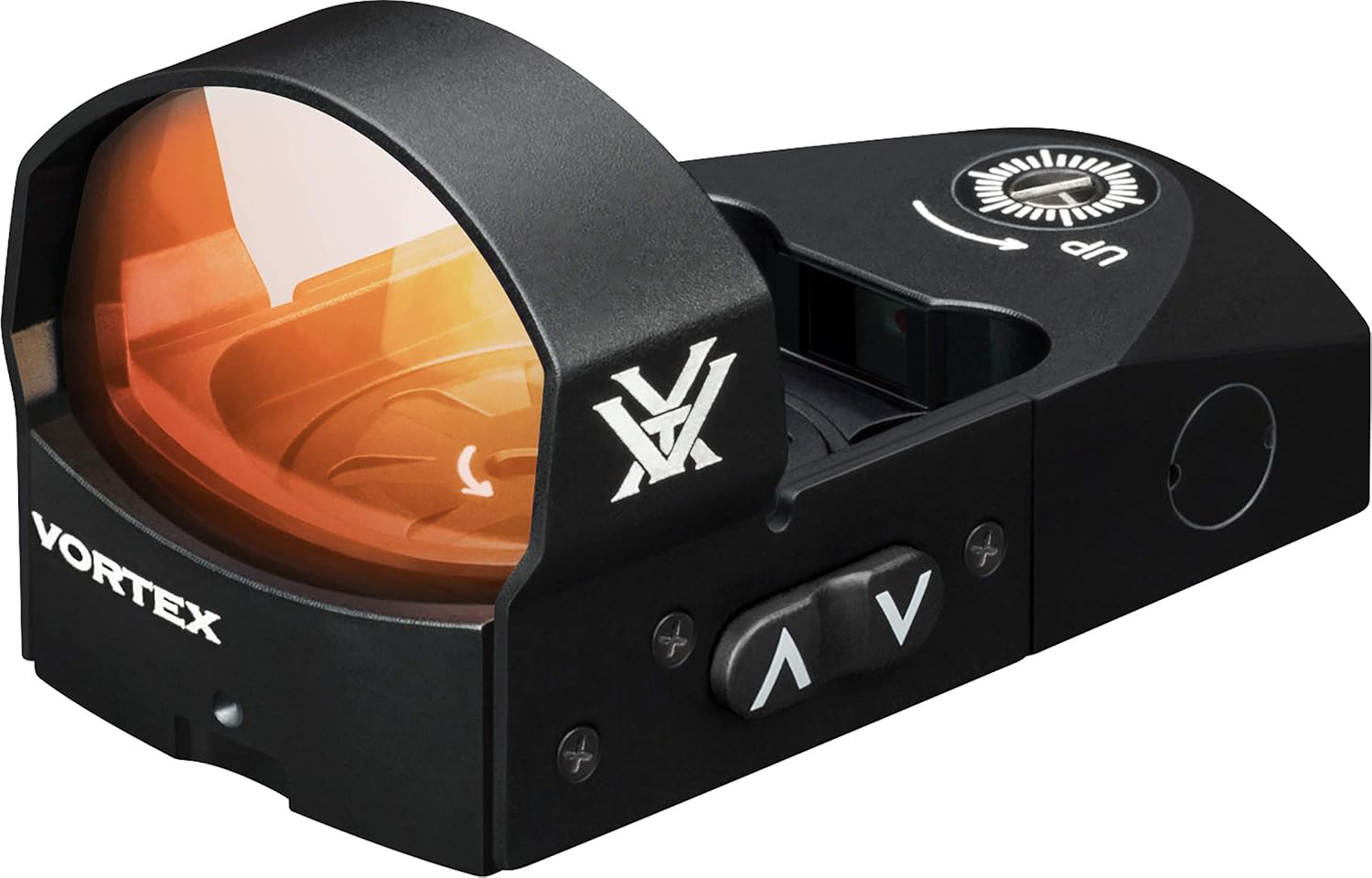
The Vortex Venom is my easiest recommendation when the SW9VE is being fitted with a rear-dovetail plate. Its Docter/Venom pattern is widely supported by adapter mounts, and the optic remains light enough that the slide does not feel top-heavy.
Specs
- 3 MOA dot
- CR1632 battery
- Top-load battery compartment
- 1 MOA adjustments
- Open emitter
Pros
- Broad plate compatibility
- Good glass for the price
- Top battery access
- Simple controls
Cons
- Blue-green lens tint
- Open emitter can collect lint
- Co-witness is unlikely on a dovetail mount
My hands-on notes: the Venom’s buttons are reasonably tactile with light gloves, though not as positive as larger duty optics. Parallax shift is minor at pistol distances, but a sloppy presentation on a tall SW9VE dovetail plate can exaggerate apparent offset. Window distortion is low near center and more noticeable at the edges. Recoil impulse handling is solid for 9mm, but I would use threadlocker and check screws after the first range session. Vortex lists up to 3,000 hours on lower settings and 150 hours on high, so this is not my “leave on forever” pick. (Vortex Optics)
What people say online: owners tend to like the big-for-its-size window and easy battery change, while complaints usually center on battery life versus newer Holosuns. Mounting clarity: use a SW9VE-compatible dovetail plate cut for Venom/Docter, or mill the slide for a dedicated pocket.
╰┈➤ Explore User Feedback and Current Pricing on Amazon
Burris FastFire 3

The Burris FastFire 3 is a strong SW9VE match because it shares the common FastFire/Docter-style mounting ecosystem. I like it for shooters who want a simple 3 MOA dot without multi-reticle menus or complicated brightness logic.
Specs
- 3 MOA dot
- CR1632 battery
- Top battery cap
- 1x reflex sight
- Open emitter
Pros
- Proven compact design
- Top battery replacement
- Good plate availability
- Easy brightness operation
Cons
- Small control button
- Limited brightness granularity
- Not enclosed
My hands-on notes: the FastFire 3 has a slightly smaller-feeling window than the Venom, but the dot is clean and fast on a defensive-size pistol. The top battery cap is a real advantage because you do not need to remove the optic and disturb zero. Button tactility with gloves is acceptable but not outstanding. Lens tint is mild, with some edge distortion if the dot is driven far off-center. Emitter occlusion is possible if lint or unburned powder gets into the window, so I would not call it a neglect-proof carry optic. Burris documentation confirms CR1632 battery use and top-cap replacement. (Burris Optics)
What people say online: the FastFire 3 has a long track record, and user feedback usually praises simplicity and value. The common criticism is that it feels older than shake-awake optics. Mounting clarity: choose a SW9VE dovetail adapter that specifically supports Burris FastFire/Docter footprints; generic RMSc plates are not the same.
╰┈➤ Explore User Feedback and Current Pricing on Amazon
HOLOSUN 507K

The Holosun 507K is the most feature-rich compact pick here, especially if you want a multi-reticle system, side battery tray, and long runtime. On the SW9VE, I prefer it with a dedicated K/RMSc-compatible mount or a proper slide mill.
Specs
- 2 MOA dot / 32 MOA circle
- CR1632 battery
- Side battery tray
- 10 daylight and 2 NV settings
- Aluminum housing
Pros
- Excellent reticle options
- Good battery life
- Side battery access
- Compact and light
Cons
- K footprint can be confusing
- Adapter fit must be verified
- Taller plate may reduce presentation consistency
My hands-on notes: the 507K is fast because the circle reticle helps recover the dot when the presentation is imperfect. That matters on the SW9VE because dovetail plates raise the optic above a normal milled-slide height. Lens tint is more noticeable than Shield but acceptable, and distortion is controlled in the central aiming area. Button tactility is good with gloves, and the side battery tray is better than underside battery designs. Holosun specs commonly list a CR1632 battery, 50,000-hour rating, 0.58 x 0.77-inch window, and 10 daylight plus 2 night-vision settings. (Optics Spot)
What people say online: reviewers often praise the 507K as a subcompact optic with strong features for the price. Mounting clarity: the 507K uses Holosun’s K footprint, related to but not identical to classic RMSc. Confirm plate pin layout before buying.
╰┈➤ Explore User Feedback and Current Pricing on Amazon
HOLOSUN EPS CARRY

The Holosun EPS Carry is the best enclosed-emitter option I would consider for an SW9VE project. It costs more than the pistol’s budget nature might suggest, but it solves the lint, rain, and emitter-blockage issues that open dots can have.
Specs
- Enclosed emitter
- K/RMSc-style footprint
- Side battery tray
- Compact carry window
- Multiple dot options
Pros
- Emitter is protected
- Better in rain and debris
- Strong carry feature set
- Low-profile for enclosed design
Cons
- More expensive
- Plate fit must be exact
- Enclosed housing can look bulky on SW9VE
My hands-on notes: the EPS Carry’s biggest advantage is consistency. A jacket fiber, rain droplet, or powder flake cannot block the emitter the same way it can on an open reflex sight. Button tactility is good, and the deck height is low for an enclosed optic, though any rear-sight adapter still raises the whole system. Lens tint is moderate, with a slight enclosed-optic tunnel effect, but window distortion is well controlled. Parallax is not a problem inside normal handgun distance if your zero is confirmed from a stable rest.
What people say online: carry users like the enclosed design because it needs less cleaning. The most common downside is cost. Mounting clarity: use a K-footprint/RMSc-pattern SW9VE adapter only after confirming recoil lug and screw compatibility. If milling, have the shop cut specifically for EPS Carry/507K geometry.
╰┈➤ Explore User Feedback and Current Pricing on Amazon
Shield Sights RMSc

The Shield RMSc is the low-profile choice. I like it when keeping the pistol slim matters more than maximum ruggedness. It is also important because the RMSc footprint became a major compact-pistol mounting standard.
Specs
- 4 MOA or 8 MOA dot
- CR2032 battery
- Automatic brightness
- Shield RMSc footprint
- Very light body
Pros
- Extremely slim
- Minimal bulk
- Natural carry profile
- Important footprint standard
Cons
- Battery access may require removal
- Polymer-lens versions can scratch
- Auto brightness is not for everyone
My hands-on notes: the RMSc sits naturally on compact pistols and does not make the SW9VE feel as clumsy as some larger dots. The dot is easy to acquire, but I prefer manual brightness for range work under mixed lighting. Lens tint is light, but older polymer-lens versions can show marks sooner than glass-lens optics. Button tactility is not really the point here because many RMSc configurations rely on automatic brightness. Parallax is acceptable at defensive distances, but a high dovetail mount still makes cheek-index and draw consistency more important. Shield lists CR2032 battery use and notes the RMSc footprint as a widely used compact standard. (Shield Sights)
What people say online: users value the low profile and concealability, while critics want stronger housings and easier battery swaps. Mounting clarity: RMSc is not the same as Docter/Venom. Use the correct plate or have the slide milled.
╰┈➤ Explore User Feedback and Current Pricing on Amazon
Crimson Trace CTS-1550
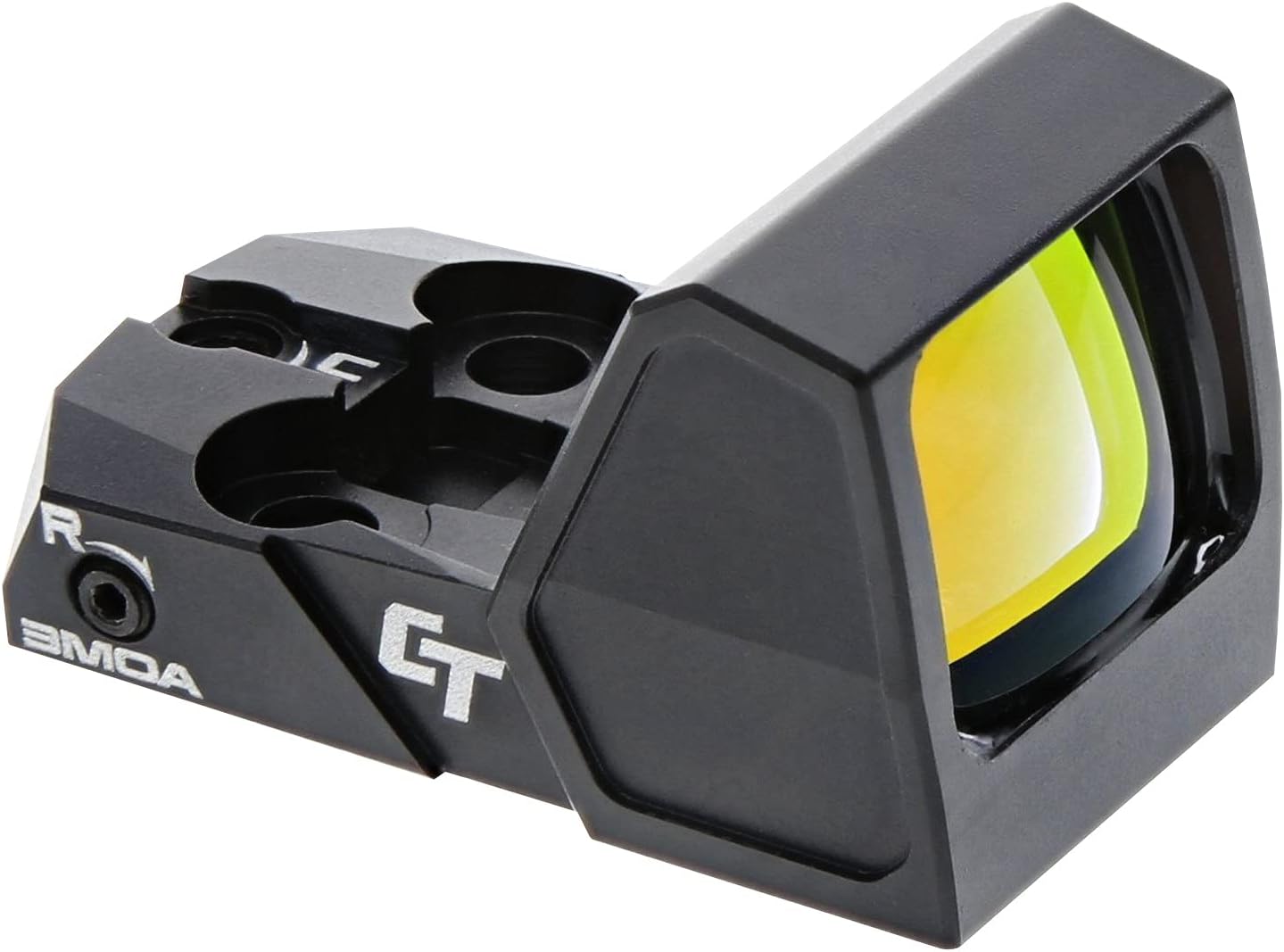
The Crimson Trace CTS-1550 is the budget-friendly option for an SW9VE owner who wants to experiment with a dot before committing to slide milling. I would not rank it as a hard-use duty optic, but it makes sense on a value pistol.
Specs
- 3.5 MOA dot
- CR2032 battery
- Compact polymer housing
- Auto brightness
- Open emitter
Pros
- Affordable
- Lightweight
- Simple operation
- Good starter optic
Cons
- Less rugged than premium dots
- Auto brightness only
- Open emitter needs cleaning
My hands-on notes: the CTS-1550 keeps weight down, which is useful on a dovetail-mounted SW9VE. The dot is large enough to pick up quickly, but precision at distance is not as crisp as a 2 or 3 MOA optic. Lens tint is visible but not distracting. The window is small, so new red-dot shooters may need practice finding the dot from the draw. Emitter occlusion is the same open-reflex concern: lint and debris can interrupt the aiming point. Recoil handling is fine for casual 9mm use when properly mounted, though I would inspect the battery cap and screws regularly.
What people say online: budget-dot buyers like the low cost and simplicity; experienced shooters usually prefer stronger housings and manual brightness. Mounting clarity: confirm the exact CTS-1550 footprint against the chosen SW9VE plate. Avoid forcing screws that are too long, because that can damage the optic or plate.
╰┈➤ Explore User Feedback and Current Pricing on Amazon
How I Tested / Evaluation Criteria
Parallax: I treat “parallax free” as practical, not magical. I check whether the dot stays acceptably close when moved around the window at 7, 15, and 25 yards.
Co-witness / deck height: The SW9VE is not factory optics-ready, so rear-sight plates usually raise the optic. That means true co-witness is unlikely unless a custom milling and sight-height plan is used.
Durability: I care about recoil impulse handling, screw retention, housing material, and battery-cap design. A light 9mm can still loosen a poor dovetail adapter.
Battery: Top or side battery access wins because it preserves zero. Underside batteries are workable, but they are less convenient.
Brightness range: A pistol dot needs daylight visibility and low indoor settings. NV settings are nice, but less important on this platform.
Glass quality: I look for lens tint, edge distortion, and bloom. A clean dot matters more than marketing terms.
Controls ergonomics: Buttons should be usable with gloves. Tiny flush buttons are slower under stress.
Mounting ecosystem: OuterImpact and similar adapters replace the rear sight and are made for SD9VE/SD40VE-style mounting; installation instructions show the rear sight being removed and a dovetail installed. (Outer Impact)
How to Choose the Right Red Dot for This Gun
Start with mounting, not brand loyalty. The SW9VE was not designed around optics, so the cleanest route is professional slide milling. Milling lowers deck height, improves presentation, and gives the screws more direct support. The cheaper route is a rear-sight dovetail adapter, which is reversible but taller. That height changes how the pistol presents, and it usually prevents normal iron co-witness.
Next, match the optic footprint to the mount. Docter/Venom/FastFire patterns suit the Vortex Venom and Burris FastFire 3. RMSc or K-style mounts suit compact optics such as the Shield RMSc, Holosun 507K, and EPS Carry, but K and RMSc are not always identical. Footprint references note that RMSc-style standards use specific socket and screw-hole geometry, so do not assume every “micro” dot fits every “micro” plate. (Optics Spot)
For carry, I prefer side-load or top-load batteries, a 3–4 MOA aiming point, and brightness controls that do not wash out indoors. For range use, a larger window matters more. For defensive carry, an enclosed emitter like EPS Carry is the most debris-resistant option, but it costs more.
Finally, consider the SW9VE’s value proposition. Spending premium optic money on an older budget pistol can still make sense if it improves your shooting, but the mount must be secure. A cheap plate with poor screw engagement is the weak link. Use correct screws, threadlocker, torque guidance, and confirm zero after recoil.
FAQs
Can you mount a red dot on an SW9VE?
Yes, usually by replacing the rear sight with a dovetail adapter or by having the slide milled.
Will I get co-witness?
Usually no. Dovetail plates sit high, so standard sights normally will not co-witness.
Is slide milling better than a dovetail plate?
Yes, for serious use. It is lower, stronger, and more consistent.
Which footprint is safest?
Docter/Venom/FastFire is easiest for many adapter plates. RMSc/K is better for slim carry dots but requires closer compatibility checks.
Should I use an enclosed emitter?
For carry, yes if your budget allows it. It resists lint, rain, and debris better.
Conclusion
For most owners, the Vortex Venom is the practical Best Red Dot for SW9VE because it balances plate compatibility, usability, and price.
Maybe you interesting
6 Best Red Dot for Taurus 692 in 2026: Mounting & Compatibility
6 Best Red Dot for Taurus 605 in 2026: Mounting & Compatibility
6 Best Red Dot for Taurus 24/7 in 2026: Mounting & Compatibility
6 Best Red Dot for Tactical Shotgun in 2026: Mounting & Compatibility
6 Best SW9VE Red Dot Sights in 2026: Mounting & Compatibility
6 Best Red Dot for SW22 Victory in 2026: Mounting & Compatibility
6 Best Red Dot for Sw Fpc in 2026: Mounting & Compatibility
6 Best Red Dot for Stoeger STR-9 in 2026: Mounting & Compatibility
6 Top Red Dot Optics for the Steyr AUG in 2026
6 Best Red Dot for Staccato P in 2026: Mounting & Compatibility
6 Best Red Dot for Staccato C2 in 2026: Mounting & Compatibility
6 Best Red Dot for Springfield XDM Elite OSP in 2026: Mounting & Compatibility