
Best Red Dot for PSA 5.7 Rock is a question I get surprisingly often because the PSA 5.7 Rock sits in an interesting category between duty pistols and competition handguns. With its lightweight polymer frame, extremely fast 5.7×28 recoil impulse, and optics-ready slide, it practically begs for a quality micro red dot.
But not every optic works well on this platform.
The PSA Rock uses an RMR footprint mounting system, which opens up a huge ecosystem of optics—but it also means deck height, emitter design, and window geometry can dramatically affect your shooting experience. With a pistol that shoots this flat and fast, the wrong optic can introduce unnecessary parallax shift or slow your sight acquisition.
Over the past few years, I’ve run dozens of pistol red dots across platforms including Glock MOS, SIG RX slides, and custom RMR-cut pistols. The PSA Rock behaves slightly differently due to its recoil impulse and slide mass.
In this guide, I break down the six optics I consistently recommend for this platform based on durability, window clarity, emitter reliability, and mounting compatibility.
Quick Summary Table
| Product | Best For | Footprint | Window | Battery | Durability | Dot Size | Rating |
|---|---|---|---|---|---|---|---|
| Trijicon RMR Type 2 | Duty reliability | RMR | Medium | CR2032 | Excellent | 3.25 MOA | ⭐ 9.6 |
| Holosun 507C | Feature-rich option | RMR | Medium | CR1632 | Excellent | 2 MOA / 32 MOA | ⭐ 9.5 |
| Holosun 507K | Slim compact build | Modified RMSc | Small | CR1632 | Very Good | 2 MOA | ⭐ 9.1 |
| Leupold DeltaPoint Pro | Large window | DeltaPoint | Large | CR2032 | Excellent | 2.5 MOA | ⭐ 9.4 |
| Vortex Venom | Budget friendly | Docter | Medium | CR1632 | Good | 3 MOA | ⭐ 8.8 |
| Steiner MPS | Fully enclosed optic | ACRO style | Medium | CR1632 | Outstanding | 3.3 MOA | ⭐ 9.5 |
Top Product List: Best Red Dot for PSA 5.7 Rock
Trijicon RMR Type 2

The Trijicon RMR Type 2 remains the gold standard for pistol-mounted red dots, especially on hard-recoiling or duty pistols.
If durability is your top priority for the PSA Rock, the RMR Type 2 is still the benchmark optic. It’s simple, extremely rugged, and built to survive harsh recoil cycles.
Specs
- Footprint: RMR
- Dot size: 3.25 MOA or 6.5 MOA
- Battery: CR2032
- Battery life: ~4 years
- Housing: Forged aluminum
- Weight: 1.2 oz
Pros
- Industry-leading durability
- Excellent lens coatings
- Proven military track record
- Wide mounting ecosystem
Cons
- Bottom battery design
- Slight blue lens tint
- Smaller window than competition optics
My hands-on notes
On the PSA Rock, the RMR’s low deck height helps maintain a comfortable co-witness with suppressor-height irons. I also notice minimal parallax shift compared to many budget optics.
Button tactility is excellent—even with gloves. The emitter is well shielded and resistant to occlusion from lint or debris.
The glass has the typical Trijicon blue tint, but distortion near the window edges is minimal.
What people say online
Most competitive shooters still trust the RMR when reliability matters. Forum users consistently mention the optic surviving thousands of rounds of +P pistol ammo without losing zero.
Mounting clarity
The PSA Rock’s optics cut supports the RMR footprint directly, so the optic installs without adapter plates.
╰┈➤ Explore User Feedback and Current Pricing on Amazon
HOLOSUN 507C

Holosun’s 507C has become one of the most popular RMR-pattern optics for shooters who want more features.
The 507C blends durability with advanced features like a multi-reticle system and solar backup power.
Specs
- Footprint: RMR
- Dot size: 2 MOA / 32 MOA circle
- Battery: CR1632
- Battery life: 50,000 hours
- Housing: Aluminum
- Weight: 1.5 oz
Pros
- Multi-reticle system
- Solar failsafe backup
- Side battery tray
- Strong value
Cons
- Slightly thicker housing
- Noticeable green tint on some models
My hands-on notes
The side battery tray is one of my favorite design elements because it eliminates the need to remove the optic to change batteries.
On the PSA Rock, the window size strikes a nice balance between speed and concealment. Parallax shift remains low inside typical handgun distances.
The buttons are crisp and tactile even with gloves. The emitter is partially shielded, though it’s still technically an open-emitter design.
What people say online
Reddit and shooting forums frequently recommend the 507C as the “best value RMR alternative.” Many users report thousands of rounds without losing zero.
Mounting clarity
The optic mounts directly to the PSA Rock’s RMR cut without adapters.
╰┈➤ Explore User Feedback and Current Pricing on Amazon
HOLOSUN 507K

The Holosun 507K was originally designed for slim concealed carry pistols but can still work well on lightweight platforms like the PSA Rock.
This compact optic is ideal for shooters who want minimal slide weight and a very low profile.
Specs
- Footprint: Modified RMSc
- Dot: 2 MOA / 32 MOA circle
- Battery: CR1632
- Battery life: 50,000 hours
- Weight: 1 oz
Pros
- Extremely lightweight
- Low deck height
- Crisp reticle options
- Excellent battery life
Cons
- Smaller window
- May require adapter plate
My hands-on notes
The reduced window size means the learning curve is slightly steeper during rapid target transitions.
However, the very low deck height produces an excellent co-witness with factory irons. Parallax shift remains minimal inside defensive distances.
Emitter occlusion can occur if debris gets into the window area, but that’s typical of open-emitter micro dots.
What people say online
Many shooters prefer the 507K for carry pistols because of its compact form factor and reliability.
Mounting clarity
The PSA Rock uses an RMR footprint, so installing the 507K usually requires a conversion plate.
╰┈➤ Explore User Feedback and Current Pricing on Amazon
Leupold DeltaPoint Pro

The DeltaPoint Pro is widely known for its large window and excellent optical clarity.
This optic shines when speed matters—especially during competition or dynamic shooting.
Specs
- Footprint: DeltaPoint
- Dot size: 2.5 MOA
- Battery: CR2032
- Weight: 1.9 oz
- Motion sensor: Yes
Pros
- Very large viewing window
- Exceptional glass clarity
- Top-loading battery
- Durable aluminum housing
Cons
- Higher deck height
- Requires mounting plate
My hands-on notes
The window size is one of the biggest advantages here. During rapid target transitions, the dot is incredibly easy to track.
The lens coatings are among the clearest I’ve seen in a pistol optic. Parallax shift is extremely minimal.
Buttons are slightly recessed but still usable with gloves.
What people say online
Competition shooters frequently recommend the DeltaPoint Pro for USPSA and 3-gun due to its window size.
Mounting clarity
Because the PSA Rock uses the RMR footprint, a DeltaPoint plate adapter is required.
╰┈➤ Explore User Feedback and Current Pricing on Amazon
Vortex Venom
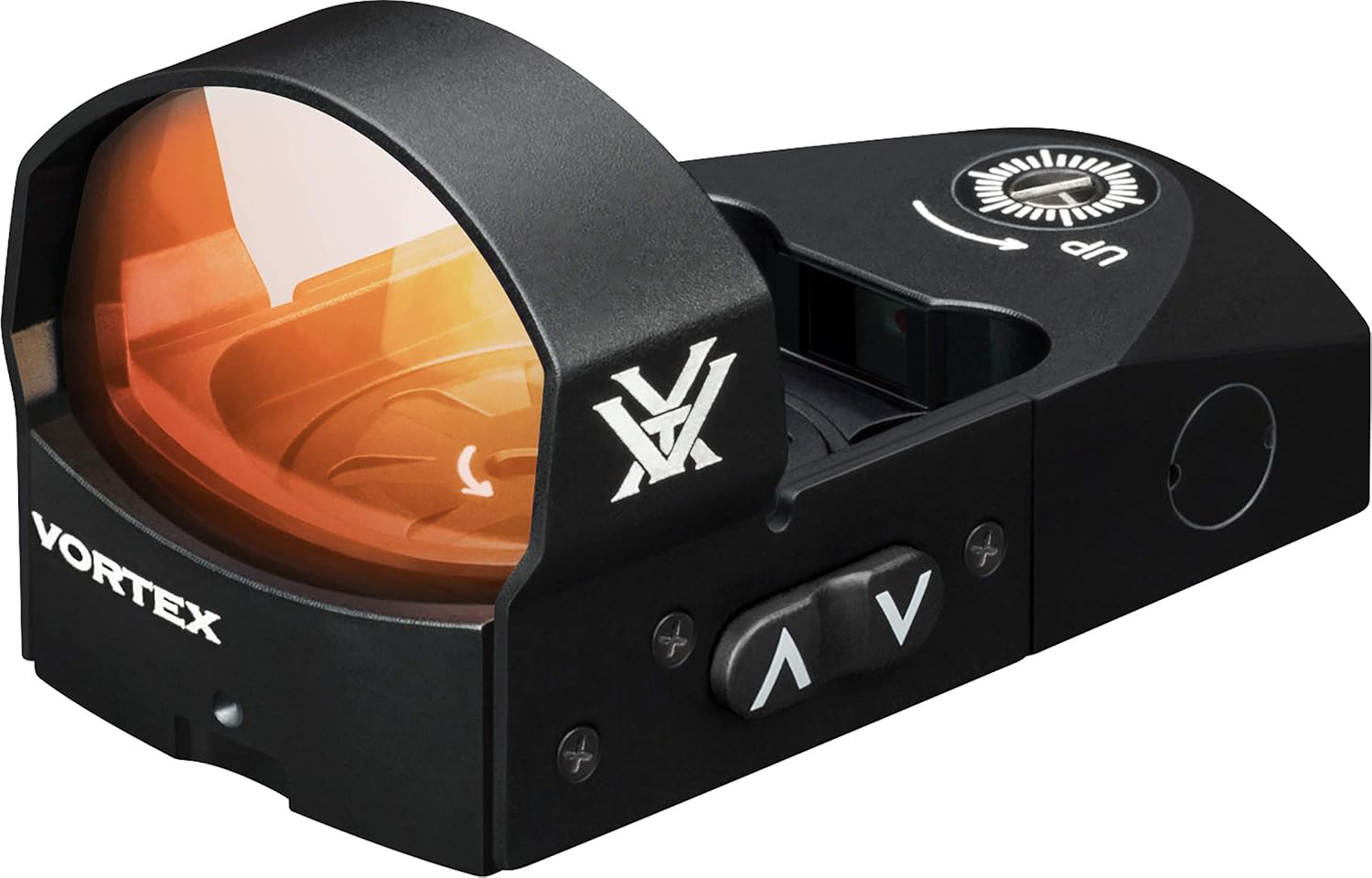
The Vortex Venom remains a solid entry-level optic that performs well for casual range use.
Short description:
If you’re building a budget PSA Rock setup, the Venom provides good performance without a huge investment.
Specs
- Footprint: Docter
- Dot size: 3 MOA
- Battery: CR1632
- Weight: 1.1 oz
Pros
- Affordable price
- Top battery access
- Simple controls
- Good warranty
Cons
- Less durable housing
- Open emitter design
My hands-on notes
The Venom’s window clarity is surprisingly good for the price. However, the aluminum housing isn’t as robust as premium optics.
The buttons are large and easy to operate with gloves. Parallax performance is acceptable inside 25 yards.
What people say online
Most shooters see the Venom as a good entry optic rather than a duty-grade sight.
Mounting clarity
You’ll need a Docter-to-RMR adapter plate to mount this optic to the PSA Rock.
╰┈➤ Explore User Feedback and Current Pricing on Amazon
Steiner MPS

The Steiner MPS is one of the toughest enclosed pistol optics available today.
This optic features a fully enclosed emitter system designed for extreme durability.
Specs
- Footprint: ACRO pattern
- Dot size: 3.3 MOA
- Battery: CR1632
- Weight: 2 oz
Pros
- Fully enclosed emitter
- Extremely rugged housing
- Excellent glass clarity
- Minimal distortion
Cons
- Slightly heavier
- Requires adapter plate
My hands-on notes
Enclosed emitters eliminate one of the biggest weaknesses of pistol optics: debris blocking the LED emitter.
The glass is impressively clear with almost no tint. Parallax shift is minimal even near the window edges.
The brightness controls are firm and tactile, though slightly recessed.
What people say online
Many law enforcement agencies are transitioning to enclosed optics like the MPS or Aimpoint ACRO.
Mounting clarity
An ACRO-to-RMR plate is required for mounting on the PSA Rock.
╰┈➤ Explore User Feedback and Current Pricing on Amazon
How I Tested / Evaluation Criteria
Parallax
Parallax shift is the apparent movement of the dot relative to the target when your eye position changes. I evaluate this by shooting from multiple angles and positions. Optics with tighter emitter alignment tend to show less shift at handgun distances.
Co-Witness and Deck Height
Deck height determines how high the optic sits above the slide. Lower deck heights typically allow better co-witness with iron sights and faster presentation from the holster.
Durability
Durability testing includes recoil cycles, drop resistance, and housing strength. Pistol optics endure far more violent recoil impulses than rifle red dots.
Battery System
I evaluate battery type, replacement access, and real-world battery life. Side or top-loading batteries dramatically simplify maintenance.
Brightness Range
A good optic must remain visible in bright daylight without blooming or starbursting. It should also dim low enough for night shooting.
Glass Quality
Optics with better lens coatings reduce tint and distortion while maintaining high light transmission.
Controls Ergonomics
Button placement and tactility matter—especially when operating the optic with gloves or under stress.
Mounting Ecosystem
I always consider footprint compatibility and the availability of mounting plates or aftermarket support.
How to Choose the Right Red Dot for This Gun
Choosing a red dot for the PSA Rock is less about brand loyalty and more about understanding how the platform behaves during recoil and presentation.
The first thing I look at is footprint compatibility. The PSA Rock is cut for the RMR footprint, which is arguably the most popular pistol optic interface in the industry. This means optics like the Trijicon RMR and Holosun 507C will mount directly to the slide without adapter plates.
Direct mounting is almost always preferable because it lowers deck height and improves durability.
Next is window size.
A larger window generally makes it easier to reacquire the dot during rapid shooting. The DeltaPoint Pro excels here because of its large viewing window. However, larger optics can also sit higher on the slide.
Another critical factor is emitter type.
Open-emitter optics are lighter and more common, but debris can occasionally block the emitter. Enclosed optics like the Steiner MPS prevent this entirely by sealing the emitter inside the housing.
Battery design is also important. I strongly prefer optics with side or top-loading batteries because they allow battery replacement without removing the optic and losing zero.
Finally, durability matters more on pistols than many shooters realize. The reciprocating slide creates extremely sharp recoil impulses. An optic that works fine on a rifle may fail quickly on a pistol.
When you combine these factors—mounting footprint, window size, emitter protection, and durability—you start to see why certain optics consistently rise to the top for the PSA Rock platform.
FAQs
Does the PSA 5.7 Rock use an RMR footprint?
Yes. The PSA Rock slide is cut for the RMR pattern, which allows direct mounting for many popular pistol optics.
Are enclosed red dots worth it?
Enclosed emitters are more resistant to rain, lint, and debris. They’re especially useful for duty or outdoor environments.
What dot size is best for a pistol?
Most shooters prefer 3–3.25 MOA for a balance between precision and speed.
Can you co-witness iron sights with a red dot?
Yes, but you typically need suppressor-height sights depending on the optic’s deck height.
Do red dots improve shooting speed?
For most shooters, red dots dramatically improve target acquisition and accuracy during rapid fire.
Conclusion
Selecting the Best Red Dot for PSA 5.7 Rock ultimately comes down to durability, mounting compatibility, and how well the optic supports fast target acquisition. Because the Rock uses an RMR footprint and produces relatively soft recoil, it works exceptionally well with modern micro red dots.
If you want the most rugged option, the Trijicon RMR Type 2 remains hard to beat. If you prefer advanced features, the Holosun 507C delivers incredible value. And if maximum reliability in harsh conditions matters, enclosed optics like the Steiner MPS are rapidly becoming the new standard.
Any of the six optics above will transform the shooting experience of the PSA Rock, making the pistol faster, more precise, and easier to run under pressure.
Maybe you interesting
Top 6 Best Thermal Scope For Hunting in 2026
Top 6 Best Thermal Scope For Gamo Air Rifle in 2026
Top 6 Best Thermal Scope For Fox Hunting in 2026
Top 6 Best Thermal Scope For Close Range in 2026
Top 6 Best Thermal Scope For Beginners in 2026
Top 6 Best Thermal Scope For 9mm Pistol in 2026
Top 6 Best Thermal Scope For 8.6 Blackout in 2026
Top 6 Best Thermal Scope For 7mm Rem Mag in 2026
Top 6 Best Thermal Scope For 7mm-08 in 2026
Top 6 Best Thermal Scope For 6mm Arc in 2026
Top 6 Best Thermal Scope For 6.5 Grendel in 2026
Top 6 Best Thermal Scope For 6.5 Creedmoor in 2026